
Poker Tournament Management App
Run Poker Tournaments Like a Pro!
From First Hand to Final Table
Seat draws, table balancing, the clock, payouts and league standings: Shuffle Up and Deal! runs the whole night from your iPhone or iPad.

How to run a home poker tournament: the complete host guide
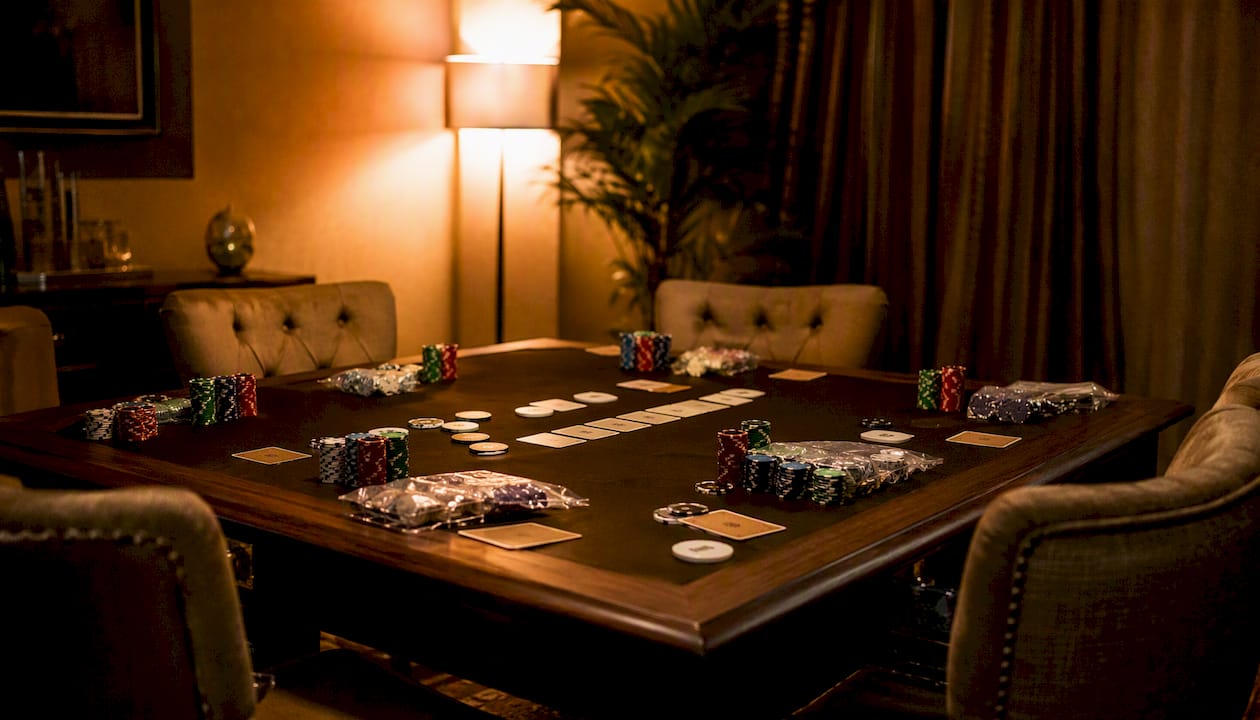
You can run a smooth, legal home poker tournament tonight. Grab 5–10 players, agree a buy-in, set a starting stack, load a blind schedule into a live timer like Shuffle Up and Deal!, and make sure every penny of the buy-ins goes straight into the prize pool. That last point is the UK legal cornerstone: no rake, no house cut, no commercial operation. Here is your immediate checklist:
- Players: 5–10 per table; aim for 6–8 for the best pace
- Buy-in: Agreed upfront, collected before the first deal, 100% to the prize pool
- Starting stack: a starting stack roughly equal to 100 big blinds (exact chip counts depend on your denominations and blind structure)
- Blind schedule: Choose quick (20 min levels), standard (3 hrs) or deep (4+ hrs) from the templates in this guide
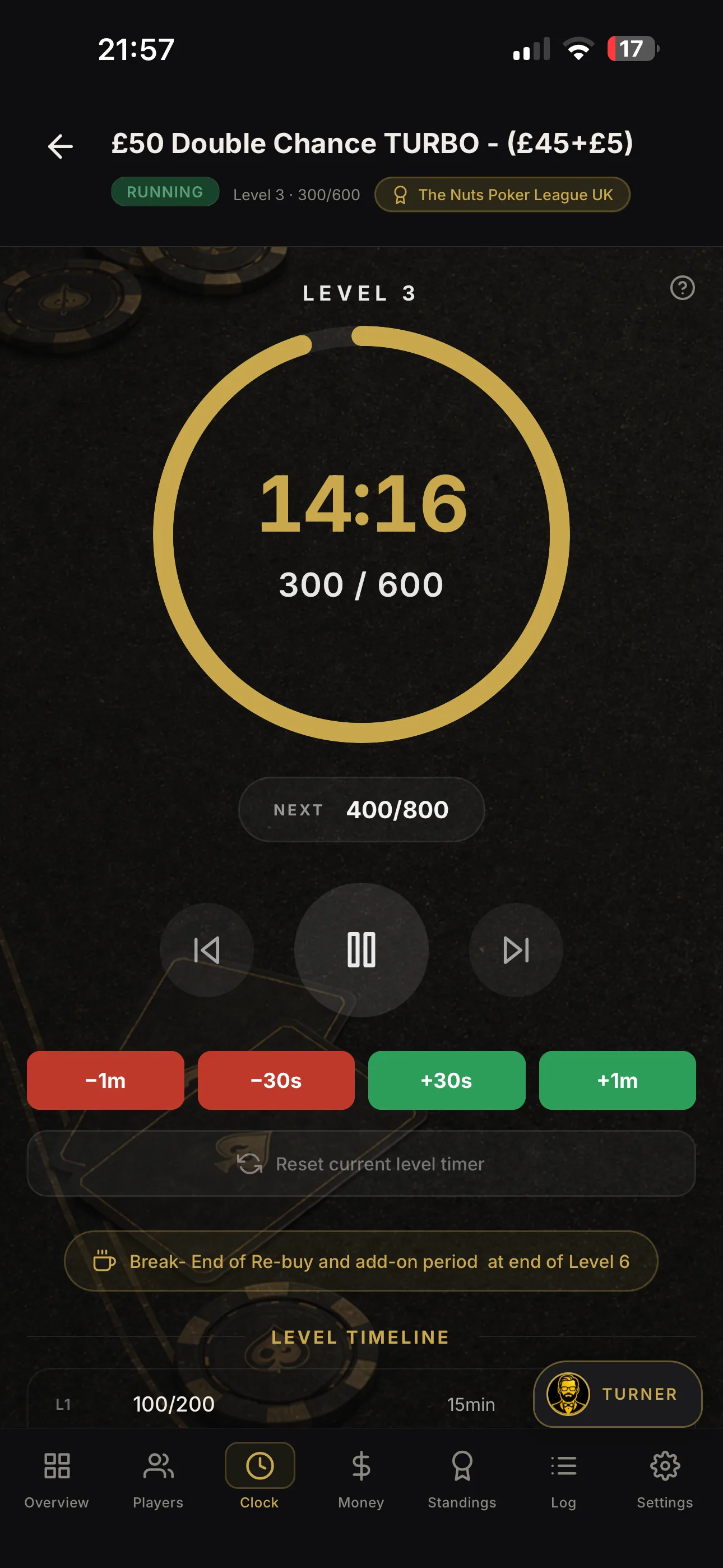
- Timer: A live clock visible to all players - Shuffle Up and Deal! handles this on any iPhone or iPad
- Payout table: Displayed before the first hand; a split favoring first, second, and third places works well for fields of about eight to fifteen players
- UK legal note: Gambling Commission guidance is clear - home games are fine without a licence so long as no organiser profit is taken
That is the whole framework. The rest of this guide fills in every detail with copyable templates, chip breakdowns and tools so your night runs like clockwork.
Key takeaways
A smooth home poker tournament comes down to three things done right before the first hand: a pre-loaded blind schedule, pre-bagged starting stacks, and every buy-in collected and recorded.
| Point | Details |
|---|---|
| Nail the blind schedule | Use a 15–20 minute level for a standard 3-hour event; load it into a live timer before players arrive. |
| Chip allocation matters | Plan for 50 chips per player minimum; 75–100 for rebuy events or sessions over 3 hours. |
| Collect buy-ins first | All money goes into the prize pool before the first deal - this is both best practice and the UK legal requirement. |
| Keep tables balanced | Aim for 5–7 players per table; use smart seating to flag imbalances as players are eliminated. |
| Shuffle Up and Deal! runs the night | Shuffle Up and Deal! handles the blind clock, seating, rebuys, ICM deals and live display from one app. |
Table of Contents
- How do you set up a home poker tournament quickly?
- What blind schedule should you use for a home poker tournament?
- How many chips does each player need at a home tournament?
- How do you handle rules, rebuys and payouts fairly?
- How do you keep a home poker tournament running smoothly all night?
- What equipment do you need for a home poker tournament?
- Which apps make running a home poker tournament easier?
- What are the UK legal rules for hosting a home poker game?
- What variations can you add once you have the basics down?
- Copy-and-use templates for your next event
- Organising for fun versus organising for competition
- Shuffle Up and Deal! makes your home tournament run like a pro event
- Sources
How do you set up a home poker tournament quickly?
The format decision shapes everything else, so make it first. No-limit Texas Hold’em freezeout is the standard for home events: one buy-in, no second chances, play until one player holds all the chips. It is the easiest format to manage and the one players know best. Rebuy and add-on formats add flexibility but extend the night and complicate cashier duties, so save them until you are comfortable running the basics.
Choosing your buy-in and prize pool
Fix a buy-in that feels comfortable for your group. Common UK home-game amounts run from £10 to £50 per player. With 10 players at £20 each, you have a £200 prize pool to distribute. Pre-define the payout split before anyone sits down:
- 3–7 players: Pay 1 place (winner takes all) or top 2 (65/35)
- 8–15 players: Pay top 3 (50/30/20)
- 16–25 players: Pay top 4–5 (40/25/20/15 or similar)
Write the payout table on a whiteboard or display it on a screen. Players who know what they are playing for make better decisions and fewer disputes arise.
Target durations and what they require
| Target length | Level duration | Approx. levels needed | Notes |
|---|---|---|---|
| approximately 90 minutes | 10–12 min | 8–10 | Turbo; suits casual groups |
| 3 hours | 15–20 min | 10–12 | Standard home game |
| 4+ hours | 25–30 min | 12–15 | Deep-stack; suits serious players |
A simple night timeline:
- T-30 min: Set up tables, bag starting stacks, load app
- T-0: Registration closes, collect all buy-ins, seat players
- First hand dealt: Start the clock immediately
- Every 60–90 min: 10-minute break; colour up chips
- Final table reached: Announce payout structure again
- Heads-up: Offer ICM deal option if both players agree
- End of night: Pay out, record results, pack down
Collect buy-ins before the first deal without exception. Chasing money mid-tournament is the fastest way to create awkwardness and slow the game.
What blind schedule should you use for a home poker tournament?
The blind structure is the single most important operational decision you will make. Get it wrong and the tournament either drags on past midnight or ends in a chaotic shove-fest after 45 minutes. Practical Web Tools recommends designing blind speed around your starting-stack-to-final-big-blind ratio, targeting a game where players start with roughly 100 big blinds and the final levels see stacks of 10–15 big blinds.
How blind speed affects the feel of the game
Short levels (under 15 minutes) push players into all-in situations quickly. That suits casual groups who want action and a defined finish time. Longer levels (20–30 minutes) reward post-flop play and strategy, which is what serious players prefer. PokerScout’s operational guidance suggests 4–12 minutes as the practical range for home events, with most hosts landing between 15 and 20 minutes for a balanced experience.
Three ready-to-use blind schedules
Quick (approx. 90 minutes, 10-minute levels)
Standard (approx. 3 hours, 15-minute levels)
Deep (approx. 4+ hours, 25-minute levels)
Antes kick in from level 4–6 depending on the schedule. The big-blind ante (one ante equal to the big blind, posted by the big-blind player) is the cleanest format for home games: it speeds up collection and eliminates confusion about who posts.
Pro Tip: Watch big-blind counts, not chip totals. When the average stack drops below 20 big blinds, the tournament is entering its decisive phase. If you are running ahead of schedule, add a 5-minute break; if behind, shorten the next break rather than skipping blind levels.
How many chips does each player need at a home tournament?
Chip allocation trips up more first-time hosts than any other logistics question. Chipsoffury’s guidance recommends planning for at least 50 chips per player, with 75–100 chips per player being better for longer sessions or events with rebuys. A 300-chip set covers roughly 4–6 players comfortably; for 10 players, plan for 500–600 chips minimum.

Recommended denomination mix for a 5,000-chip starting stack
For a starting stack of 5,000 chips with denominations of 25, 100, 500 and 1,000:
- 25-value chips: 20 chips (500 total)
- 100-value chips: 20 chips (2,000 total)
- 500-value chips: 5 chips (2,500 total)
- 1,000-value chips: 0 at start (introduced at colour-up)
That gives each player 45 chips, which is comfortable for early-level betting without creating a mountain of low-value chips. Limiting yourself to three or four denominations reduces colour-up errors significantly, especially later in the night when players are tired and the pace is fast.
Pre-bag each starting stack in a small zip-lock bag or rubber-banded bundle before players arrive. It speeds up registration dramatically and removes any doubt about whether stacks are correct.
Table layout and seating
Seat players randomly using a card draw or your app’s built-in seating tool. Place the dealer button, a visible timer, and a printed payout table at each table. For multi-table events, number the tables and seats clearly so players can find their spots without asking.
Pro Tip: Colour up chips at each break, not mid-level. Announce the colour-up one level in advance so players can break their small chips into pots. Collect any odd chips that cannot be coloured up using a chip-race: deal one card per odd chip, highest card wins the leftover.
How do you handle rules, rebuys and payouts fairly?
Essential house rules to post before the first hand
Pin these to the wall or display them on a screen:
- String bets are not allowed: Declare your action verbally before moving chips
- One player per hand: No advice from spectators or eliminated players
- Cards speak: The best hand wins at showdown regardless of what a player declares
- Dealer responsibilities: The dealer button rotates clockwise; the player to the left posts the small blind
- Mobile phones: Away from the table during hands (optional but recommended)
- Late registration: Define the cut-off level (commonly level 4–6 for standard events)
For dispute resolution, designate one person as Tournament Director (TD) before the game starts. Their ruling is final. Shuffle Up and Deal!’s AI rules assistant can interpret and resolve tournament rule questions in real time, which is particularly useful when the TD is also playing.
Registration and cashier procedure
Collect buy-ins at a dedicated station before players sit down. Hand each player their pre-bagged starting stack in exchange for payment. Record every transaction - a simple spreadsheet or the app’s registration module works well. Set a late-registration cut-off (e.g. end of level 4) and communicate it clearly. Players arriving after that point can watch or join a side cash game.
Rebuy and add-on rules
If you allow rebuys, define the rules precisely:
- Rebuy window: Levels 1–4 only (keeps the event time-bounded)
- Rebuy eligibility: Players at or below the starting stack only
- Add-on: One optional top-up for all players at the end of the rebuy period
- Cap: Maximum two rebuys per player
Payout examples
| Field size | Places paid | Split |
|---|---|---|
| 6–8 players | 1 | 100% to winner |
| 8–15 players | 2–3 | 60/40 or 50/30/20 |
| 16–25 players | 3–4 | 40/25/20/15 |
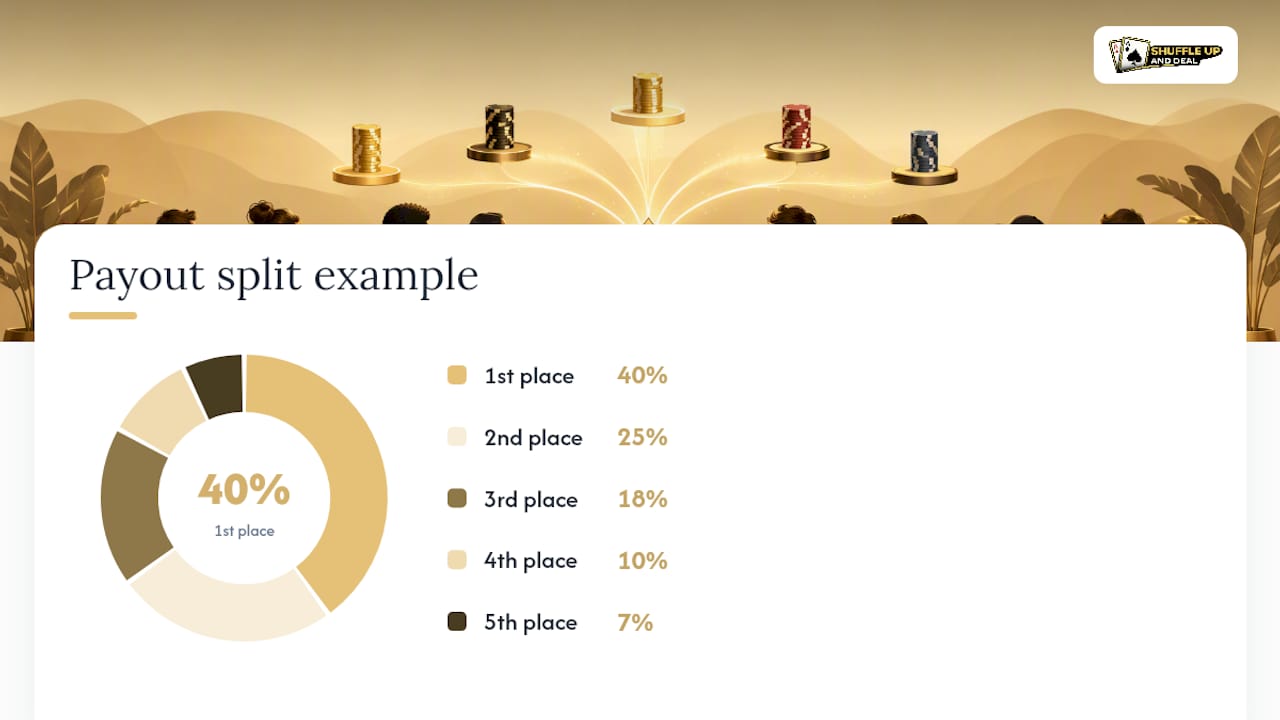
| 16–25 players | 4–5 | 40/25/18/10/7 |
For heads-up play, you can offer an ICM deal based on chip counts. The ICM model calculates each player’s equity in the prize pool relative to their stack, giving a fairer split than a straight chip-count percentage. Shuffle Up and Deal!’s built-in ICM calculator handles this instantly.
How do you keep a home poker tournament running smoothly all night?
Seat draws and table balancing
Draw seats randomly at the start. For multi-table events, keep 5–7 players per table - more than eight slows play noticeably and changes the strategic dynamics. As players are eliminated, balance tables by moving the player in the seat furthest from the dealer button at the short-handed table to the corresponding seat at the fuller table.
App-based smart seating removes the mental arithmetic entirely. Shuffle Up and Deal!’s seating chart display shows every player’s current seat and flags when a table needs balancing, so you never have to count heads manually mid-hand.
Running breaks and the flow of the night
- Call a 10-minute break every 60–90 minutes
- Use break time to colour up chips, handle rebuys and announce the current blind level
- Post the updated chip counts or average stack on the display
- Announce the next blind level 2 minutes before the break ends
When you reach the final table, re-draw seats if the table configuration has changed significantly. Announce the payout structure again so every remaining player knows exactly what they are playing for.
Handling disputes quickly
Stop the hand, ask both players to leave their cards face down, and hear each side briefly. Apply the house rule or consult the app’s rules assistant. Make a ruling, explain it in one sentence, and restart play. Never let a dispute drag on for more than two minutes - it kills the atmosphere for everyone else.
Pro Tip: Cast the blind clock to a TV or spare screen using Shuffle Up and Deal!’s external display feature. Players can see the current level, time remaining and average stack without asking. Eliminated players can follow the action on their phones via the app’s live share link, which keeps the social energy alive even after they bust out.
What equipment do you need for a home poker tournament?
Essential equipment
- Chip sets: Minimum 300 chips for 4–6 players; 500–600 for up to 10 players
- Playing cards: Two decks per table (one in play, one shuffled ready)
- Dealer button: One per table, plus small blind and big blind buttons if available
- Timer/clock: A device running a live blind clock - a phone, tablet or dedicated display
- Registration station: A table, buy-in record sheet and secure cash box
- Payout display: Printed sheet or screen showing the prize breakdown
Venue checklist
- Enough seating for all players plus spectators
- Good lighting over every table (poor lighting causes card-reading errors)
- Low background noise during play; music between hands is fine
- Access to drinks and snacks without players leaving the table mid-hand
- A separate, quiet area for cash handling and payouts at the end of the night
Cash handling and security
Keep buy-in money in a locked box or secure bag throughout the event. Designate one person to handle cash at all times. Pay out winnings at a separate station away from the main tables, and have the winner confirm the amount before they leave. A simple written record of all transactions protects everyone.
Which apps make running a home poker tournament easier?
The right app turns a chaotic evening into a professional event. Here is what to look for and how Shuffle Up and Deal! covers every requirement.
What a good tournament app must do
- Live blind clock: Counts down each level, advances automatically and displays the next level
- Smart seating and table balancing: Assigns seats at registration and flags when tables need balancing
- Registration and cashier workflows: Tracks buy-ins, rebuys and late entries in one place
- Payout and ICM calculators: Calculates prize splits and deal equity from chip counts
- External display and casting: Pushes the clock and seating to a TV or second screen
- Multi-device syncing: Lets a co-host manage registration on a second device while you run the clock
How Shuffle Up and Deal! covers those needs
Shuffle Up and Deal! is built specifically for tournament directors running events from an iPhone or iPad. Load your blind schedule before players arrive, and the live clock advances automatically through every level. When a player is eliminated, log the knockout in the app and it immediately flags which seat needs filling and which table needs balancing. The payout module calculates prize splits in real time as the field shrinks, and the ICM calculator handles any deal negotiation at the final table.
The external display feature turns any iPad or connected TV into a dedicated tournament screen showing the current level, time remaining, players left and average stack. Share the live tournament link with players and spectators so they can follow along on their own phones, even after they have been eliminated.
Pro Tip: Set up the app and sync all devices at least 30 minutes before players arrive. Load the blind schedule, enter player names during registration and test the display output. A host who is fiddling with their phone when the first hand is dealt loses authority immediately - preparation is everything.
What are the UK legal rules for hosting a home poker game?
Home poker games are generally lawful in the UK provided the organiser does not take a rake or profit from running the event. The Gambling Commission is the UK authority on what constitutes licensed gambling activity. If you charge an entry fee that does not go entirely into the prize pool, or if you run the game commercially, you may need a licence.
UK home game rule of thumb: Every pound collected in buy-ins must be paid out as prize money. The host covers costs (chips, cards, refreshments) separately. The moment the host takes a cut of the pot or charges a “hosting fee” from the prize pool, the game may cross into unlicensed commercial gambling.
Age limits and responsible hosting
- All players must be 18 or over. No exceptions.
- Do not allow visibly intoxicated players to continue playing or buying in
- Display a responsible-gambling contact prominently - GambleAware is the primary UK resource
- If you are concerned about a player’s behaviour, Gambling Therapy offers online and local support options
- Keep a written record of buy-ins and payouts for transparency
When a game might require a licence
If you charge a rake (a percentage of each pot), run the game as a regular commercial operation, or advertise it publicly for profit, the activity likely requires a licence from the Gambling Commission. When in doubt, consult the Commission’s register and guidance directly.
What variations can you add once you have the basics down?
Once you have run two or three standard freezeouts, variations keep the format fresh and give regular players something new to think about.
- Bounty: Each player has a bounty (e.g. £5) on their head. Knock someone out and collect their bounty chip immediately, separate from the main prize pool. It increases aggression and interaction.
- Mystery bounty: Bounties are sealed envelopes of varying values. Players do not know what they will win until they eliminate someone. Shuffle Up and Deal!’s mystery bounty guide explains how to run this format and track bounty payouts in the app.
- Turbo: Use the quick blind schedule from this guide. Suits groups who want a decisive result in under two hours.
- Deep-stack: Start players with 15,000–25,000 chips and use the deep schedule. Rewards post-flop skill and suits experienced groups.
- League play: Run a series of events over a season, tracking points across nights. Shuffle Up and Deal!’s league season planning tools handle leaderboards and cumulative scoring automatically.
Introduce one variation at a time and test it at a low-stakes event before making it your standard format. Bounty formats in particular require clear rules about when bounties are paid and how split-pot eliminations are handled.
Copy-and-use templates for your next event
Chip allocation by field size
For longer sessions or rebuy events, plan for 75–100 chips per player to avoid running short during colour-ups. A detailed chip denomination guide can help you decide the right mix for your specific chip set.
Registration form fields
A simple registration form should capture:
- Player name
- Seat number (assigned at registration)
- Buy-in amount paid (and initials of cashier)
- Rebuy 1 (amount and level)
- Rebuy 2 (amount and level)
- Add-on (yes/no)
- Total paid
- Signature confirming house rules accepted
Print one sheet per player and keep them in the cash box with the buy-in money. This protects you and the players if any dispute arises about amounts paid.
Sample payout table (10 players, £20 buy-in, £200 prize pool)
| Place | Payout |
|---|---|
| 1st | £100 (50%) |
| 2nd | £60 (30%) |
| 3rd | £40 (20%) |
Display this before the first hand. If rebuys are allowed and the prize pool grows, recalculate and re-display at the end of the rebuy period.
Organising for fun versus organising for competition
There is a tension at the heart of every home poker tournament that most guides skip over: the structure you choose signals the kind of night you are running, and players read that signal immediately.
A relaxed social event calls for shorter levels, looser enforcement of minor rules, and a host who is willing to pause the clock for a funny story or a late pizza delivery. The goal is a good evening, not a perfectly timed final table. For these nights, the quick blind schedule works well, a single table keeps things intimate, and the payout structure barely matters because the conversation is the real prize.
A competitive event is a different contract. Players who show up expecting serious poker will resent slow rulings, inconsistent enforcement and a host who bends the rules for a friend. Longer levels, strict adherence to house rules, ICM deals at the final table and a proper blind clock signal that this is a real tournament. Those players will come back precisely because you ran it properly.
The mistake most hosts make is running a competitive structure with a social atmosphere, or vice versa. Communicate the format to players before they arrive. A quick message saying “this is a serious 4-hour deep-stack, strict rules apply” or “it’s a fun turbo, we’ll be done by 10pm” sets the right expectations and prevents the friction that comes when a serious player sits down at a casual game and starts calling clock on every decision.
Timing and fairness are the two things players remember. Get those right and the atmosphere takes care of itself.
Shuffle Up and Deal! makes your home tournament run like a pro event
Running a tight, professional home tournament used to mean juggling a spreadsheet, a kitchen timer and a whiteboard. Shuffle Up and Deal! replaces all of that with a single app on your iPhone or iPad.
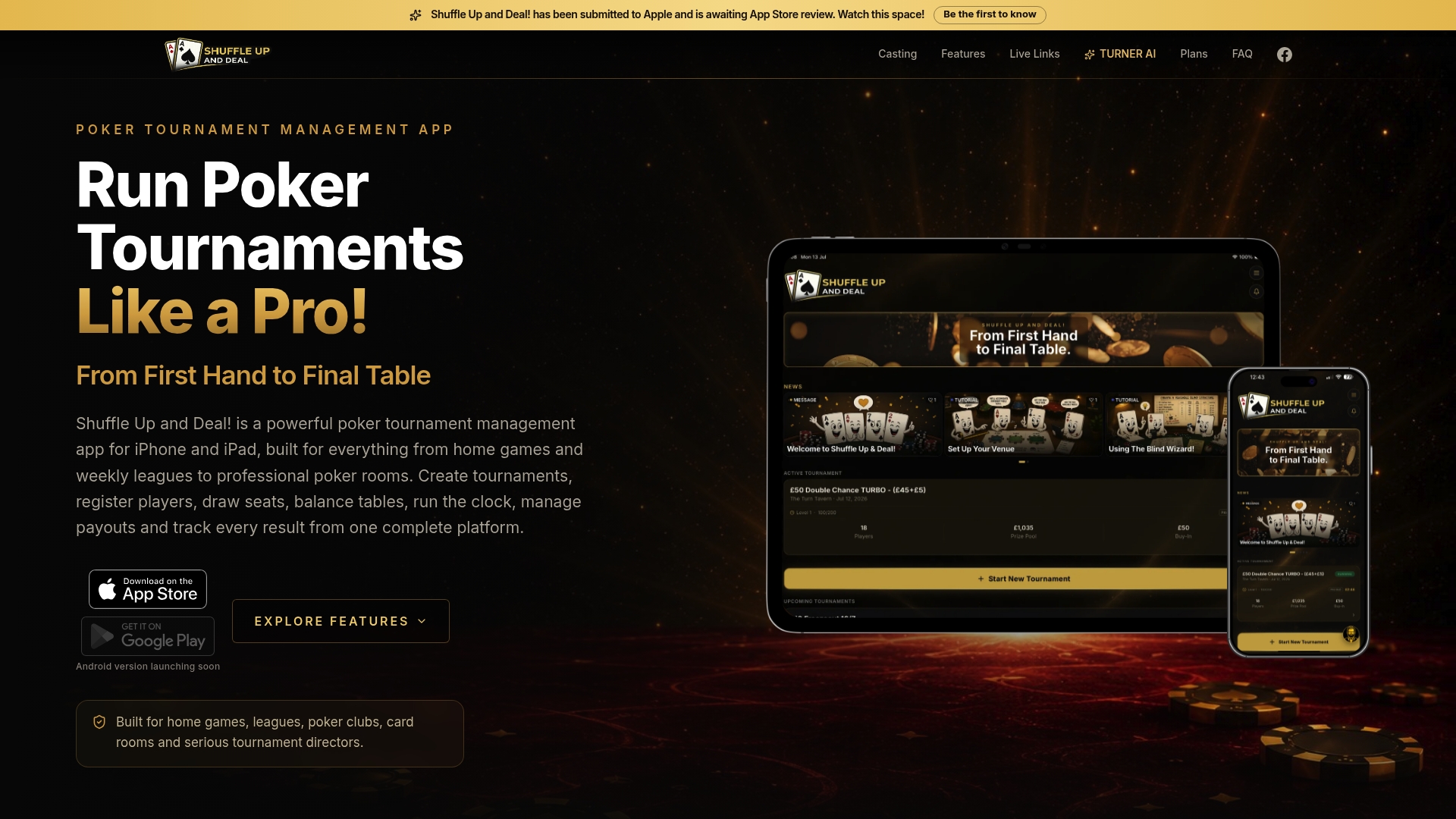
Load your blind schedule before players arrive, and the live clock counts down every level automatically. Register players and collect buy-ins through the app’s cashier module, handle rebuys and late entries without losing track of the prize pool, and let the smart seating algorithm balance your tables as eliminations happen. When you reach the final table, the ICM calculator gives you a fair deal number in seconds. Cast the tournament display to any TV so players always know the current level, time remaining and average stack - no more shouting across the room.
Shuffle Up and Deal! offers a free plan to get started, with paid tiers that unlock higher player counts, league management and advanced display features. Set it up before your guests arrive and your next home tournament runs itself.
Sources
- Registers
- GambleAware
- Gambling Therapy
- How to Host Home Poker Tournaments: Step-by-Step Guide
- How to Set Up a Poker Home Game: Complete Guide to Chips, Blinds, and Tournament Structure (2026) - Practical Web Tools
- Poker Chip Distribution Calculator | Instant Setup for Any Game
This article is general information, not a substitute for advice from a qualified lawyer. Consult a qualified legal professional about your own circumstances before acting on anything here.