
Poker Tournament Management App
Run Poker Tournaments Like a Pro!
From First Hand to Final Table
Seat draws, table balancing, the clock, payouts and league standings: Shuffle Up and Deal! runs the whole night from your iPhone or iPad.


How to Run a Home Poker Tournament Like a Pro
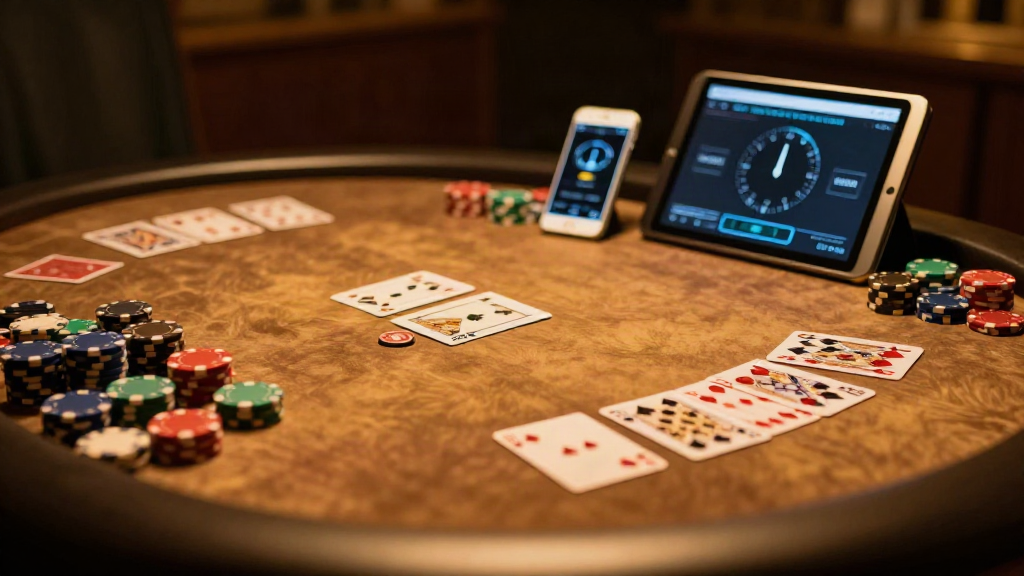
Running a home poker tournament should be the best night of the week - not a juggling act with a stopwatch in one hand and a spreadsheet in the other. Whether you host a single table of mates or run a recurring league across three tables, the difference between a room that flows and a room that grumbles comes down to a handful of decisions you make before the first card is dealt. Here is how to run a home poker tournament like a pro, from starting stacks to the final payout.
Set the ground rules before anyone sits down
Professionals decide the format first and announce it early. Write down the buy-in, the starting stack, the blind level length and whether the night is freezeout, rebuy or re-entry. Post it in the group chat so there are no "I thought we said" conversations at the table.
A workable default for a home game: a single-table freezeout with 10,000 starting chips, 15-minute levels and blinds starting at 25/50. For a deeper, more social night, stretch levels to 20 minutes. For a quick weeknight game, cut them to 10. The structure is your tournament's personality - pick one and stick to it.
Choose your blinds and starting stacks
Your blind structure does the heavy lifting. The golden rule is simple: give players room to play poker early, then accelerate so the night ends in a reasonable window.
Start with a stack of at least 100 big blinds - 10,000 chips at 25/50 is the standard. Use a smooth progression so the total chips in play never outrun the blinds too fast. A clean pattern looks like 25/50, 50/100, 75/150, 100/200, 150/300, 200/400, and on up, adding roughly 25–50% per level rather than doubling overnight.
If you are running rebuys or a re-entry period, close late registration at a set level - say the end of level six - so the prize pool is final and the tournament can settle into its real shape.
Draw seats fairly and draw them fast
The seat draw is where good tournaments are won and bad ones are accused of cheating. Keep it transparent.
For a single table, shuffle the seating cards face down and let players draw. For multiple tables, draw a table and a seat for every entrant so nobody can claim they were placed beside the big stack on purpose. If you have late arrivals or re-entries, draw them fresh rather than squeezing them into gaps.
Doing this by hand with paper is where the chaos creeps in - re-drawing after a no-show, losing track of who is where, and hearing "that's not fair" before a single hand is played. Running the draw from one place keeps it clean and lets you show the result on screen.
Balance tables as players bust
Table balancing is the part that separates a smooth room from a shuffling mess. As players bust, tables go short while others stay full, and the game grinds to a halt if you handle it by hand.
The rule the pros follow: move the player due for the big blind next from the fullest table to the short table, and seat them in the worst available position so nobody gains an unfair edge. Break tables from the back as fields shrink, and keep the balance even so no table plays short for long.
In a home game this is manageable up to about two tables. Cross three and you are constantly counting seats, re-checking the blinds and pausing the clock to shuffle people around - exactly the job software was built to take off your hands.
Run the clock without a stopwatch
The clock is the single biggest source of stress for home hosts. If you are the one holding the timer, you cannot play your own hands properly, and one missed level means a stalling tournament and a table full of complaints.
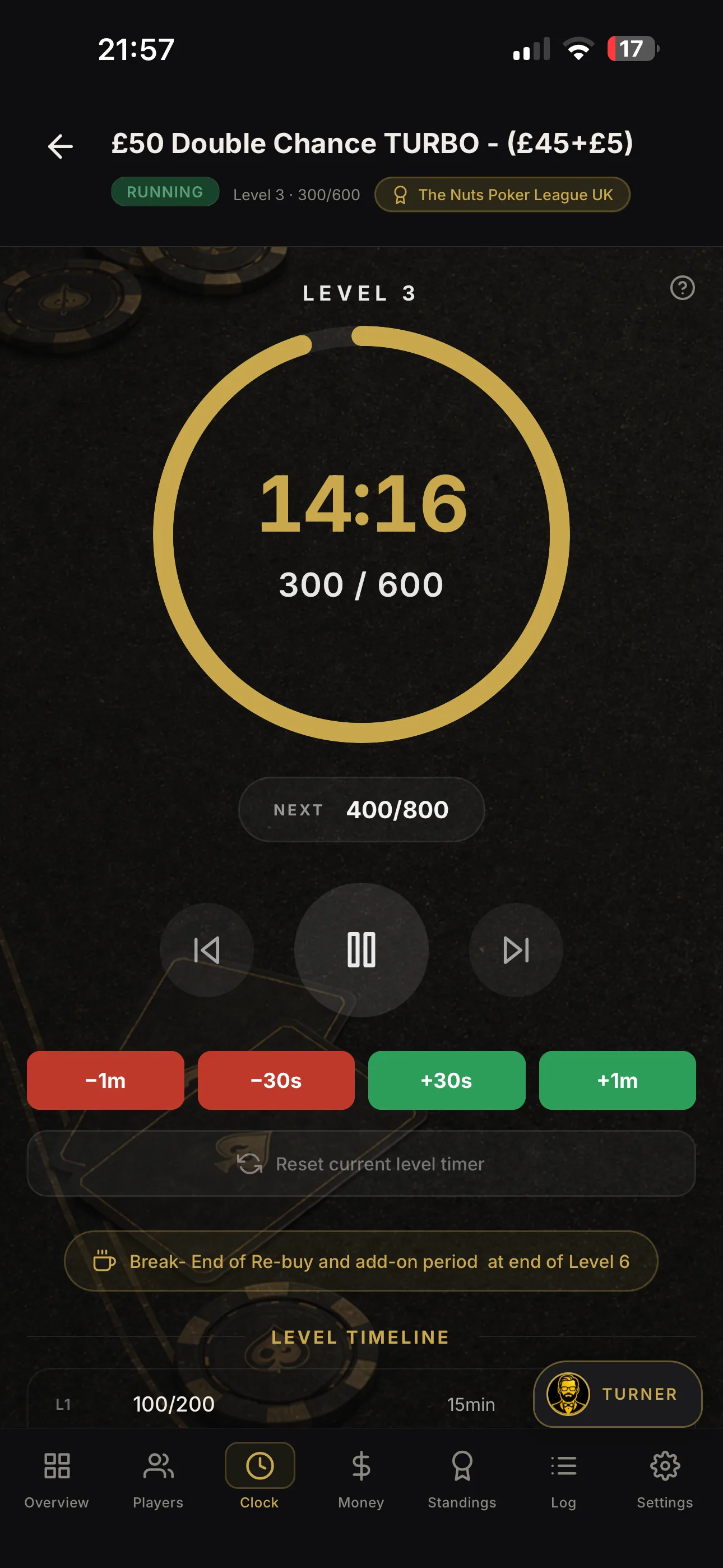
Set a proper blind timer, put it somewhere everyone can see - a TV or a spare monitor is ideal - and let it run the levels automatically. Players always know the blinds, the average stack and how long is left. You get to fold a hand without watching the seconds tick down.
Handle re-entries, late registration and the bubble
Decide your policy up front and apply it evenly. Late registration until a fixed level, a set number of re-entries or rebuys, and a hard cutoff so the prize pool locks.
Then there is the bubble - the last player out before the money. Announce it clearly so everyone knows where they stand. When the bubble breaks, payouts begin and the mood shifts; a room that can see the positions and the average stack on a screen handles that moment without arguments.
Manage payouts and track results
Payouts are where trust is either earned or lost. Agree a structure before you start - for a nine-player game, paying the top three in something like 50/30/20 works well, and adjust as numbers change. Announce the split, collect the buy-ins, and keep a clear record of finishes.
If you run a league, results matter beyond the single night. Tracking standings, cashes and points by hand across weeks is where most home organisers quietly give up. Keeping every result in one place turns a casual game into a proper league with an actual champion.
Put the whole night in one place
You can run a great home tournament with paper, chips and a kitchen timer - for a while. The cracks show the moment you add tables, re-entries or a league. Seat draws get messy, the balance slips, the clock stalls and the payout maths gets done on a phone calculator while players wait.
Shuffle Up and Deal! puts the whole tournament in one system for iPhone and iPad: create the tournament, register players, draw seats, balance tables, run the blind clock, cast the display to a TV, manage payouts and track every result. It is built for people who run real, in-person tournaments - so you spend the night playing and hosting, not operating spreadsheets and stopwatches in the corner.
Your first pro night
Start simple. Lock your format, pick a sensible blind structure, draw seats fairly, and put a visible clock in front of the room. Get those four right and even a single-table home game feels professional. Add the app when you are ready to stop juggling the admin yourself - and to run the kind of room players want to come back to every week.