
Poker Tournament Management App
Run Poker Tournaments Like a Pro!
From First Hand to Final Table
Seat draws, table balancing, the clock, payouts and league standings: Shuffle Up and Deal! runs the whole night from your iPhone or iPad.


Mystery bounty poker: the tournament director's guide

What is mystery bounty poker and how does it work?
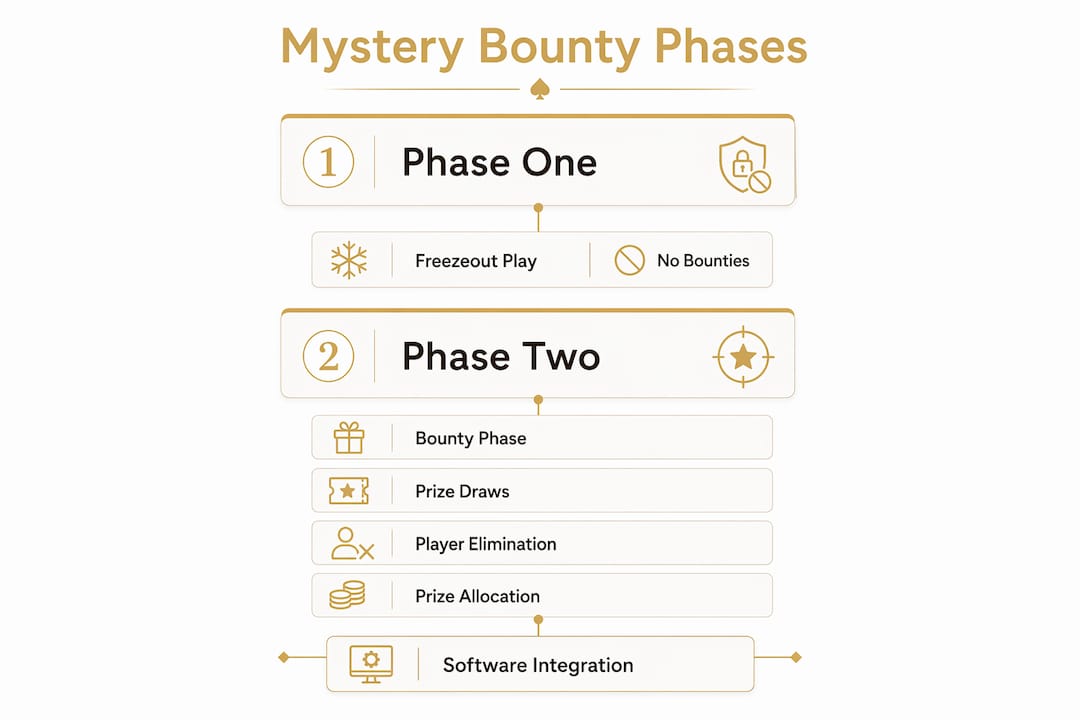
Mystery bounty poker tournaments split into two distinct phases. The first plays as a standard freezeout: no bounties, no draws, just regular tournament poker. Then, at a set threshold (typically Day 2 in multi-day events, or a specified late level in single-day formats), the bounty phase activates. From that moment, every knockout earns the eliminating player a random prize drawn from a pre-loaded bounty pool.
The two-phase structure is what separates this format from standard knockout and progressive knockout events. Prize pool splits between the regular pool and the bounty pool typically follow ratios of 50/50, 60/40, or 70/30. The WSOP Mystery Millions uses a bounty allocation of about a third of the buy-in, with the top envelope paying a million-dollar prize.
Key features you need to understand as an organiser:
-
Two separate prize pools must be managed and tracked independently throughout the event
-
Bounty prizes vary wildly in value, from near the buy-in amount to life-changing sums
-
Random draws (envelope or tombola systems) determine each prize, so no player knows their bounty value before making a decision
-
Stack coverage matters: only a player who covers an opponent can claim that opponent’s bounty
-
Bounty value deflates as prizes are drawn, directly affecting player strategy in real time
The format first appeared at the 2021 Wynn Fall Classic and has since been adopted by the WSOP, EPT, and WPT.
Table of Contents
-
Integrating the mystery bounty format with your existing systems
-
Case studies and lessons from successful mystery bounty events
-
Shuffle Up and Deal!: built for exactly this kind of tournament
Operational challenges and how software solves them
Running a mystery bounty tournament manually is genuinely demanding. Every knockout triggers a prize draw, and every draw changes the remaining bounty pool’s composition. Fail to track claims accurately and you create information asymmetry - players who don’t know which top-tier prizes remain make worse decisions, feel cheated, and complain loudly.

Live events traditionally manage bounty payouts via prize chest or tombola systems, which require manual workflows for every draw. That’s a real bottleneck when you’re also managing table balancing, blind levels, and late registration simultaneously.
Transparency is the primary retention tool in this format. Equal live access to remaining bounty pool information builds trust and keeps players engaged rather than suspicious.
Shuffle Up and Deal! addresses these challenges directly. The tournament management app automates bounty tracking, blind level control, player registration, and live prize pool displays, cutting the manual workload and reducing errors.
-
Live bounty pool display: players and staff see remaining prize values in real time
-
Multi-device syncing: floor staff and the tournament director stay on the same page
-
Smart table balancing: keeps the field moving without manual seat assignments
-
Integrated prize pool tracking: regular and bounty pools managed separately, updated instantly
Pro Tip: Display the remaining bounty pool publicly at all times during the bounty phase. Tracking which top-tier prizes remain is critical because it affects average bounty value and player behaviour. Transparency here prevents disputes before they start.
Strategic considerations for organisers and players
Professional poker strategist Jonathan Little identifies bounty-adjusted EV as the essential concept: players should use the average bounty value (remaining bounty pool divided by remaining players) rather than chasing the top prize or dismissing small envelopes.
For organisers, the strategic implication is clear: communicate the average bounty value to players at the start of the bounty phase and update it visibly as prizes are drawn. Players who understand the maths make better decisions and enjoy the format more.
Stack coverage is the other critical factor. Only players who cover opponents can claim their bounty, so advise participants to build stacks aggressively before the bounty phase begins. This single piece of guidance, delivered clearly in your tournament briefing, prevents a significant source of player confusion and floor disputes.
Strategy experts at BluffingMonkeys note that mystery bounty poker rewards discipline over excitement-chasing. Players who call every shove hoping for a big envelope lose money over time. The format is high-variance by design, but correct play still has a clear mathematical basis.
Bounty distribution methods and prize pool allocation
The bounty pool is fixed at registration and distributed via random draw. Most structures allocate 30%–50% of each buy-in to the bounty pool. A $200 event with many entries and a half allocation creates a large bounty pool. When the bounty phase activates with a reduced field, the average prize per knockout is calculated by dividing the remaining bounty pool by the players left.
Prize distributions typically follow a steep curve: the majority of envelopes pay near the minimum, while a small number of top prizes can be worth 50x or 100x the buy-in. This is what creates the lottery excitement that makes the format so popular with recreational players.
As a director, you must decide the distribution before the event and publish it clearly. Players are entitled to know the full prize list, even if individual envelopes remain secret. Withholding the distribution entirely damages trust; revealing it builds it.
Bounty inflation and deflation are real management concerns. As top prizes are drawn, the average envelope value drops, which changes player behaviour. Tracking this in real time and displaying it publicly keeps the field informed and your event running fairly.
Integrating the mystery bounty format with your existing systems
The bounty phase transition is the single most operationally complex moment in the event. You need to simultaneously activate the bounty tracking system, brief floor staff on draw procedures, and communicate the change to all remaining players.
Software that integrates bounty tracking with your existing blind clock and table management removes the coordination burden. Shuffle Up and Deal! handles this within a single platform: the transition from freezeout to bounty phase is a settings change, not a workflow overhaul. The live tournament clock continues uninterrupted while bounty tracking activates alongside it.
For card rooms already using a management system, the key question is whether your current tool can manage two separate prize pools simultaneously and display bounty pool status publicly. If it cannot, the mystery bounty format will expose that gap immediately.
Case studies and lessons from successful mystery bounty events
The WSOP Mystery Millions demonstrated the format’s ceiling: two $1,000,000 bounties drawn at a $1,000 buy-in event created moments that went viral and drove enormous interest in subsequent events. The lesson for directors is that the format’s drama is a marketing asset, not just a gameplay mechanic.
Smaller UK card rooms running mystery bounty tournaments have found that clear pre-event briefings on stack coverage rules and bounty phase timing reduce floor calls significantly. The most common disputes arise from players who didn’t understand that covering an opponent is a prerequisite for claiming the bounty. Solve this in the briefing, not at the table.
Experienced organisers combine technical software with clear communication about bounty phase transitions to manage player expectations and prevent disputes. The events that run most smoothly are those where the director has rehearsed the phase transition, briefed every floor staff member, and prepared a public display showing the bounty pool status before the first hand of the bounty phase is dealt.
Shuffle Up and Deal!: built for exactly this kind of tournament
Running a mystery bounty event without the right tools means juggling two prize pools, manual draw tracking, and live updates across multiple tables, all while keeping the blind clock running and the field balanced. That’s a lot to manage.
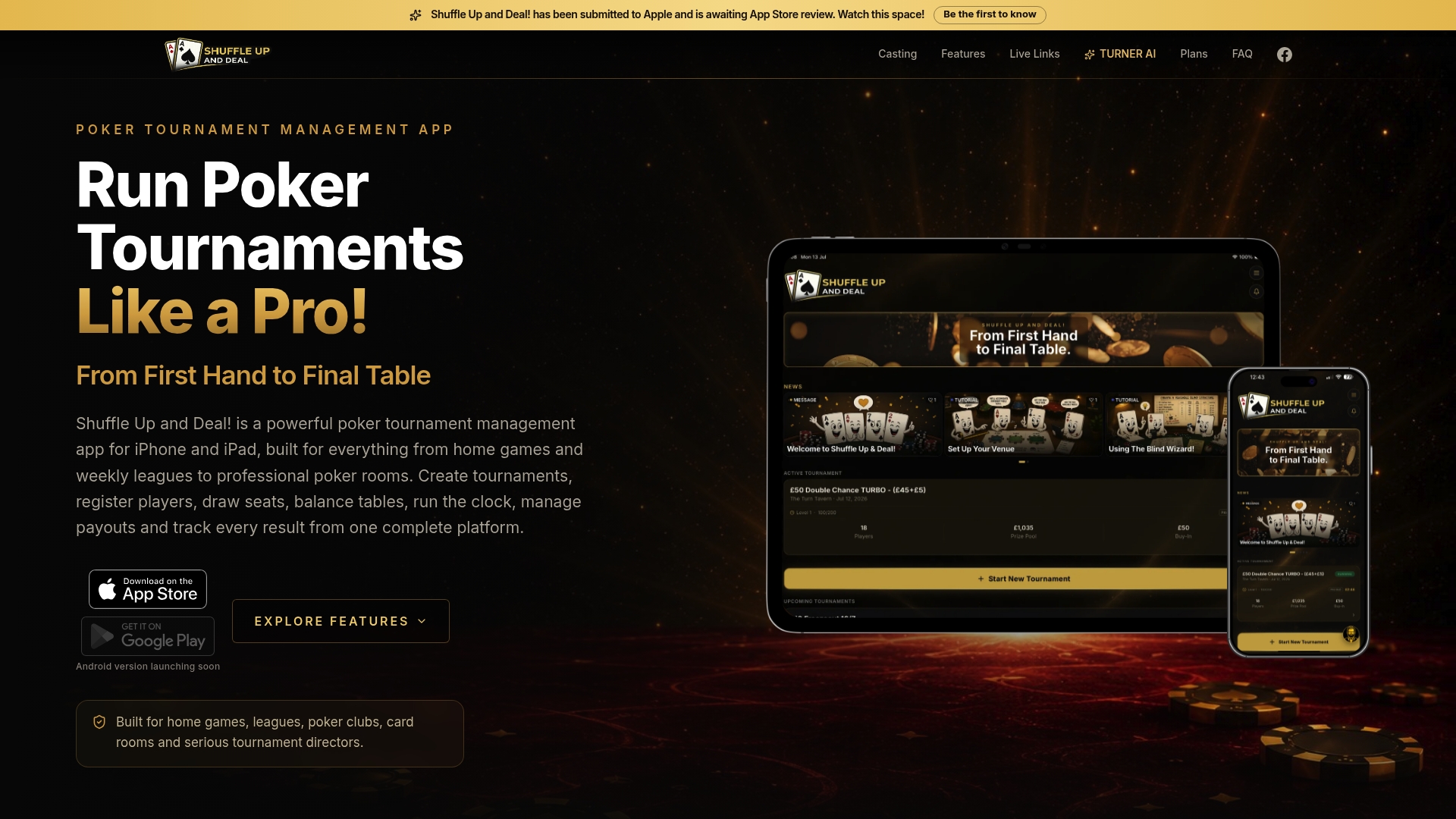
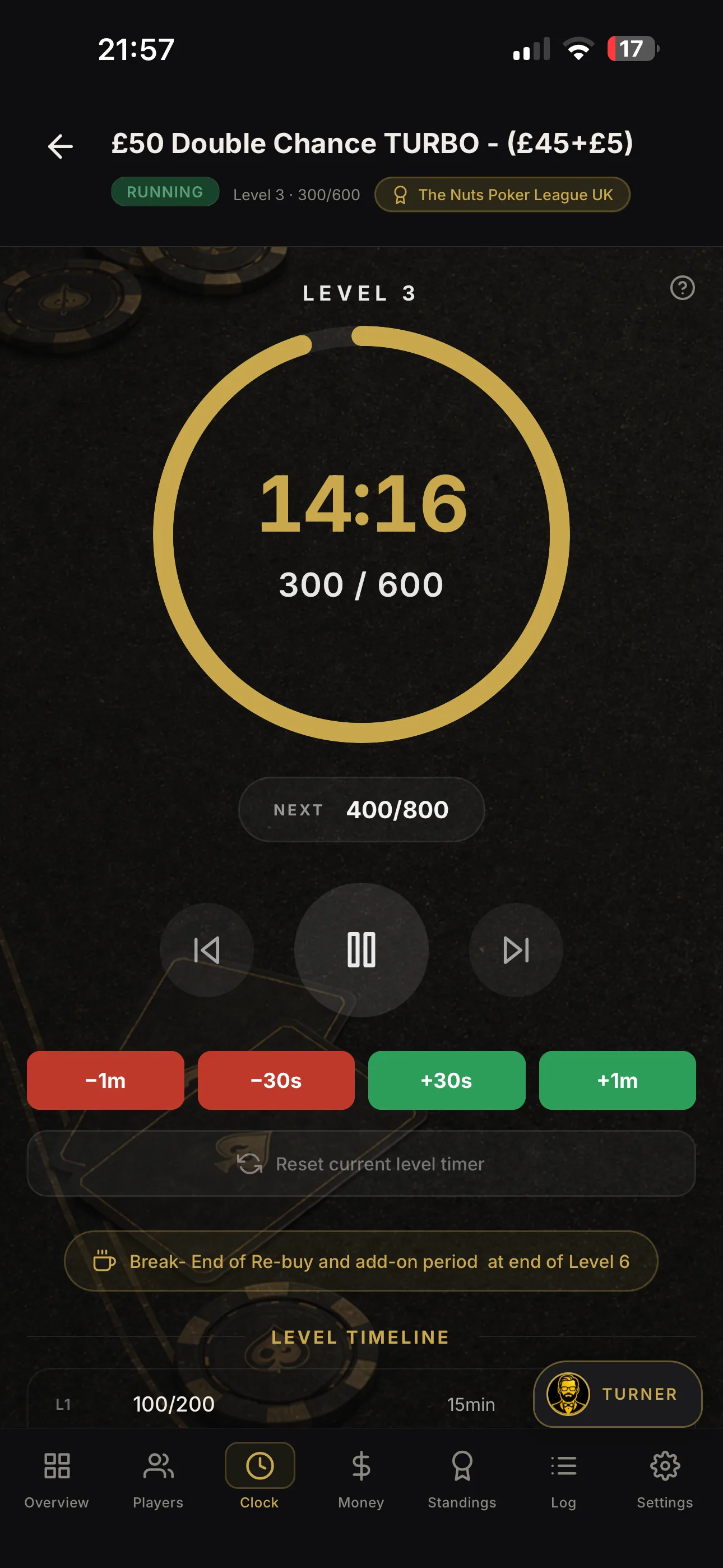
Shuffle Up and Deal! puts all of it in one place. The Shuffle Up and Deal! app handles player registration, smart table balancing, blind level control, separate prize pool tracking, and live bounty pool displays, all from your iPhone or iPad. Multi-device syncing keeps your floor staff aligned without radio calls. The live tournament share link lets players check bounty pool status on their own phones, which means fewer questions directed at your team.
Whether you’re running a home game mystery bounty or a full card room event, Shuffle Up and Deal! scales to fit. Download the app and run your next mystery bounty tournament with confidence.
Key takeaways
Mystery bounty poker tournaments demand separate prize pool management, real-time bounty tracking, and clear player communication to run fairly and efficiently.
| Point | Details |
|---|---|
| Two-phase structure | The freezeout phase has zero bounty value; strategy and management change the moment the bounty phase activates. |
| Average bounty value | Divide the remaining bounty pool by remaining players to get the correct EV input for each knockout decision. |
| Transparency builds trust | Displaying the remaining bounty pool publicly throughout the bounty phase prevents disputes and keeps players engaged. |
| Stack coverage rule | Only players who cover opponents can claim bounties; communicate this clearly in your pre-event briefing. |
| Shuffle Up and Deal! for management | Shuffle Up and Deal! tracks bounty pools, blind levels, and table balance in one app, purpose-built for events like this. |