
Poker Tournament Management App
Run Poker Tournaments Like a Pro!
From First Hand to Final Table
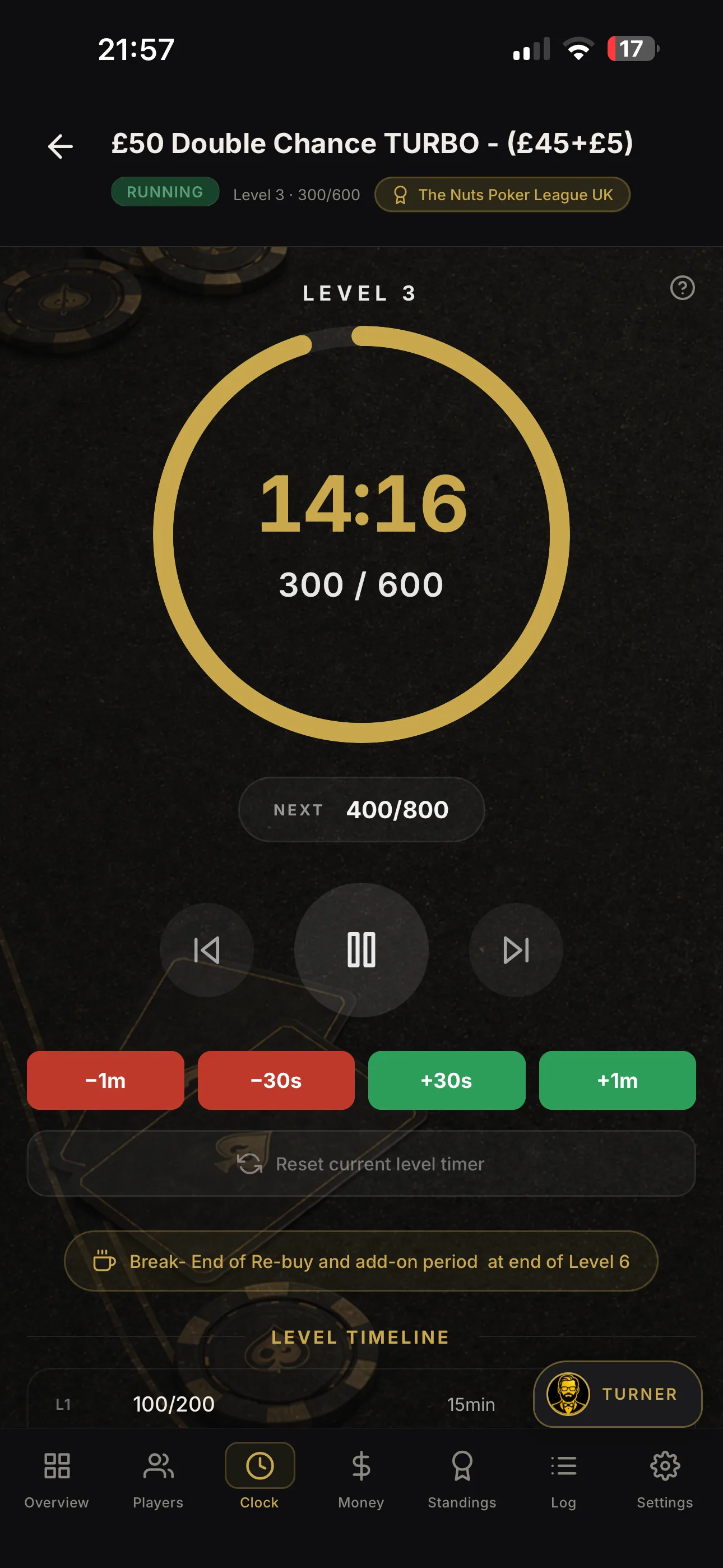
Seat draws, table balancing, the clock, payouts and league standings: Shuffle Up and Deal! runs the whole night from your iPhone or iPad.


Organise a poker night: host a smooth home game
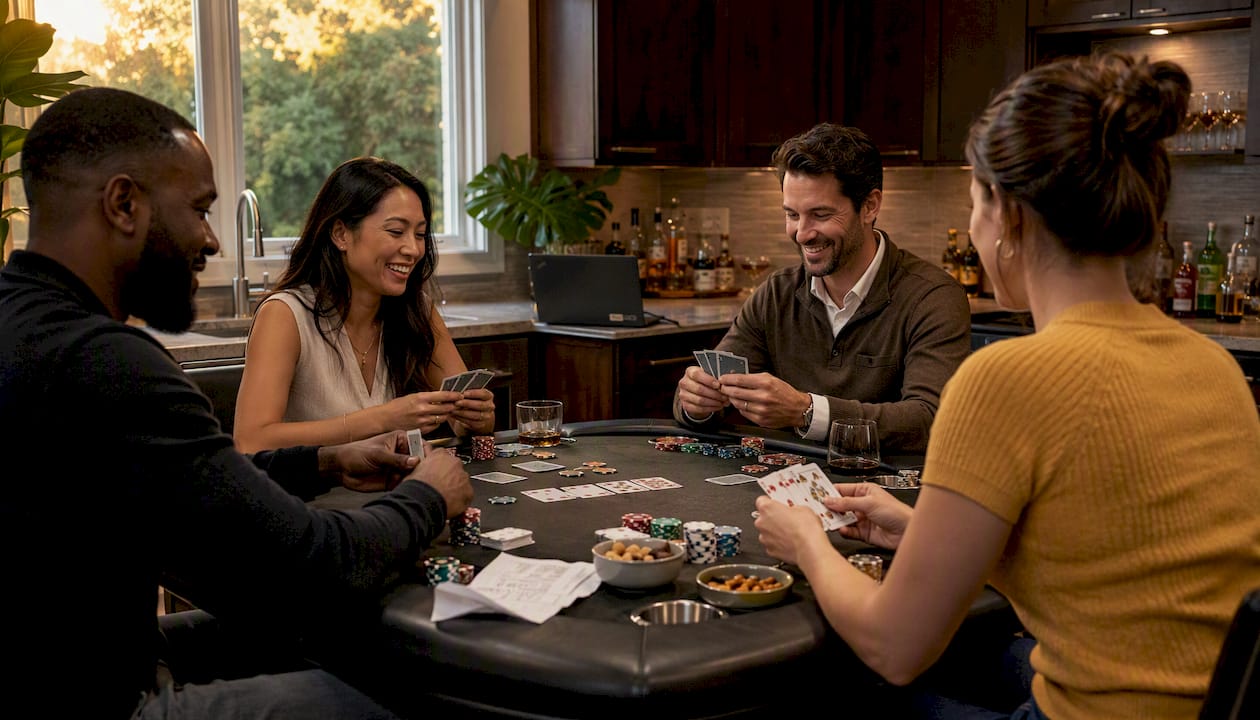
You can organise a smooth, enjoyable poker night at home in one evening by working through a short checklist, setting clear house rules, picking the right variant for your group, and using simple tools to manage blinds and payouts. A session lasting a few hours is the sweet spot for most home games, and the whole thing is far more manageable than it sounds.
Here is what you need to lock in before your guests arrive:
-
Player count and RSVPs: confirm numbers at least 48 hours ahead; a moderate number of players fills a table perfectly
-
Buy-in and rebuy policy: decide the amount, write it down, and share it in advance
-
Equipment: two decks, a 300-piece chip set, a dealer button, and a comfortable table
-
Variant and hand rankings: choose Texas Hold’em for a mixed group; print a cheat sheet for beginners
-
Food and drinks: finger food only, drinks station away from the table
-
Blind schedule: set levels of 15–20 minutes so the game finishes on time
-
Pacing plan: schedule a short break after the first few levels to keep energy up
Pro Tip: Load Shuffle Up and Deal! on your iPhone or iPad before guests arrive. The app handles your blind clock, seating assignments, and payout tracking automatically, so you can focus on hosting rather than arithmetic.
Table of Contents
What should you do before guests arrive?
A little preparation the day before saves a lot of scrambling on the night. Run through this list and you will start the game with confidence.
-
Confirm RSVPs and set a final player count. Six to eight players is the ideal range for a single table; beyond eight you will need a second table or a waiting list.
-
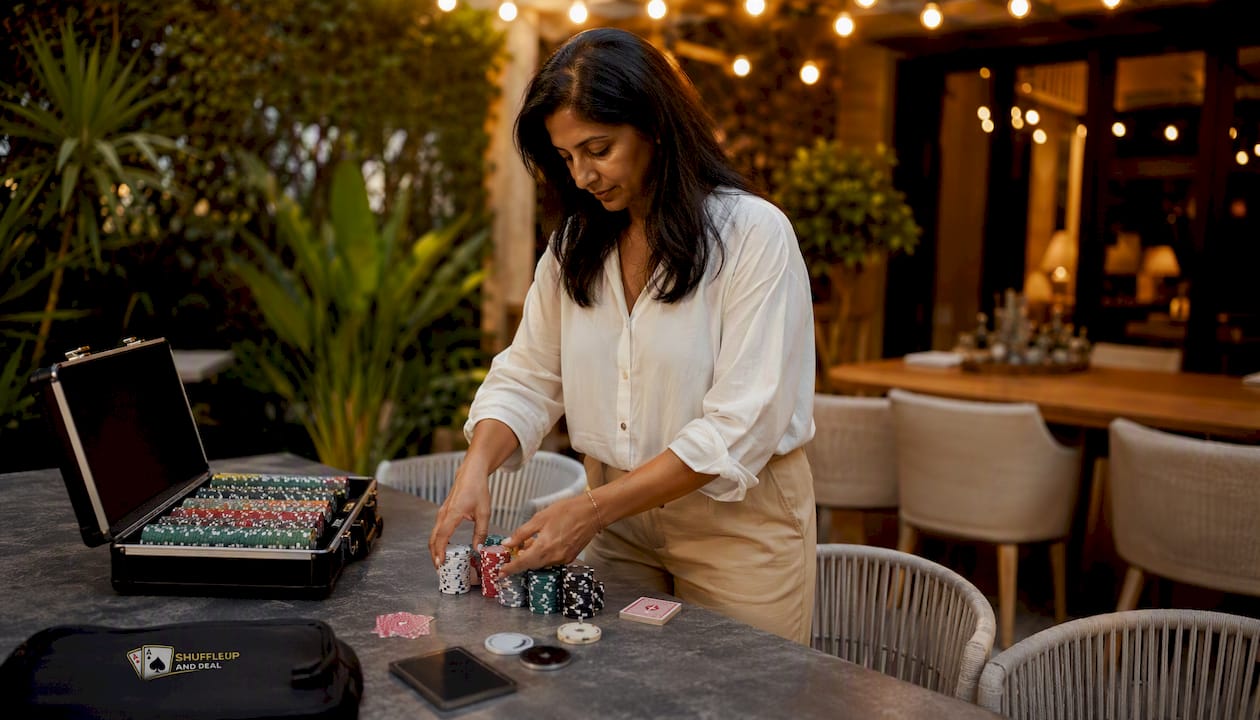
Prepare your chip set. A 300-piece set suits a table with a moderate-sized group of players well. Assign denominations by colour and count out starting stacks in advance.
-
Lay out two decks. Alternating decks between hands keeps the game moving because one can be shuffled while the other is dealt.
-
Test your playing surface. A felt-covered table is ideal; a tablecloth over a dining table works fine. Check that every seat has enough elbow room and a clear sightline to the board.
-
Set up your food and drinks station away from the table. Spills on cards or chips are a genuine nuisance.
-
Decide buy-in, rebuy policy and payout structure. Write it down and share it in your group chat before anyone arrives. No surprises.
-
Appoint a non-playing banker. This person handles all cash, records every buy-in and rebuy, and manages payouts at the end.
-
Load and test your timer. Whether you use a kitchen timer or Shuffle Up and Deal!, confirm the blind levels are set correctly before the first hand is dealt.
Pro Tip: Create a WhatsApp or group chat for your game and send the buy-in amount, start time, and a photo of the hand-rankings sheet the day before. Players who know what to expect arrive on time and ready to play.
How do you choose the right poker variant and house rules?
The variant you choose shapes the whole evening. Get it wrong and beginners fold after three hands; get it right and the table is still buzzing at midnight.

Texas Hold’em is the right call for most mixed groups. The rules are simple enough to explain in five minutes, the hand rankings are widely known, and there is enough strategy to keep experienced players engaged. Pot-Limit Omaha works well when everyone at the table has played before; the four hole cards create bigger swings and more action, but the added complexity will confuse newcomers. Seven-Card Stud is rarely worth the effort for a casual home game - the absence of community cards slows the pace and the betting structure is less intuitive.
Once you have chosen your variant, publishing house rules in advance prevents most disputes. Cover these points before the first hand:
-
Hand rankings (post a printed sheet on the table)
-
Blind amounts and structure
-
All-in procedure and side-pot rules
-
Show or muck policy at showdown
-
Rebuy and late-registration rules
-
Phone policy at the table
For beginners, run a short practice round with cards face-up before real money goes in. It takes ten minutes and eliminates the most common early-game confusion. You can also point newer players to the pot odds explained resource on the Shuffle Up and Deal! blog if they want to understand the maths behind betting decisions.
Enforce a strict no-IOU policy from the start. Rebuys are cash only, paid immediately. IOUs complicate settlement and, more importantly, they damage friendships.
What equipment do you need and how much will it cost?
You do not need a casino-grade setup to run a great home game. The table below covers the minimum kit and realistic budget options for UK hosts.
| Item | Budget option | Mid-range option |
|---|---|---|
| Playing cards (2 decks) | £5–£8 (standard plastic-coated) | - |
| Dealer button | Included in most sets | Separate weighted button, £3–£5 |
| Table surface | Felt tablecloth, - | Folding poker table top, - |
| Chairs | Dining chairs you already own | Padded folding chairs, - |
| Timer / blind clock | Free app (Shuffle Up and Deal!) | iPad on a stand for display |
For a 300-piece chip set, three to four colours give you enough denominations to run a clean tournament. A typical colour assignment for a buy-in looks like this:
-
White: low denomination chips
-
Red: medium denomination chips
-
Blue: higher denomination chips
-
Black: highest denomination chips
This gives each player a comfortable starting stack suitable for a blind structure of moderate duration.
Lighting matters more than most hosts expect. Bright, focused light over the table with the rest of the room kept dim creates a proper atmosphere and makes cards easy to read. A single adjustable lamp or a pendant light directly above the table does the job without any expense.
If you would rather not buy a table at all, some venues offer dedicated poker room hire for groups who want a proper setup without the storage problem.
How do you run the night from registration to final payout?
This is where most home games fall apart. Blind levels creep, rebuys go unrecorded, and nobody can agree on the final payout. A clear operational script fixes all of that.
Registration and the banker’s role
Collect buy-ins at the door. The non-playing banker records each player’s name and the amount paid in a simple ledger - a notepad works, a spreadsheet is better. Designating a single non-playing banker to manage cash and the ledger makes payouts transparent and reduces errors. No player should handle cash for another player.
Sample blind schedule for a session of moderate length
Set blinds to increase regularly with short levels and include a break midway. This approach reliably concludes a tournament with a typical number of players within a few hours.
Rebuys and late registration
Set a clear cut-off: rebuys allowed for the first three levels only, late registration closes at the end of level two. Cash only, paid to the banker immediately. Write every rebuy in the ledger.
Payouts
A simple top-three payout for a typical group and buy-in might distribute the prize pool proportionally among first, second, and third places. Settle in cash at the table as soon as the final hand is played. Shuffle Up and Deal! calculates payouts automatically and tracks the prize pool in real time, which removes any end-of-night arithmetic disputes.
What house rules and etiquette keep the game friendly?
Clear rules posted before the game starts are the single most effective way to prevent arguments. Technology-based rules assistants can resolve disputes quickly and reduce downtime when a tricky situation arises mid-game.
Core house rules to post before play
-
Action declarations are binding. Say “call”, “raise” or “fold” clearly; no take-backs.
-
No string bets. Declare your raise amount before moving chips.
-
All-in procedure. Announce “all-in” verbally, push chips forward in one motion.
-
Showdown policy. The last aggressor shows first; others may muck without showing.
-
Phones. Silent and face-down at the table during a hand.
Table etiquette
-
Arrive on time. A late player disrupts seating and slows the start.
-
Act in turn. Looking at your cards before the action reaches you is fine; acting out of turn is not.
-
Keep conversation friendly. Trash talk is fine in moderation; personal comments about play are not.
-
Handle a disruptive player calmly and privately. A quiet word from the host is almost always enough.
Dispute resolution
When a dispute arises: pause the hand, refer to the posted rules, and the host makes the final call. If the situation is genuinely ambiguous, Shuffle Up and Deal!'s built-in TDA rules assistant can interpret the rule and give a clear answer in seconds, which keeps the game moving and removes any sense of bias.
What food and drinks work best for a poker night?
The goal is food that tastes good, travels easily from a side table, and leaves no grease on the cards. Finger food and a separate drinks station protect cards and chips from spills and sticky fingers.
Food ideas that work well:
-
Mini sandwiches or wraps (cut small, easy to eat in two bites)
-
Crisps and dips in individual bowls rather than a shared bag
-
Chicken skewers or cocktail sausages on sticks
-
Cheese and crackers
-
Brownies or cookies for a sweet option
Keep the drinks station on a separate surface, ideally behind the players rather than beside the table. Cans are better than glasses for the table area if players insist on keeping a drink nearby.
Atmosphere:
Intentional design creates a professional feel without expensive kit. Bright, focused light over the table, room lights dimmed, and a low-volume instrumental playlist in the background are the three things that most reliably shift the mood from “dinner party” to “proper game”. Jazz, lo-fi hip-hop, or a dedicated poker playlist on Spotify all work. Keep the volume low enough that players can hear each other clearly across the table.
Schedule a five-minute break after level five. Players stretch, refill drinks, and return more focused. The game runs better for it.
Pro Tip: Set the room temperature slightly cool rather than warm. A warm room makes players drowsy by level four, especially after food. Around 19–20°C is the sweet spot for sustained concentration.
How do you keep the game fair and prevent cheating?
Most home games are played entirely on trust, and that is fine. A few simple procedures protect that trust without making the evening feel like a security audit.
-
Rotate two decks. One deck is in play while the other is being shuffled by the next dealer. This speeds up the game and means no single deck is ever out of sight for long.
-
Use a cut card. After the shuffle, offer the deck to the player on the dealer’s right for a cut before dealing.
-
Keep the dealer button moving correctly. A misplaced button is the most common source of blind disputes.
-
Limit spectators during hands. A non-playing friend watching over a player’s shoulder creates an unfair information advantage, even unintentionally.
-
Watch for collusion. Two friends who consistently check to each other on the river when a third player is all-in is a red flag. Address it privately and early.
-
Cash handling. The banker records every transaction. No player touches the prize pool. No IOUs, ever. Requiring immediate cash payment for rebuys removes the most common source of end-of-night disputes.
If a chip count discrepancy arises mid-game, pause the hand, recount the relevant stacks at the table, and document the result in the banker’s ledger. Resolve it before the next hand is dealt.
Pro Tip: Take a photo of the chip counts and ledger at the break. If a dispute arises in the final levels, you have a timestamped record to refer back to.
How does Shuffle Up and Deal! make hosting easier?
Managing blind levels, seating, rebuys and payouts manually while also trying to be a good host is genuinely difficult. Shuffle Up and Deal! handles the operational side so you can focus on the game.
Features home hosts use most:
-
Blind clock with automatic level progression. Set your schedule once; the app advances levels and alerts players automatically.
-
Smart seating algorithms. The app assigns seats and balances tables as players bust out, removing any awkward manual reshuffling.
-
Player registration. Log every player and their buy-in at the start; the app tracks the prize pool from that moment.
-
Rebuy and late-registration controls. Record rebuys in the app and the prize pool updates instantly.
-
Payout tracking. The app calculates the correct payout for each finishing position automatically.
-
Live share links. Players who have busted out can follow the tournament on their phones via a live link, which keeps them engaged rather than restless.
-
ICM deal calculator. When two or three players want to make a deal at the final table, the in-app ICM calculator gives a fair split based on chip counts in seconds.
-
AI rules assistant. When a ruling is disputed, the app’s rules assistant interprets the situation and gives a clear answer.
Quick-start sequence for your first night
-
Open Shuffle Up and Deal! and create a new tournament event.
-
Enter your blind schedule (or use a preset template).
-
Register each player as they arrive and log their buy-in.
-
Start the blind clock when the first hand is dealt.
-
Share the live tournament link with players and spectators.
-
Record rebuys in the app as they happen; the prize pool updates automatically.
-
When the final hand is played, tap through to the payout screen and settle in cash.
Pro Tip: The app saves the most time during the late stages of a rebuy tournament, when blind levels are short, multiple players are re-entering, and the prize pool is changing quickly. That is exactly when manual tracking breaks down. Let the app handle it.
Copy-and-paste templates for your home game
Sample blind schedule (3–4 hour event, 6–8 players)
| Level | Small blind | Big blind | Duration |
|---|---|---|---|
| 1 | 100 | 200 | 20 min |
| 2 | 200 | 400 | 20 min |
| 3 | 400 | 800 | 20 min |
| 4 | 800 | 1600 | 20 min |
| 5 | 1500 | 3000 | 15 min |
| BREAK | 5 min | ||
| 6 | 3000 | 6000 | 15 min |
| 7 | 6000 | 12000 | 15 min |
| 8 | 10000 | 20000 | 15 min |
Chip breakdown for a 300-piece set (30,000 stack size)
| Colour | Denomination | Qty per player | Total value per player |
|---|---|---|---|
| White | 100 | 10 | 1000 |
| Red | 500 | 8 | 4000 |
| Blue | 1000 | 10 | 10,000 |
| Black | 5000 | 3 | 15,000 |
See the poker chip breakdown guide on the Shuffle Up and Deal! blog for denomination options across different buy-in levels.
Sample house rules (copy into your group chat)
Tonight’s rules: Texas Hold’em, £20 buy-in, rebuys allowed for the first three levels (cash only). Blinds increase every 15–20 minutes. Action declarations are binding. No string bets. Phones silent and face-down during hands. The host’s ruling is final. No IOUs. Good luck.
Simple payout table (8 players, £20 buy-in, £160 prize pool)
| Finishing position | Payout |
|---|---|
| 1st | £80 (50%) |
| 2nd | £48 (30%) |
| 3rd | £32 (20%) |
Key takeaways
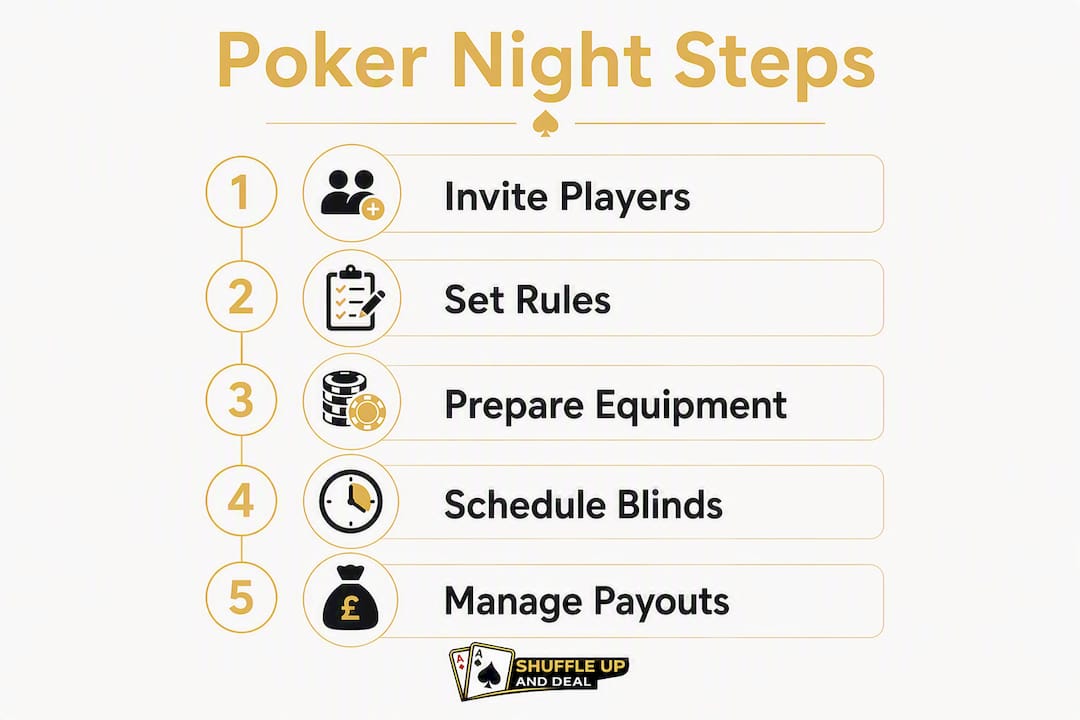
A well-organised home poker night comes down to five things: a confirmed player list, clear written rules shared in advance, a non-playing banker, a timed blind schedule, and a plan for food and atmosphere that keeps players comfortable throughout.
| Point | Details |
|---|---|
| Confirm numbers early | Six to eight players fills one table cleanly; confirm RSVPs 48 hours ahead to set chip stacks correctly. |
| Non-playing banker is non-negotiable | A dedicated banker who records every buy-in and rebuy prevents end-of-night disputes and protects friendships. |
| No IOUs, ever | Rebuys are cash only, paid immediately; debt complicates settlement and damages relationships. |
| Blind levels every 15–20 minutes | A schedule with blind increases every 15–20 minutes and a 5-minute break after level five reliably finishes a six- to eight-player game in 3–4 hours. |
| Shuffle Up and Deal! handles the operational load | Shuffle Up and Deal! automates blind progression, seating, rebuy tracking and payouts so the host can focus on the game. |
The habits that separate good home game hosts from great ones
Most hosting advice focuses on the mechanics: chips, blinds, food. Those matter, but the hosts whose games run for years rather than fizzling out after three sessions tend to share a different set of habits.
The single biggest factor is
. A recurring date, same day of the month, same rough time, with a calendar invite sent a week ahead, does more for attendance than any amount of effort on the night itself. People plan around a fixture; they forget about a one-off. If you want a game that runs for years, treat it like a standing appointment.
Rotating the host role is underrated. When one person hosts every time, they carry all the setup burden and eventually burn out. Sharing the responsibility across two or three regulars keeps the game fresh and spreads the cost. The host who ran it last month becomes the most enthusiastic guest this month.
Soft skills matter more than most hosts admit. Managing a dominant player who talks over others, or a newcomer who plays too slowly, requires a light touch. Address it at the break, not mid-hand, and frame it as keeping the game fun for everyone rather than a personal criticism. The tone you set as host ripples through the whole table.
Finally, resist the urge to make the game hyper-competitive. The players who keep coming back are not always the best players; they are the ones who had a good time. A social atmosphere where a bad beat gets a laugh rather than a lecture is worth more than a perfectly optimised blind structure. For hosts who want to scale beyond a single table into a proper league, Shuffle Up and Deal!’s league season planning tools and leaderboards give you the infrastructure to do it without the admin overhead.
Run your next home game with Shuffle Up and Deal!
Tracking blind levels on a kitchen timer, scribbling rebuys on a napkin, and arguing over the final payout are problems every home host has faced. Shuffle Up and Deal! removes all three. The app gives you a professional blind clock that advances automatically, smart seating that rebalances as players bust out, and a live prize pool that updates with every rebuy, all from your iPhone or iPad.
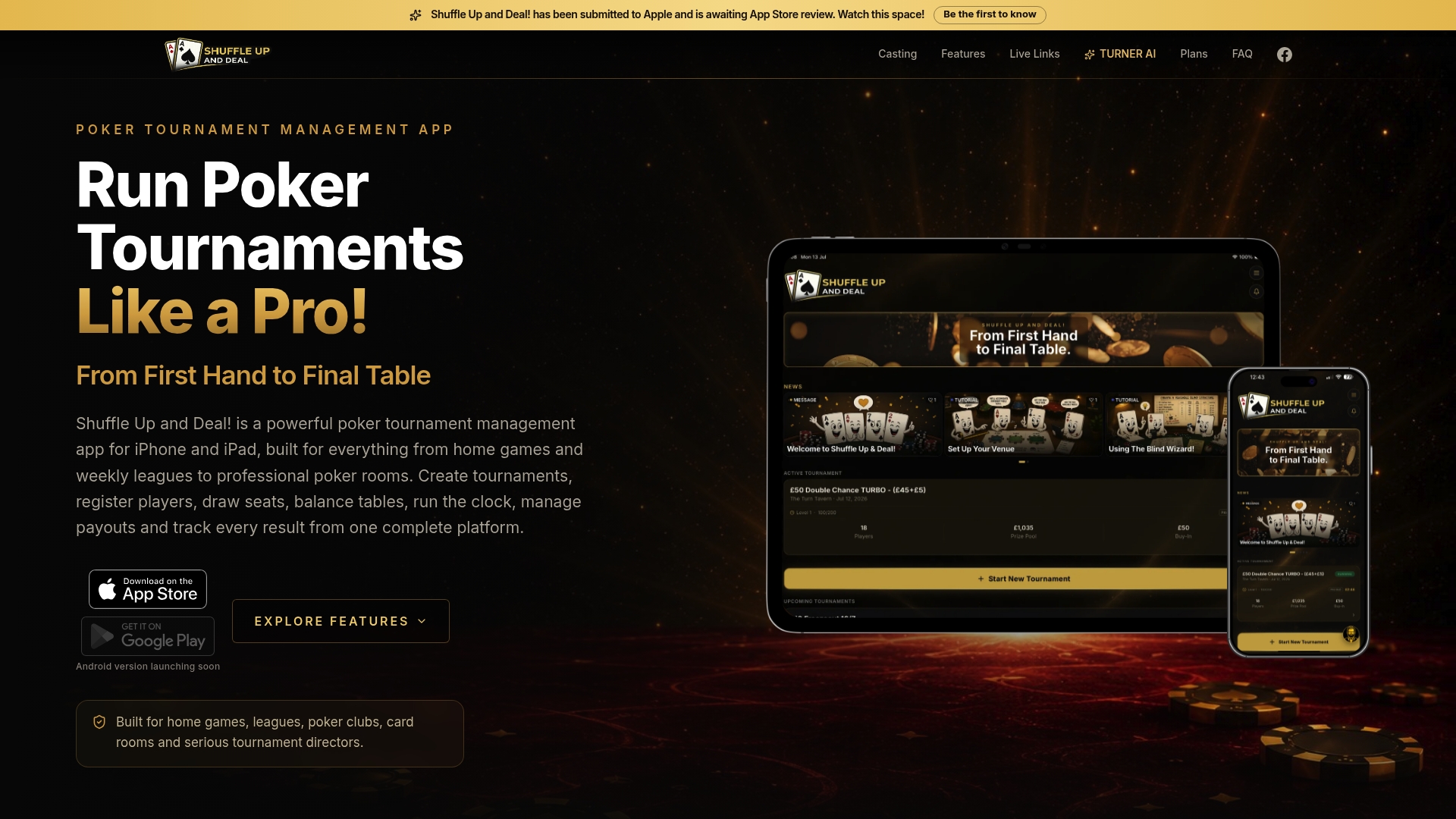
Getting started takes about five minutes. Create your tournament, enter your blind schedule, register players as they arrive, and start the clock. Share the live tournament link so busted players can follow the action on their phones. When the final hand is played, the payout screen tells you exactly who gets what.
Whether you are running your first home game or your fiftieth, Shuffle Up and Deal! gives you the tools to run it cleanly, quickly, and without disputes. Try it free and see how much smoother your next night runs.