
Poker Tournament Management App
Run Poker Tournaments Like a Pro!
From First Hand to Final Table
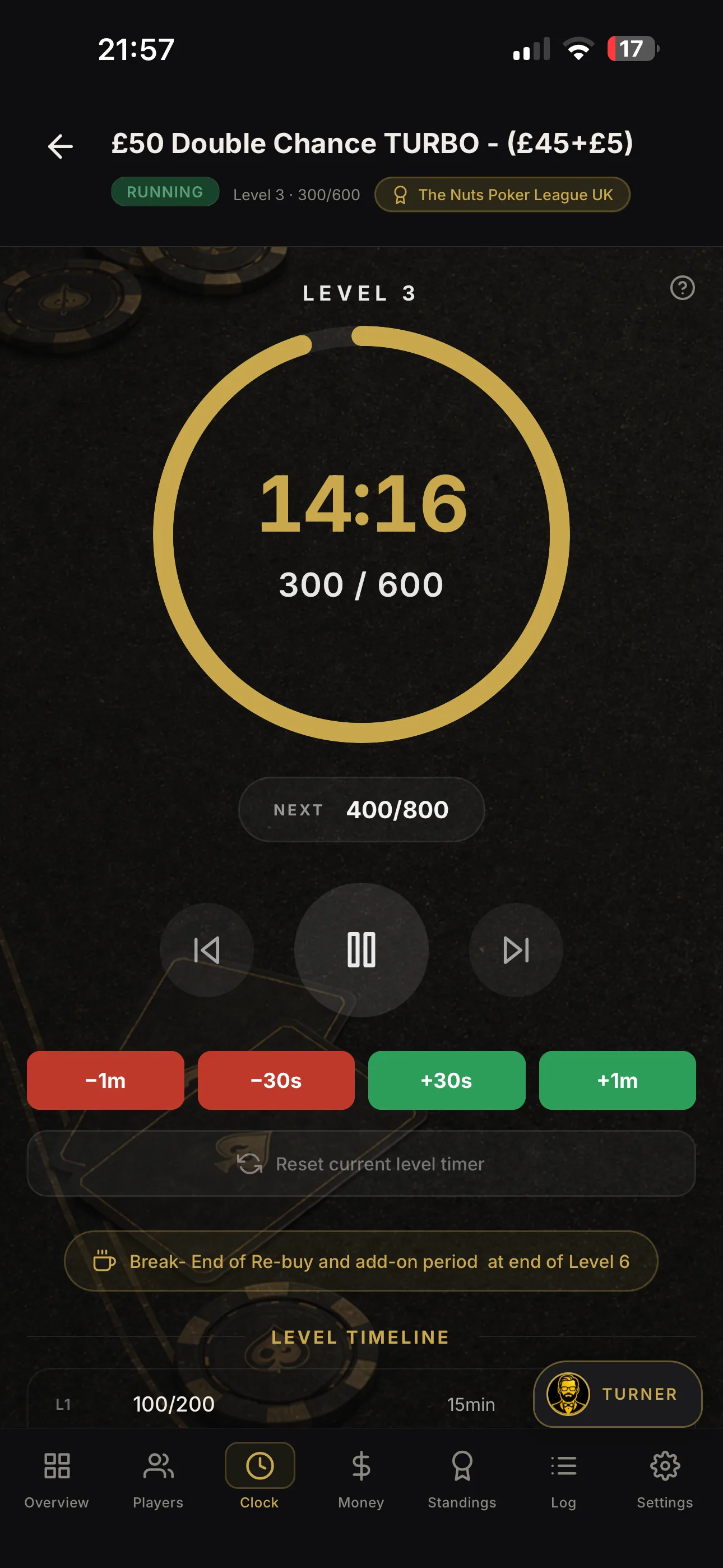
Seat draws, table balancing, the clock, payouts and league standings: Shuffle Up and Deal! runs the whole night from your iPhone or iPad.

Shuffle Up and Deal: Poker Tournament Terms Every Director Should Know
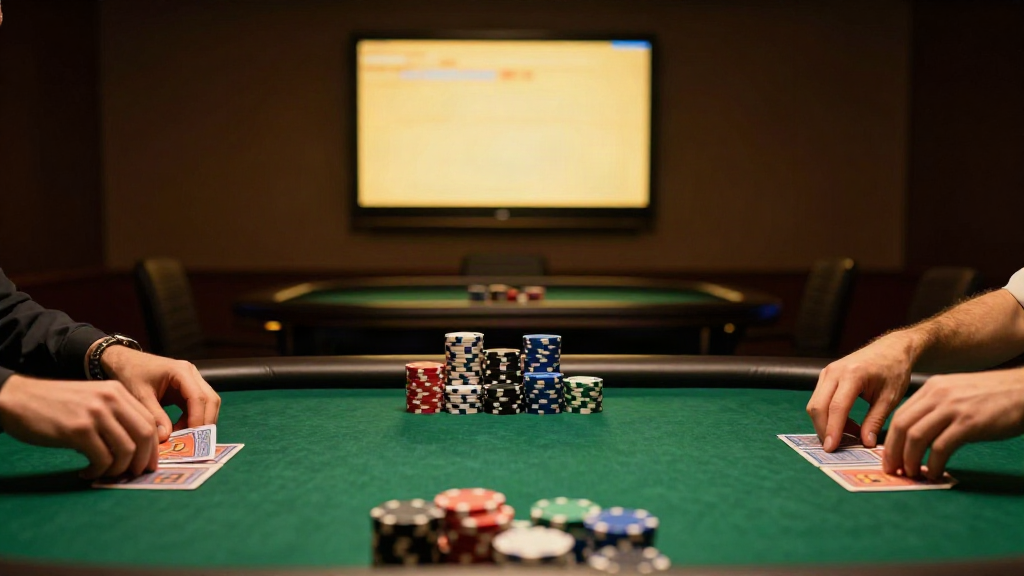
You shout "shuffle up and deal", the first hand goes out, and for the next four hours you stop being a player and start being the person everything depends on. If you run tournaments, you already know the room speaks a language of its own. Blinds, bust-outs, the rail, the stone bubble - terms thrown around casually by players and quietly searched for by the directors trying to keep the night on track. This is the insider glossary you wish came in the box.
What does "shuffle up and deal" actually mean?
It is the traditional call that starts a tournament or restarts play after a break. The dealer shuffles, the cards are cut, and the first hand of the level is dealt. For a tournament director it is a small but useful moment of ceremony: it signals that the clock and the table are in sync and that every player knows the level is live. Say it once, clearly, and the room settles.
The core terms every director needs on day one
Blinds and levels
Blinds are the forced bets posted by the two players to the left of the button each hand. A level is the period of play at a fixed blind amount before they increase. Keeping levels moving on time is the single biggest thing you control in a tournament - and it is the reason a reliable poker blind timer matters more than almost anything else in the room.
Re-entry, rebuy and late registration
A rebuy lets a player buy more chips after busting, usually within a set period. Re-entry lets a player who has been eliminated buy back in as a fresh entry. Late registration is the window during which new players can still join the tournament after it starts. Get any of these three wrong and you create arguments about chip counts and fairness that are almost impossible to settle later.
Seat draw
The seat draw is how you assign players to tables and seats. Done with paper and a bag, it is slow, hard to prove fair and awkward when someone disputes it. Done properly, it is instant, transparent and repeatable - players see their seat, you move on.
Table balancing, breaking tables and the draw
As players bust, tables empty out and you have to move players from full tables to short ones, or break a table entirely and redraw. Balancing tables fairly - without ever moving a player into the big blind twice - is one of the fiddliest jobs in tournament management. Do it by hand and it eats your attention at exactly the moment you need it most.
Bust-out
A bust-out is a player losing their last chip and being eliminated. Every bust-out changes the numbers: the seats, the average stack, the payout ladder and the "players remaining" figure on the display. If those numbers do not update the moment a player leaves, the whole room notices.
The bubble, the stone bubble and ITM
The bubble is the point where the next player eliminated misses the paid places. The stone bubble is the unlucky player who finishes immediately outside the money. ITM means in the money - the players who finish in the paid positions. Announce the bubble clearly and you turn a tense moment into a moment players respect.
The rail and the final table
The rail is the area where eliminated players and spectators watch the action. The final table is the last table of the tournament, where the biggest money and the title are decided. Balancing and managing the final table - stacks, blinds, payouts - is the part of the event that everyone remembers.
Payouts and the payout ladder
The payout ladder is the schedule of how much each finishing position earns. Working it out by hand, on the fly, with a shrinking prize pool and players asking questions, is where mistakes creep in. Directors who get this right are the ones players trust with bigger buy-ins.
League standings
If you run a recurring league, standings are the cumulative points players earn across events. Tracking them in a spreadsheet works until it does not - and the week it breaks is the week people stop trusting the league.
Why the jargon matters to how you run the room
Every one of these terms is really a job. A blind level is a timer to run. A bust-out is a set of numbers to update. A payout is a calculation to get right. A seat draw is a process to prove fair. When you are juggling a clock, a spreadsheet, a paper draw and a calculator, each term is a small stress point.
That is the difference between terminology you explain to players and software that understands it. A purpose-built poker tournament management app handles the jargon the way a tournament director thinks about it: levels that advance on their own, seat draws that happen in a tap, tables that balance without double big blinds, and payouts worked out before you announce them.
Frequently asked questions
How do I run a home poker tournament fairly?
Set clear blind levels and stick to them, run a proper seat draw, keep the numbers visible to everyone, and settle payouts from a written ladder rather than a rough guess. The moment players can see the clock, the seats and the prizes, disputes dry up.
Do I need a poker blind timer, or can I use a stopwatch?
A stopwatch tells the time. It does not tell the room the level, the blinds, the antes, the next level or how long is left. Directors who run more than a single table need a clock every player can see - ideally cast to a TV - so there is one source of truth.
Is there real poker tournament software for iPhone?
Yes. Shuffle Up and Deal! runs a full tournament from your iPhone or iPad: registration, seat draw, blind clock, table balancing, bust-outs, payouts, league standings and a live player display you can cast to a screen. No laptop, no separate timer, no paper draw.
What is the stone bubble?
The stone bubble is the player eliminated one place before the paid places - the one who just missed the money. It is the most dramatic line in a tournament and the reason the bubble period is handled carefully once play stops.
How do I balance tables without upsetting players?
Move from the fullest table to the shortest, never put a player into the same seat position twice in a row, and make the move visible and explainable. Good software tracks the smaller details - like who has already paid a big blind - so you never have to apologise for an unfair move.
Run the room like you know what you are doing
The terms above are the vocabulary of live tournament poker, but knowing them is only half the job. The other half is having the systems behind them that keep the night fair, fast and professional. Shuffle Up and Deal! was built by people who run tournaments, for people who run tournaments - so the clock, the seat draw, the balance, the bubble and the payouts are handled the way you would handle them yourself, if you had four hands.