Poker Tournament Management App
Run Poker Tournaments Like a Pro!
From First Hand to Final Table
Seat draws, table balancing, the clock, payouts and league standings: Shuffle Up and Deal! runs the whole night from your phone or tablet.


Players and TDs: Run Hand for Hand Fairly With Live Bubble Tools
Hand for hand is a tournament protocol that synchronises play across every remaining table as the bubble approaches, so no player faces an unfair pace disadvantage. It kicks in once the field is one elimination away from the money, forcing all tables to complete the same hand before anyone deals a new one. The purpose is simple: fairness, and stopping the clock becoming a weapon.
TL;DR:
- Hand for hand begins when players are one elimination away from cashing, typically calculated precisely based on payout structures and live elimination data.
- During this phase, all tables play one hand at a time, stopping simultaneously until the slowest table completes its hand to ensure fairness.
- Tournament Directors must carefully announce, track, and enforce the rule, with software tools like Shuffle Up and Deal! simplifying synchronization and reducing disputes.
- The slower pace of hand for hand significantly extends tournament duration, making advanced planning and scheduling adjustments essential.
- Enforcement of hand for hand requires strict procedures and often stricter penalties for infractions like stalling, angle-shooting, or miscommunication.
Table of Contents
- What hand for hand poker actually means at the table
- When hand for hand starts: bubble math and payout thresholds
- Procedure and TD responsibilities during hand for hand
- How hand for hand changes strategy on the bubble
- Common disputes and how they get enforced
- How tournament software supports hand for hand
- Where the hand for hand rule actually came from
- Hand for hand versus regular tournament play
- Why hand for hand slows tournaments and how to plan for it
- How the rule differs across tournaments and platforms
- Best practices from experienced tournament directors
- Try Shuffle Up and Deal! for cleaner bubble management
- Sources
What hand for hand poker actually means at the table
Hand-by-hand poker is not a betting rule. It is a pacing rule, and the distinction matters more than most players realise until they are sat on the bubble watching a neighbouring table finish its hand while yours grinds through a three-way side pot.
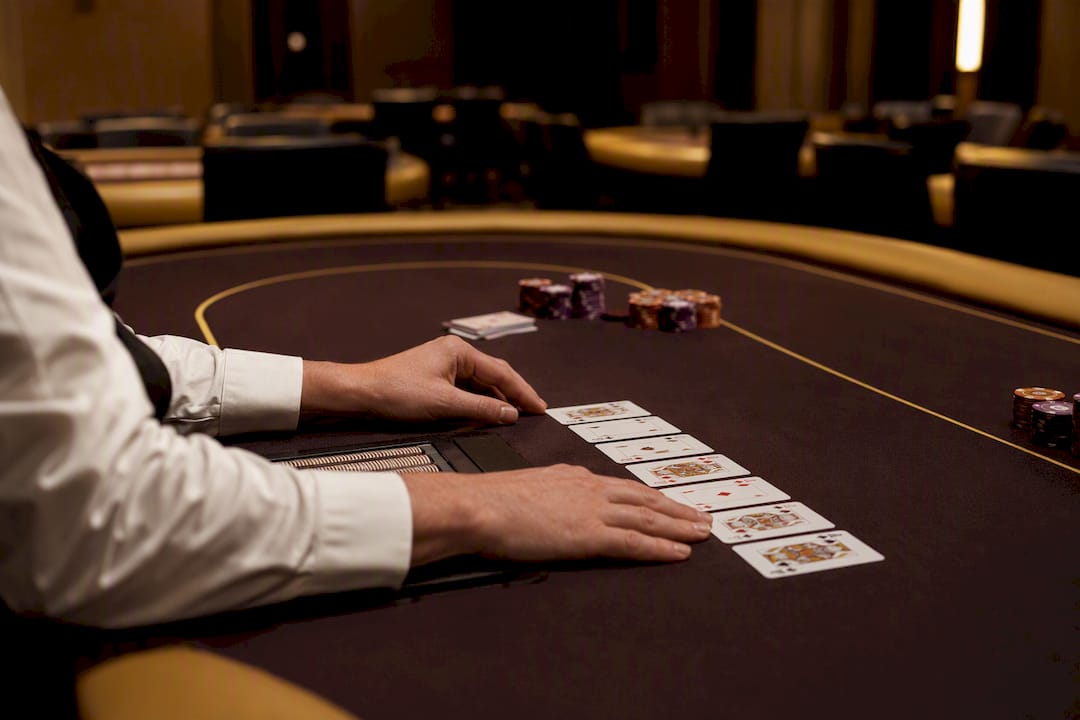
Once hand for hand is called, every table plays exactly one hand, then stops. Nobody deals a new hand until all other tables have finished theirs. Dealers hold their cards, players wait, and the Tournament Director tracks completion table by table. Only when the last table folds, calls, or busts a player does the next round of hands begin across the whole room. This repeats hand after hand until someone is eliminated and the money bubble bursts.
The rationale is about protecting the field from an accident of geography. As PokerStrategy’s glossary puts it, the protocol synchronises play so that players at faster tables never gain an edge simply because their dealer moves quicker or their table sees fewer big pots. Without it, a short stack at a slow table could get outraged to the bubble by identical stacks at a brisk one, through no fault of their own strategy.
You will find hand for hand used in:
- Multi-table tournaments (MTTs) of any size, live or online
- Sit & Go tournaments once they reach a bubble-adjacent stage
- Large live festivals, where dozens of tables must stay in lockstep
- Satellite events, where the “money” is a seat rather than cash
The bigger the field, the more this matters. A 500-entry tournament might run 50 tables simultaneously, and even a small variance in hand speed between tables compounds quickly. Hand for hand removes that variance entirely, at the cost of a slower bubble.
When hand for hand starts: bubble math and payout thresholds
Hand for hand does not start on a whim. It starts at a specific, calculable point: one elimination away from the number of paid places, commonly called being “one off the money” or “one table away from ITM” (in the money).
Working out when that moment arrives is straightforward arithmetic, though it catches new organisers out surprisingly often:
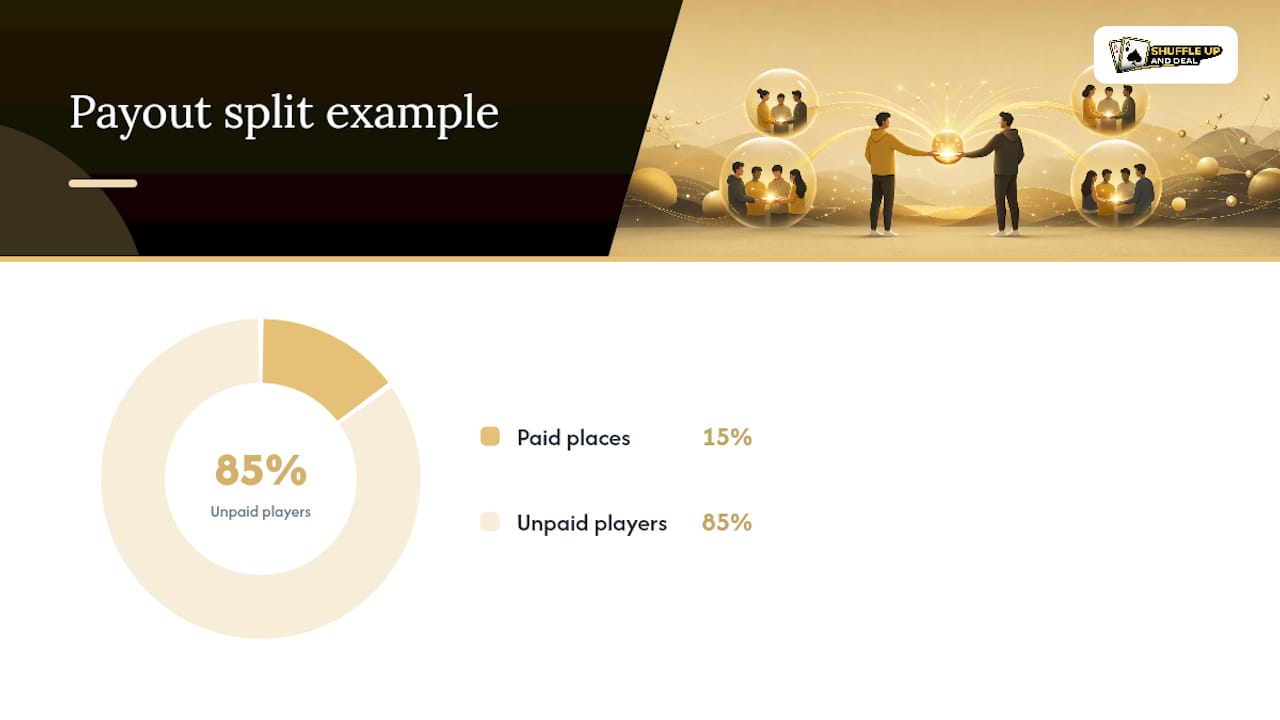
- Count total entrants and confirm the paid-places number from the published structure, which for major festivals typically covers roughly the top 10 to 15% of the field.
- Subtract paid places from players remaining. If 118 players remain and 117 places pay, you are one elimination from the bubble bursting, and hand for hand should already be active.
- Watch the trigger point, usually set a handful of players before the exact threshold (many rooms activate it three to five players out) so tables can be balanced and slowed in an orderly way rather than reactively.
- Confirm with the room’s tournament management software, which tracks live eliminations and payout tiers automatically rather than relying on a TD doing mental arithmetic mid-rush.
Take a 100-player field paying the top 15 places. At 16 players left, spread across two tables of eight, hand for hand is called. Every hand from that point runs in lockstep until player 17 busts and the remaining 15 are guaranteed a payout. In a bigger structure, the same principle applies as the bubble is approached, with many tables needing to stay synchronised at once.
Payout shape affects how tense this stretch feels. A flatter structure that pays more places spreads the bubble tension thinner; a top-heavy one, common in high-roller events, makes the bubble brutal because min-cash barely beats elimination in equity terms, a point RiverOdds covers well when breaking down typical payout percentage splits.
Procedure and TD responsibilities during hand for hand
Running a clean hand for hand stretch is one of the harder operational jobs a Tournament Director does, because it requires precision under pressure with dozens of players watching every decision.
The standard sequence looks like this:
- Announce clearly. The TD calls hand for hand over a microphone or floor announcement, states the exact table count and payout threshold, and confirms it on the tournament clock or display.
- Freeze the clock. Blind levels typically pause or the clock is held between hands so no table is rushed by a level change mid-bubble.
- Synchronise deals. No table starts a new hand until every table’s floor person or dealer confirms completion, usually via a signal or a raised hand.
- Track eliminations live. The TD or floor staff log each bust-out the moment it happens, because the whole bubble hinges on knowing precisely when it bursts.
- Balance and remove tables. When a table drops below full strength, players move to keep counts even, and once the elimination arrives, the shortest table is broken down without disrupting hand counts elsewhere.
According to PokerNews’ definition of hand for hand, the TD’s core duty is holding every table until the slowest one finishes, a rule that sounds simple but demands constant floor communication once you have more than four or five tables in play. In practice, TDs combine live hand counts with elimination logs to timetable removals carefully, so pulling a table never changes how many hands the remaining tables must play.
Enforcement matters as much as procedure. Stalling, deliberately taking excessive time over a decision to delay your table’s finish, is the most common infraction, and most rulebooks treat it as a penalty-worthy offence, ranging from a verbal warning to a timed penalty or hand-forfeit in repeat cases.
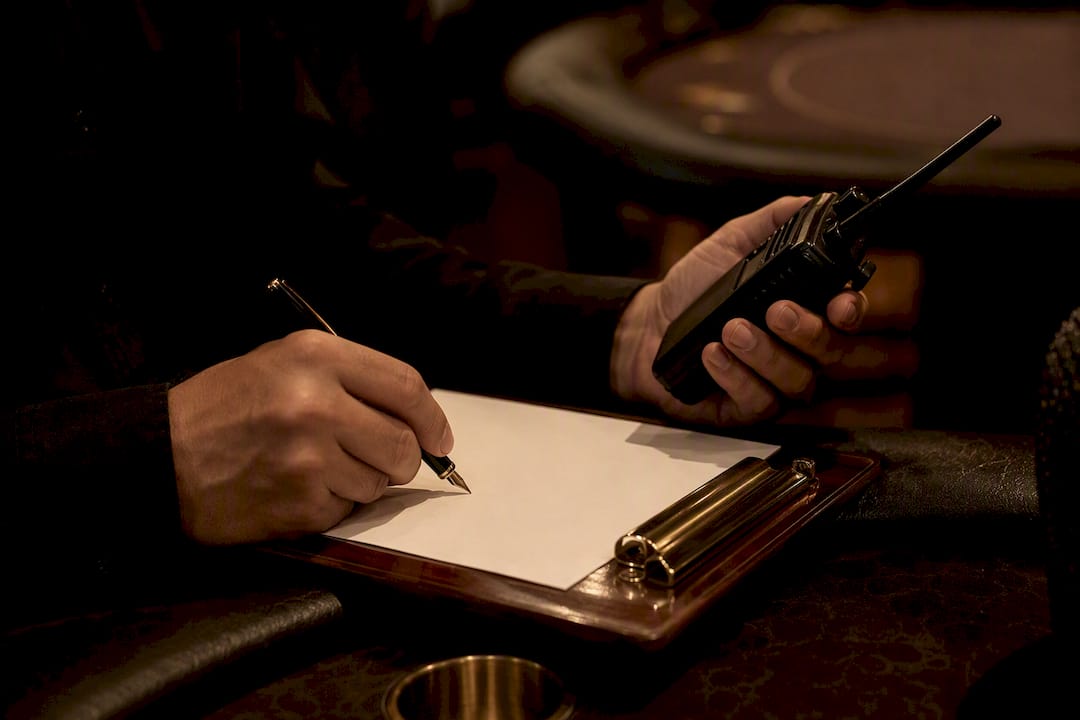
Pro Tip: If you are directing, station a runner or floor person at each table during hand for hand specifically to relay “table finished” status back to the podium. Waiting for players to shout across the room causes more disputes than the stalling itself.
How hand for hand changes strategy on the bubble
Hand for hand does not just slow the tournament down. It changes the decisions you make with your stack, because everyone at every table knows exactly how much scrutiny the next few hands will carry.
For short stacks, the calculus tightens. You know eliminations are being watched closely and that busting means missing a min-cash by one place, so shove/fold ranges often narrow around this stretch. Many short stacks tighten up further than pure push/fold charts suggest, purely to avoid being the unlucky elimination that bursts the bubble for everyone else while a rival ladders into the money untouched.
Big stacks, by contrast, gain leverage precisely because of that bankroll management betting caution. A well-timed shove against a mid-stack who is desperate to survive the bubble can pick up chips with a wide range, since fold equity spikes when opponents are playing to survive rather than to win.
ICM (Independent Chip Model) considerations sharpen everything during this stretch:
- Min-cash equity often outweighs marginal chip gains, so thin value shoves that are correct in a cash game can be mistakes near the bubble.
- Doubling up a short stack rarely helps your ICM as much as raw chip count implies, since eliminating a rival directly moves you closer to the money.
- Timing matters: a call that is fine two hands before the bubble bursts can be a disaster one hand before it, because the equity of the money jump shifts hand by hand.
Payout structure shape drives how sharp these effects feel. Flatter payout curves soften the bubble because the gap between min-cash and elimination is smaller, while top-heavy structures common at high-roller festivals make the bubble one of the tensest stretches in the entire event, a contrast The Hendon Mob’s analysis of payout structures lays out clearly across major series. If you want the maths behind these calls, our breakdown of poker tournament bubble stack rules and this guide to pot odds are useful companions to ICM thinking under hand for hand pressure.
Common disputes and how they get enforced
Hand for hand concentrates every organisational weakness a tournament has into one stretch, which is why disputes cluster here far more than during normal play.
The most frequent infractions are:
- Stalling, taking deliberately long over routine decisions to delay your table finishing.
- Angle-shooting on timing, acting out of turn or claiming a decision was made before it was, to speed up or slow down a hand’s resolution.
- Miscommunication between tables, where one floor person signals “finished” before a hand is genuinely complete.
- Disputed all-in timing, particularly when two tables have simultaneous all-ins that could affect bubble order.
TDs typically investigate by cross-referencing dealer accounts, any available table timers, and witness statements from players at the table in question. Most professional rulebooks escalate sanctions from a verbal warning through a timed penalty (missing one or more hands) to disqualification for egregious or repeated stalling.
Players can protect themselves with a few habits: call the floor immediately rather than arguing with an opponent directly, note the approximate time of any disputed action, and ask the TD to confirm the ruling out loud so it is on record. Clear, calm reporting resolves disputes far faster than a heated exchange at the felt.
How tournament software supports hand for hand
Running hand for hand on paper, with a clipboard and a shouted announcement, is how disputes happen. Software closes most of the gaps.
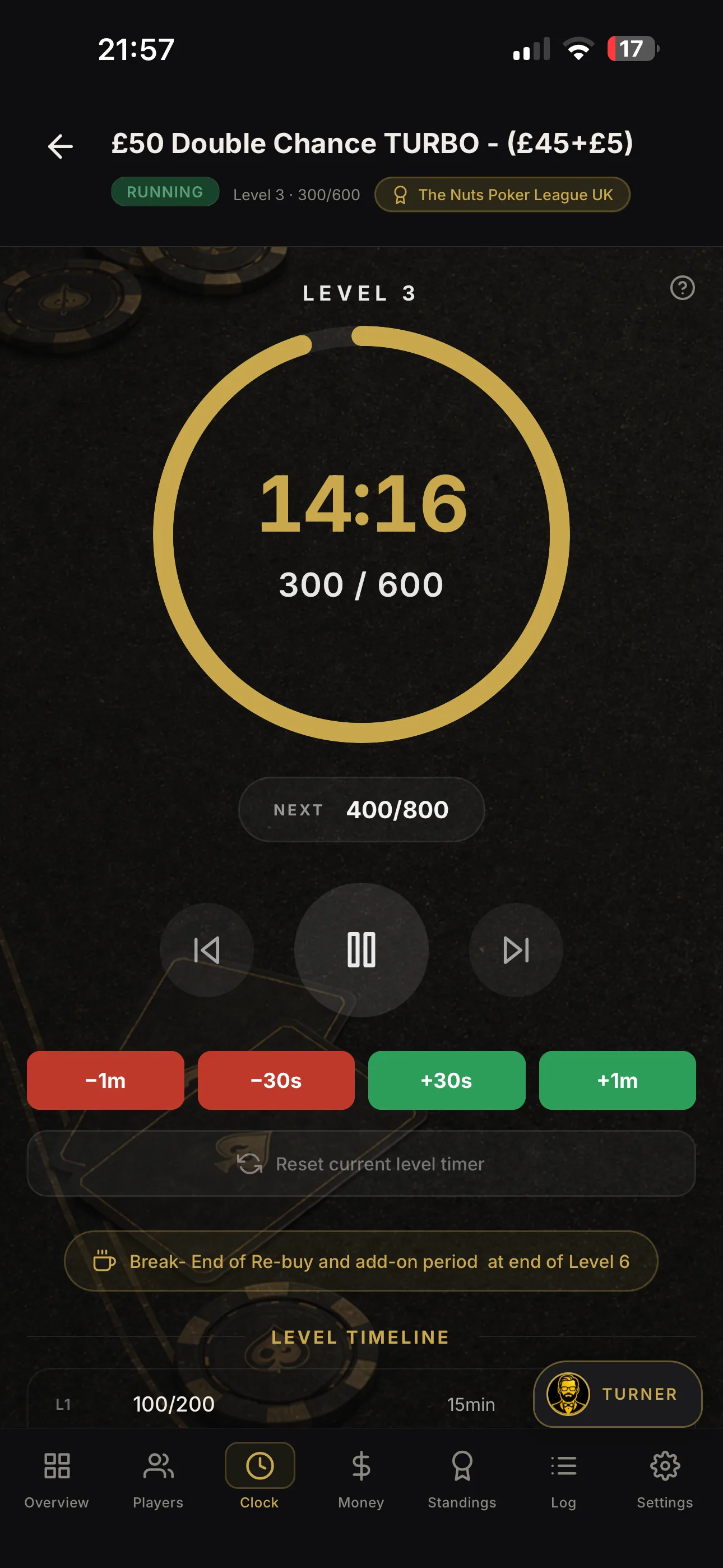
Shuffle Up and Deal! builds bubble management directly into the tournament flow rather than treating it as a manual add-on. The features that matter most here:
- Automatic bubble calculation, tracking entrants, eliminations, and paid places live so the exact hand-for-hand trigger point is never guesswork.
- Live clock control, letting the TD freeze or hold blind levels the instant hand for hand is called, synchronised across every connected device.
- Smart seating and table balancing, so when a table breaks during the bubble, players redistribute without disturbing hand counts elsewhere.
- Live share links, giving players and rail-siders a real-time view of eliminations and payout status without crowding the podium for updates.
These features reduce ambiguity precisely where it causes the most friction: nobody has to ask “are we definitely one off the money?” because the app answers that automatically, and nobody has to wonder whether another table has actually finished, because the clock will not release until it has.
Pro Tip: Trigger hand for hand inside the app the moment your player count crosses the calculated threshold, then watch the elimination feed rather than relying on floor shouts. It keeps every table’s status visible from one screen, which is invaluable once you are running more than six or seven tables.
Where the hand for hand rule actually came from
Hand for hand is not a modern invention bolted onto poker by television production needs. It grew out of the practical reality of running large multi-table events long before digital tracking existed.
As tournament poker scaled through the 1980s and 1990s, from small card-room fields into hundreds-strong events, organisers noticed a recurring problem: tables dealt at different speeds, and faster tables reached the bubble threshold before slower ones. That created a structural unfairness that had nothing to do with skill, since a player’s fate depended partly on which dealer they happened to draw.
Tournament Directors, largely through associations formalising rules across venues, adopted synchronised bubble play as the fix. Rather than letting the fastest table effectively decide who got eliminated first, every table would be held to the same hand count once the bubble was close. Wikipedia’s summary of hand for hand notes the method’s core purpose has stayed consistent since: it is fundamentally a synchronisation tool, and even now produces rare edge cases such as simultaneous multi-table all-ins that create genuine timing ties.
The rule spread from live card rooms into online platforms as multi-table online tournaments grew, and software made enforcement far easier than a floor full of shouting humans ever could.
Hand for hand versus regular tournament play
The gap between hand for hand and ordinary tournament play is entirely about pacing, not rules of poker itself. Betting structure, blind levels, and hand rankings never change.
In regular play, each table deals continuously and independently. A fast table might play forty hands an hour while a slower one manages twenty-five, and nobody intervenes, because the outcome differences even out over the course of a long tournament.
Hand for hand removes that independence entirely. Every table plays one hand, then holds. The next hand across the entire tournament floor starts only when the slowest table finishes. This makes the tournament as a whole considerably slower during the bubble stretch, sometimes dramatically so if one table hits a complicated all-in decision or a lengthy floor ruling.
The other core difference is scrutiny. During regular play, a borderline angle-shoot or slow decision draws mild irritation. During hand for hand, the same behaviour holds up dozens of other tables simultaneously, which is exactly why penalties for stalling tend to be enforced far more strictly in this window than at any other point in the event.
Why hand for hand slows tournaments and how to plan for it
Hand for hand adds real time to a tournament schedule, and any organiser who has not budgeted for it will run late.
The slowdown comes from a simple mechanical fact: the whole field’s pace drops to match its slowest table. If nine tables finish a hand in ninety seconds but the tenth takes four minutes because of a big multi-way pot, every other table sits idle for those extra two and a half minutes. Multiply that across dozens of hands until the bubble bursts, and a stretch that might have taken twenty minutes in normal play can stretch to forty-five or beyond.
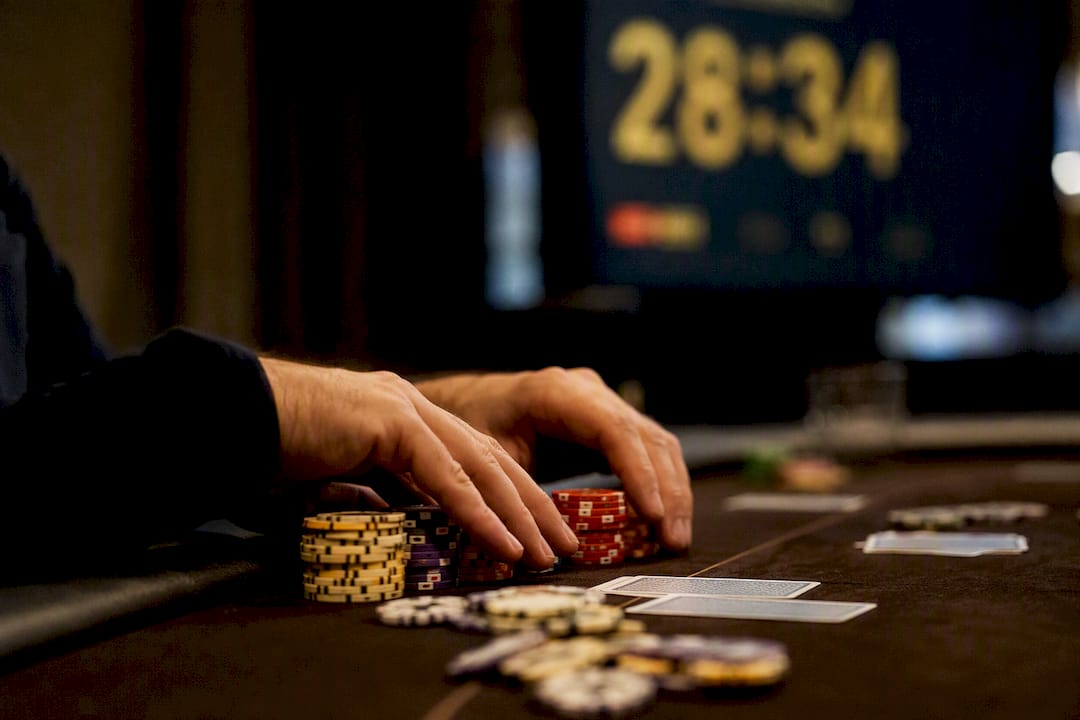
For scheduling purposes, experienced TDs build in a buffer once the field nears the money threshold, rather than assuming hand for hand will run at normal pace. A published running order that promises dinner break at a fixed time can slip badly if the bubble takes longer than expected, so many rooms deliberately schedule breaks after the bubble is confirmed to have burst rather than at a fixed clock time.
This is one area where automated bubble tracking earns its keep: knowing precisely how many players remain and how close the threshold is lets a TD warn the room realistically, rather than guessing. It also helps players plan; if you know hand for hand has just started with three tables still in play, you can reasonably expect a longer wait before the next level change than the printed schedule suggests.
How the rule differs across tournaments and platforms
Hand for hand’s core principle, synchronise every table until the bubble bursts, holds everywhere, but the details vary meaningfully between festivals, formats, and platforms.
Major live festivals typically apply hand for hand strictly, with dedicated floor staff and microphone announcements, and treat stalling penalties seriously given the money and prestige at stake. Smaller live series and home games often apply a looser version, relying on players self-policing table pace with less formal enforcement.
Online platforms enforce hand for hand automatically through software logic rather than human floor staff. Every table’s software simply will not deal the next hand until all remaining tables confirm completion, removing the human communication lag entirely, though it introduces its own quirks around disconnect handling and time-bank usage near the bubble.
Format also matters. Satellite tournaments, where the prize is entry into a bigger event rather than cash, sometimes apply hand for hand slightly differently around multiple identical seats being awarded simultaneously. Sit & Gos, being single-table or small multi-table by nature, reach hand for hand faster relative to total field size, since the bubble arrives proportionally sooner in a smaller structure.
The safest habit for any player moving between rooms or platforms is simple: check the specific room’s rules before the bubble arrives, because assuming one festival’s enforcement style applies everywhere is a common and avoidable source of confusion.
Best practices from experienced tournament directors
Clean bubble handling comes down to preparation more than reaction. Announce hand for hand loudly and specifically, stating the exact payout threshold, not just “we’re close.” Confirm every table has genuinely finished before releasing the next hand, rather than trusting a shout from across the room.
The most common mistake I see is TDs treating hand for hand as something to manage reactively once players start asking questions. By then, you are already behind. The fix is simple: calculate your trigger point in advance and brief your floor staff before the field gets anywhere near it.
Publishing your full payout structure before the tournament starts removes most bubble arguments before they happen. Players who know exactly when the money starts rarely dispute the mechanics of getting there.
- Jason
Try Shuffle Up and Deal! for cleaner bubble management
Running hand for hand off a clipboard and a microphone works until your field grows past a handful of tables, then the cracks show fast. Shuffle Up and Deal! gives directors an automatic bubble calculator, live clock control, and smart table balancing in one place, so the trigger point, the freeze, and the table breaks all happen from a single screen instead of a shouted relay across the room.
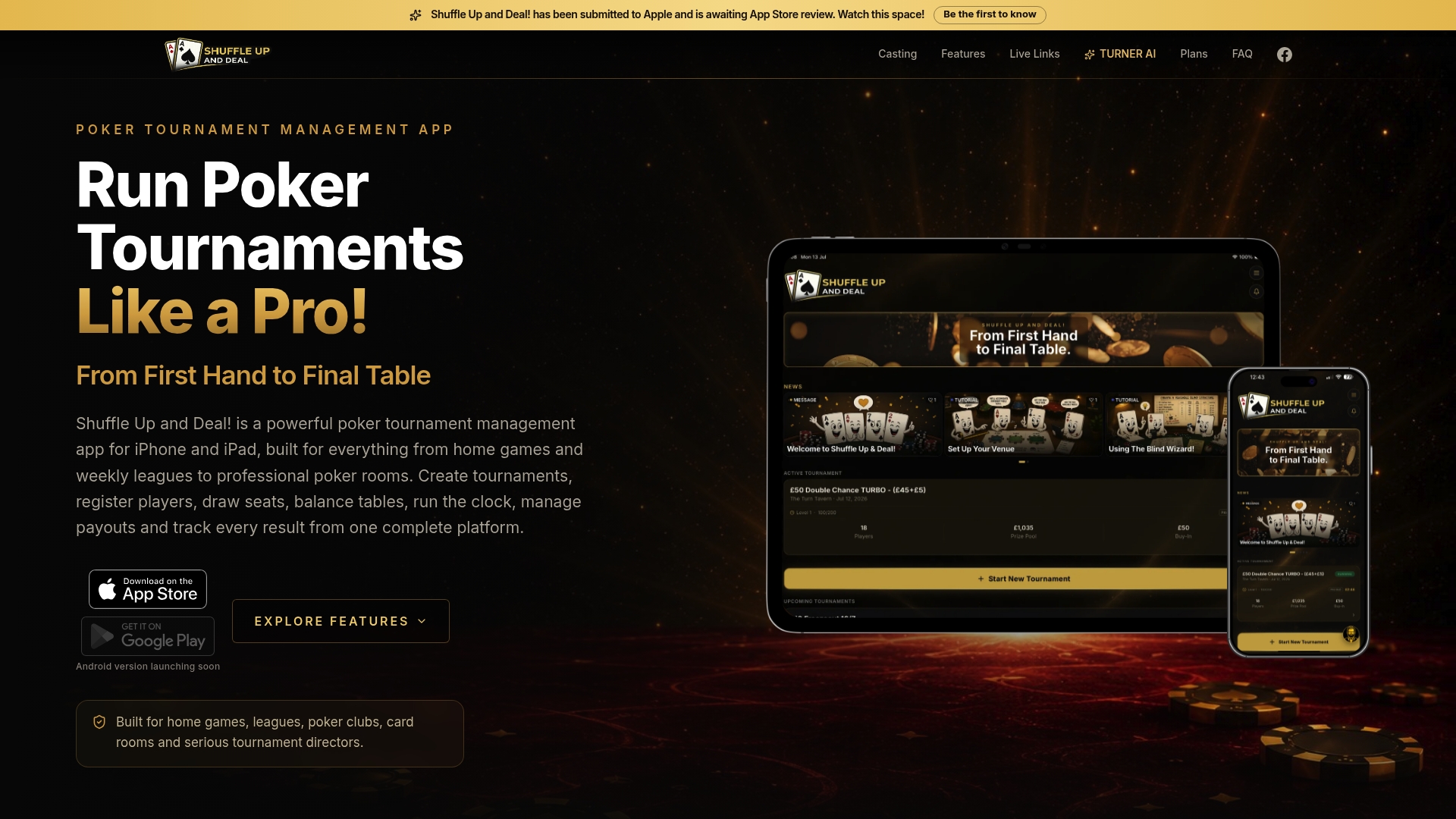
That matters most in the moment players remember longest: the bubble. Live share links let the whole room, and anyone on the rail, see eliminations and payout status update in real time, which cuts down the “are we there yet?” disputes that make bubble stretches feel adversarial. If you are curious about how synchronised seating and balancing work in practice, our piece on the seating chart display walks through it in more detail, and our roundup of poker tournament articles and guides covers the rest of the operational side.
Download the Shuffle Up and Deal! tournament management app and set up your next event’s payout structure and bubble tools before the first hand is even dealt.
Sources
- Hand-for-hand poker (PokerStrategy glossary)
- Hand-for-Hand | PokerNews poker terms
- How payout structures differ across major poker series (The Hendon Mob)