Poker Tournament Management App
Run Poker Tournaments Like a Pro!
From First Hand to Final Table
Seat draws, table balancing, the clock, payouts and league standings: Shuffle Up and Deal! runs the whole night from your iPhone or iPad.

Rebalance Poker Tables at Two Seats: TD Playbook and App Automation

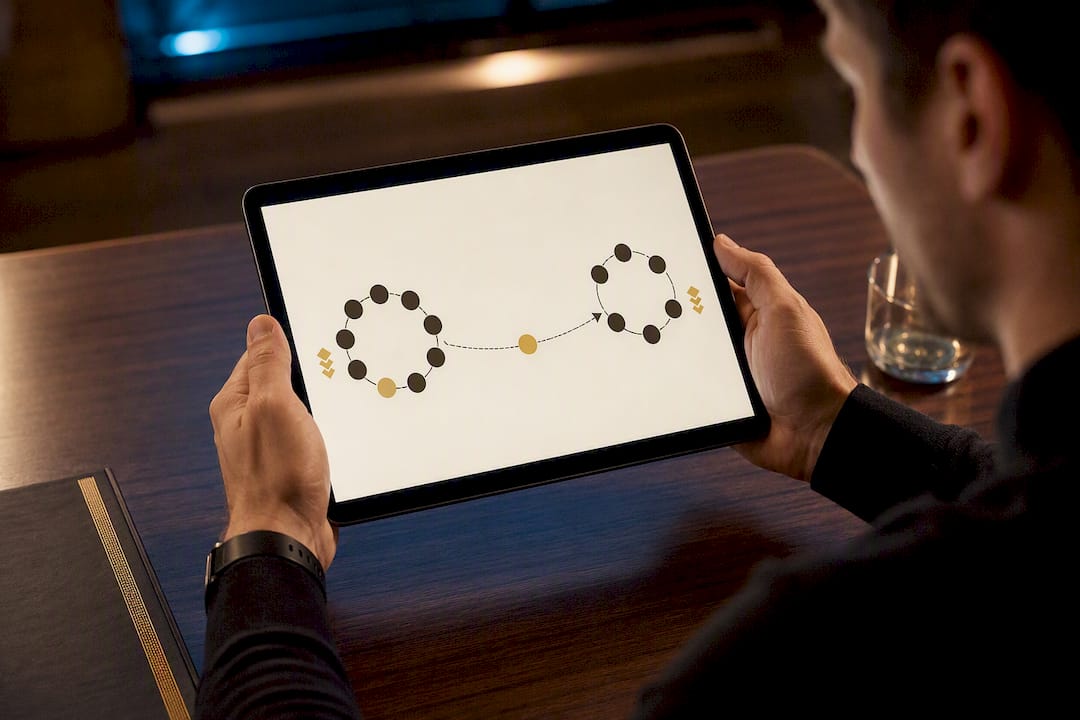
Rebalance when tables have a difference of two seats or more, or one seat near the money. Move the player due to be big blind next, seat them in the worst position at the short table, and make the switch at hand end. Announce all moves clearly. That single sequence, repeated consistently, prevents most of the disputes tournament directors ever face.
TL;DR:
- Table imbalances of two or more seats should trigger reseating, especially as the total difference approaches near the money or alters odds significantly.
- The player to post the big blind next is moved to the worst position at the short table, but never into the small blind seat, to minimize equity loss.
- Always announce reseating moves clearly before the next hand, confirm the move, and update seating charts to prevent disputes and errors.
- Use automation tools like Shuffle Up and Deal to detect imbalances and suggest the correct mover instantly, reducing mistakes and dispute risk.
- At home games, wait for natural breaks or when imbalance actively affects game flow, rather than reacting mid-level, to maintain tournament fairness.
Table of Contents
- What are the numeric thresholds for table balancing poker?
- Who do you move, and why does it matter?
- How do you actually execute a reseating move?
- How often should home games rebalance tables?
- Why does the big-blind rule protect fairness?
- Applying the rules with Shuffle Up and Deal
- What one habit actually reduces reseating disputes?
- Automate table balancing with Shuffle Up and Deal
- Sources
- FAQ
What are the numeric thresholds for table balancing poker?
The TDA’s official rules give organisers a clean, enforceable trigger: play halts on any table three or more players short once blinds start being affected, and tables get balanced once the difference hits two seats. That threshold exists because a table running short changes the maths of every hand at it. Fewer players means blinds and antes come round faster, position shifts, and the whole structure gets skewed against whoever is left there.
Software platforms tend to go further. Replay Poker’s rebalancing procedure aims to keep the difference between any two tables at one player wherever practicable, which is tighter than the TDA’s minimum standard. A worked example makes this concrete:
-
Three tables running 9, 9, and 7 players trigger a move
-
One player shifts from a nine handed table to the seven handed table
-
The result is 9, 8, 8, a maximum spread of one seat
-
A table dropping to six players while others sit at nine calls for a full break, not a single-seat fix
-
Halting a hand mid-play to force a move is not the answer. Wait for the hand to finish
Once the field shrinks enough that two tables can merge into one without anyone sitting idle, break the emptier table entirely rather than patching it seat by seat.
Who do you move, and why does it matter?
Move the player next due to post the big blind, seating them in the worst seat at the short table, which can include the big blind seat but never the small blind. This approach minimizes equity loss, as the player is about to pay the big blind regardless of seating, preventing them from losing earned positional advantage. Forum discussion among tournament directors consistently favours this rule precisely because it is easy to apply under pressure and hard to argue with at the table.
- The player next to post the big blind moves, but not the small blind next player. The mover may be seated in the big blind seat but never directly in the small blind seat.
Mixed games complicate things slightly. In games like HORSE or 8-Game, the rotation between formats means “worst position” can shift depending on which variant is live at that moment, so some directors apply the rule at the point of the switch rather than mid-format.
Pro Tip: Print or display your reseating rule in the same document as your blind structure. Players argue far less when the policy was visible before the tournament started, not explained on the fly.
How do you actually execute a reseating move?
Get the mechanics wrong and even the fairest rule looks arbitrary. Run it as a repeatable checklist.
- Confirm which table is short and which has a genuine surplus, checked at the end of a hand rather than mid deal.
- Identify the qualifying mover using the big-blind-next rule. If more than one player at different tables qualifies, choose randomly among them.
- Select the destination seat: the empty seat that delays the mover’s next big blind the longest, never the small blind.
- Announce the move to both tables before the next hand starts, out loud, so nobody can claim they missed it.
- Update the seating chart, adjust the tournament clock if the move affects timing, and confirm the player is seated before cards go in the air.
- Mark the vacated seat as dead immediately so the dealer does not deal to it by mistake
- Keep a written or digital log of every move. Disputes almost always come down to “who said what, when”
- Never interrupt a hand in progress to force a seat change, even if the imbalance looks urgent
Skipping the announcement step is the single most common cause of table balancing arguments. Players do not mind moving. They mind moving without being told why.
How often should home games rebalance tables?
Home tournaments and small field events do not need the same rebalancing frequency as a two-hundred-entry casino event. Community guidance on running smaller tournaments generally favours a looser two-seat trigger, applied at natural breaks rather than the instant an imbalance appears.
- Wait for a break between blind levels before moving anyone, rather than reacting mid level
- Only force a move sooner if the imbalance is actively distorting blind frequency at one table
- Treat late registration closing as a natural checkpoint to rebalance everyone in one pass
Tighten that leniency once the field nears the bubble or the money. A skewed table late in a tournament has a direct effect on who survives, so the same two-seat cushion that was fine on level three becomes unacceptable on level fifteen. Good checkpoints for any home game are simple: after each blind level, before payouts are calculated, and immediately after any noticeable drop in attendance from rebuys ending or players busting out in a cluster.
Why does the big-blind rule protect fairness?
Balancing tables is never purely mechanical. It carries real equity consequences, and the big-blind-next rule exists specifically to minimise them. Stack and ICM considerations matter more the closer a tournament gets to the money, because a poorly timed move can hand one player extra hands of position they had not earned while costing another player hands they had.
- Moving the big-blind-next player means nobody loses a “free” hand they were owed by the rotation
- Antes and escalating blinds make reseating errors more costly late in a tournament, so tighten tolerances as the structure accelerates
- Final tables and odd seat counts (an 8-max table filling a 9-max event) sometimes force a deviation from the standard rule. Document the exception rather than improvising it silently
Roughly two seats of imbalance is the point most experienced directors treat as the ceiling before fairness starts to erode, which lines up with the TDA’s own threshold for triggering a move.
Applying the rules with Shuffle Up and Deal
Manual seat counting is where most balancing mistakes creep in, particularly across multiple tables running at once. Shuffle Up and Deal! is built around exactly this problem, with smart seating algorithms that flag imbalances the moment they cross your threshold and suggest the correct mover automatically.
A typical workflow looks like this:
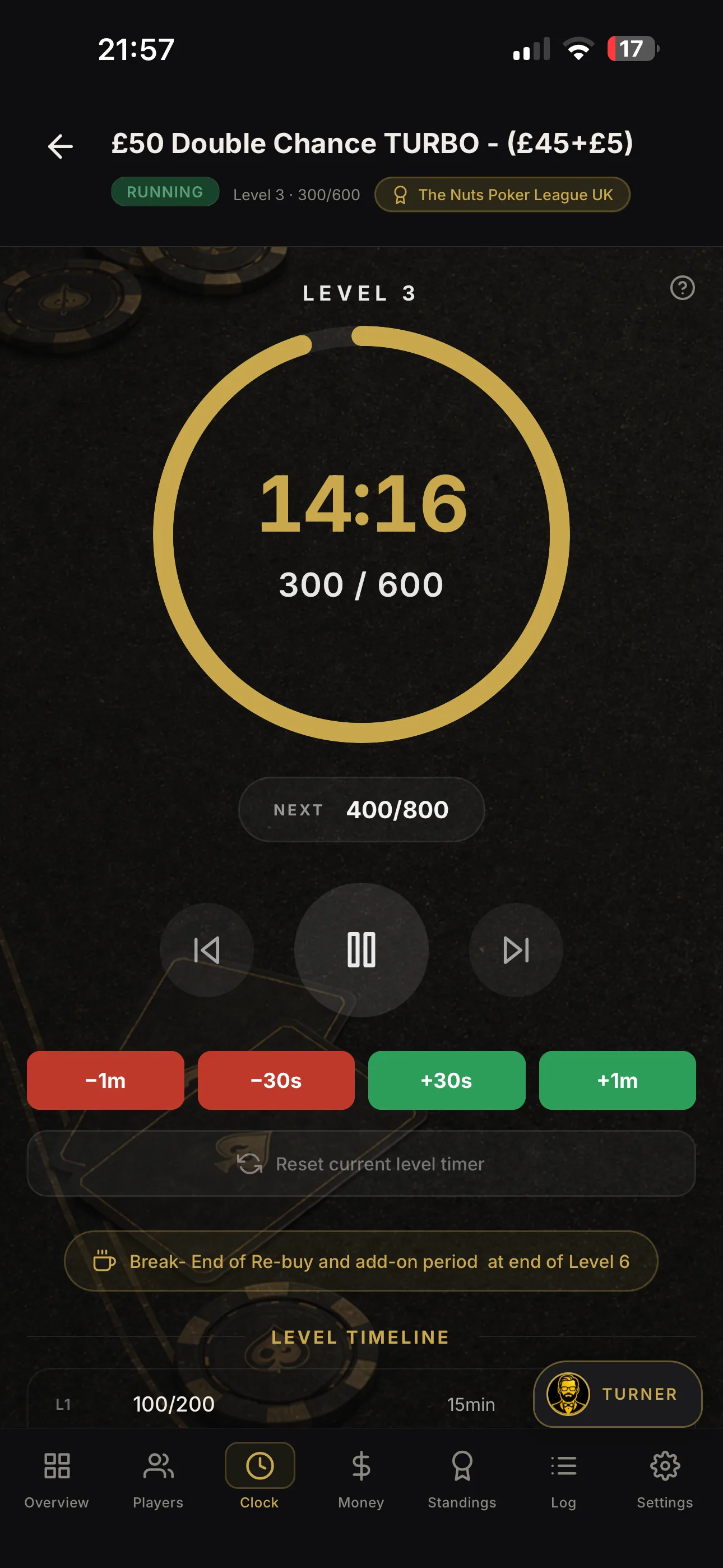
- The app detects a table running two or more seats short and flags it on the live tournament clock display
- You accept the suggested mover, already calculated using the big-blind-next logic
- The seating chart and any external display update instantly, so players see the change without you announcing it table by table
- The clock and registration records adjust automatically, keeping your records clean for payouts later
That last point matters more than it sounds. A messy seating log is exactly what turns a minor dispute into a genuine argument at the final table.
What one habit actually reduces reseating disputes?
The organisers who run the smoothest events do one thing consistently: they write the reseating policy into the event rules before the first hand is dealt, then read it aloud. The mistakes that cause real arguments are almost always self-inflicted. Changing the rule mid-event because a regular complains, or forcing a move in the middle of a hand because it “looks fair right now.” Consistency beats cleverness every time.
- Jason
Automate table balancing with Shuffle Up and Deal
Shuffle Up and Deal! is the alternative to running seat counts on a notepad between hands. Where a manual system depends on you catching every imbalance before it skews the blinds, the app’s smart seating algorithms track every table live and surface the correct mover the moment a threshold is crossed, using the same big-blind-next logic covered above.

You get a live tournament clock, automatic reseating suggestions, and seating charts that update on every connected display the instant a move is confirmed, so there is no gap between decision and communication. For home hosts running one table or directors managing a full room, that means fewer disputes, a cleaner record of every move for when questions come up later, and considerably less time spent recounting seats by hand. Start on the free plan and see the full feature set at Shuffle Up and Deal!'s product page.
Sources
- Poker TDA rules: seating, breaking & balancing tables
- How table rebalancing works – Replay Poker
- How often should I balance tables at a home poker tournament? – Poker StackExchange
FAQ
What is the 80/20 rule in poker?
It is a rough heuristic suggesting roughly 80% of pots at a typical table are won without a showdown, underlining why position and aggression matter more than raw hand strength in most spots.
What is the 50% rule in poker?
It is a shorthand some players use for continuation betting, betting roughly half the pot as a default sizing when the exact odds calculation is not worth the time at the table.
What is the weakest position in poker?
The small blind is generally considered the weakest position, since the player acts early post flop in most streets and has already committed chips without seeing a hand’s full value, which is also why balancing rules never move a player into that seat.
What hands should you go all in preflop with?
That depends entirely on stack depth, position, and the action ahead of you. As a short stack nears the bubble, premium pairs and strong aces become standard shoves, while deeper stacks call for tighter ranges.
How do you decide when to balance poker tables?
Balance when the difference between tables reaches two seats, or one seat once you are near the money, following the same threshold the TDA’s rules set out, and always move the player due to be big blind next.