
Poker Tournament Management App
Run Poker Tournaments Like a Pro!
From First Hand to Final Table
Seat draws, table balancing, the clock, payouts and league standings: Shuffle Up and Deal! runs the whole night from your iPhone or iPad.

Automate Couples Seating Policy: TD Playbook and Shuffle Up Checklist

Default to random seat assignment and avoid placing known couples, spouses or close associates at the same table when it is practical to do so. Exceptions should only happen with documented approval and active monitoring during play. This approach protects your event from even the appearance of collusion while keeping enforcement simple and consistent for every player.
TL;DR:
- Random seat assignment is mandatory, with known couples and close associates not seated together unless documented approval and active monitoring are in place.
- Seating is determined through a two-step redraw process involving visible seat cards and random card dealing, preventing any suspicion of rigging.
- Consistent procedures for breaking tables, handling late entries, and logging all seat assignments and exceptions ensure fairness and transparency.
- Enforcement relies on active monitoring, a no-disclosure rule, and a penalty ladder to address suspected collusion or rule violations.
- Automation through the Shuffle Up and Deal! app simplifies compliance, automatically applying the seating policy, balancing tables, and recording all relevant data.
Table of Contents
- Building a policy template: definitions, core rules and exceptions
- Running the room: seat draws, redraws, late entries and balancing
- Enforcement and conduct: no-disclosure rules and a penalty ladder
- Special cases: disclosed relationships, backing and accessibility
- Making it automatic: the Shuffle Up and Deal! implementation checklist
- What running the seating rule taught me
- Put the policy to work with Shuffle Up and Deal!
- Sources
- FAQ
Building a policy template: definitions, core rules and exceptions
A written policy only works if players can understand it in one read. Start with clear definitions, then state the rule, then cover exceptions before anyone sits down.
- Define your terms: a “couple” covers spouses, partners and live-in relationships; a “close associate” covers family members, backers and staking partners known to you or declared at registration.
- Core clause: seats are assigned randomly for the starting table and every subsequent redraw or table balance; known couples and close associates are not knowingly seated together where an alternative random draw is available.
- Exception clause: an exception requires a written request before the event or check-in, approval from the tournament director on duty, and a monitoring note logged for the level in which it applies.
- Notice text: publish a short line on registration forms and the floor sheet, such as “Seats are assigned randomly. Known couples or associates will not be seated together except by documented exception.”
This mirrors the spirit of the Poker Tournament Directors Association’s rules on seating and table balancing, which lean on random assignment throughout to keep the game visibly fair. Publishing the policy before players sit down does more to prevent disputes than any amount of floor explanation once cards are in the air, since most complaints come from players who feel blind sided rather than from the rule itself.
Running the room: seat draws, redraws, late entries and balancing
Consistency here is what makes the policy stick. Follow the same sequence every time, whether you’re running a ten-table Sunday or a single home game.
- Print numbered seat cards for every seat in play and hold a public draw before cards go in the air.
- When breaking a table, run a two-step redraw: show the seat cards to the affected players, shuffle and stack them face down, then deal each player a playing card face up. Assign seats in order of card rank, so no one chooses their own destination.
- Seat late entrants, alternates and re-entries with full stacks, drawn randomly into open seats, respecting the rule that a player cannot be dealt in between the small blind and the button.
- Break tables in a fixed order (typically the table with the highest number breaks first) and move the player next due for the big blind to the worst position on the table being filled.
- Halt manual seating decisions and default to full random draws once a table is three or more players short, per common tournament floor discretion.
- Log every seat assignment and exception in your event notes immediately, not after the level ends.
This two-step process, drawn from Triton Poker Series rules and echoed across TDA-aligned rulebooks, works because the seat cards and the player selection are visibly separated. Nobody can claim the draw was rigged when they watched the deck get shuffled in front of them.
Pro Tip: Run the redraw at the podium, in view of the room, not at the affected table itself. Visibility is half the point.

Enforcement and conduct: no-disclosure rules and a penalty ladder
Seating policy only works alongside conduct rules. The “no disclosure” principle, which forbids revealing the contents of live or folded hands to anyone at the table, exists precisely because seating alone cannot stop table talk from tipping a hand. Together, the two rules close most of the gap collusion relies on, as commentary on the no-disclosure rule has long pointed out.
- Monitor actively: assign floor staff to watch tables where an exception is in effect, and note anything unusual in a shared incident log.
- Use your displays: a live seating chart or external screen makes the current table draw visible to the whole room, reducing suspicion by default.
- Apply a penalty ladder: a first infraction earns a verbal warning, a repeat earns a one-round penalty, and deliberate or repeated collusion earns disqualification without refund.
- Stay consistent: the same infraction should draw the same response regardless of who is involved, including friends of the house or regulars.
- Communicate outcomes: tell the affected table what happened and why, without naming players beyond what’s necessary, so the room trusts the process rather than guessing at it.
Special cases: disclosed relationships, backing and accessibility
Exceptions will happen. Backers sitting near the players they’ve staked, family groups at a home game, or a player with a medical need for a specific seat all need a process rather than a judgement call on the fly.
- Require advance declarations from backers, staking groups or family members before the event starts, not once they’re already seated together.
- Set separation minimums where geometry allows it, such as opposite ends of the table or different tables entirely, and note the monitoring window in your log.
- Handle accessibility requests on their own track: a seat near an exit or power source for medical equipment is a logistics decision, not a collusion risk, and shouldn’t be bundled with the couples policy.
- Allow couples together only when documented, time-limited and monitored, with a named approver and a review point later in the day.
- Keep a simple record template: date, players involved, reason, approver, and monitoring outcome, all in one line per exception.
Making it automatic: the Shuffle Up and Deal! implementation checklist
Writing the policy is one job. Running it consistently for six hours straight is another, and that’s where the app work pays off.
- Pre-event: configure Shuffle Up and Deal!'s smart seating algorithm for random assignment and turn off manual seat placement wherever your policy requires it.
- Check-in: let the app apply the seating rule automatically as players register, and log any approved exception straight into the event notes rather than on a paper slip.
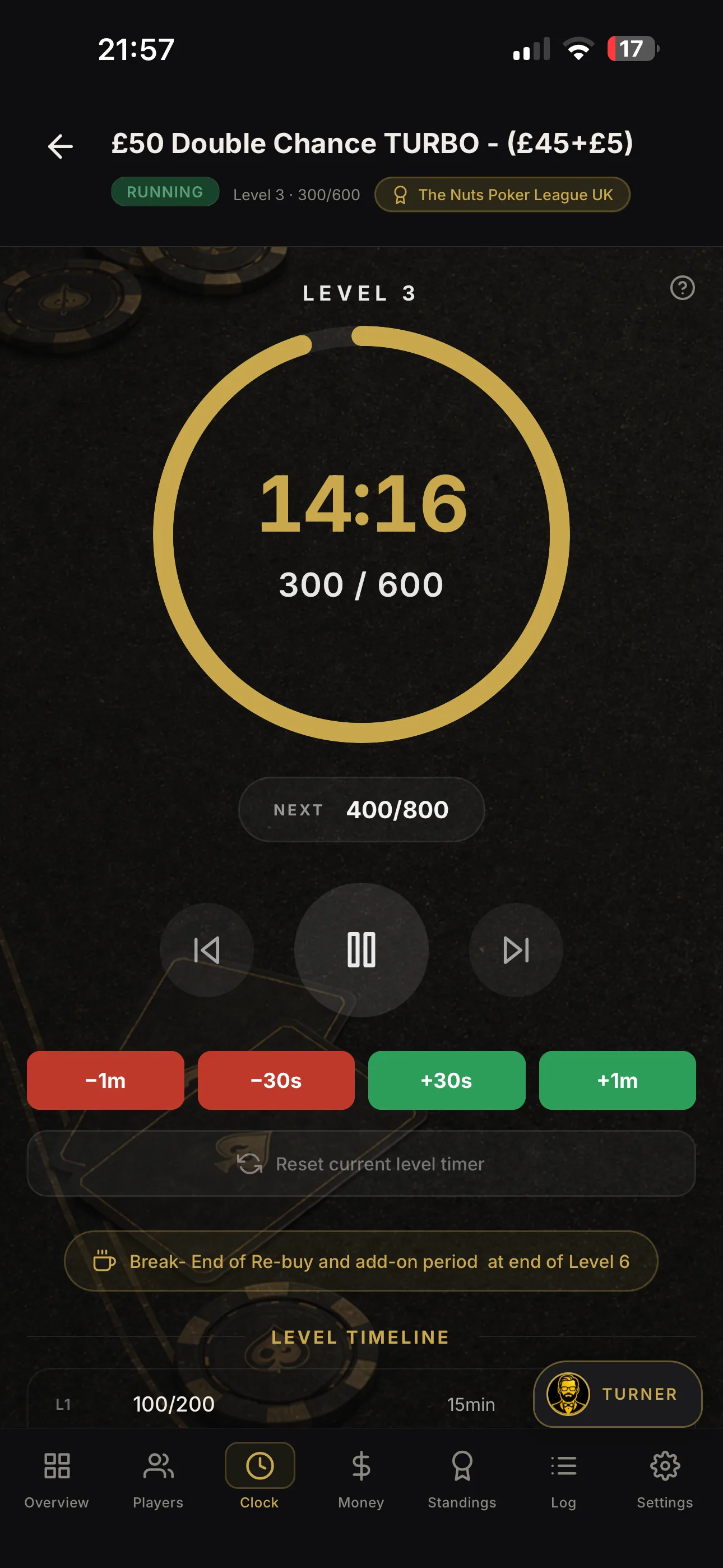
- Mid-event: use automatic table rebalancing to handle breaks without manual intervention, and put the live tournament display on screen so the room can see the current draw for itself.
- Post-event: export the seating log and incident notes directly from the app, giving you a clean record for any appeal or audit.
Pro Tip: Export your seating and exception logs at the end of every event, even when nothing went wrong. You’ll want the habit the one time something does.
For more on the rebalancing side specifically, see the table balancing playbook and the seating chart display feature that pairs with it.
What running the seating rule taught me
I once had two players quietly swap seat cards before a redraw, thinking nobody would notice. Nobody had asked for an exception, so the fix was simple: redo the draw in full view of the table. Clear advance notice and applying the rule the same way every time cuts complaints faster than any explanation after the fact. If you’re worried players will push back, the pushback fades once they see the process never bends.
- Jason
Put the policy to work with Shuffle Up and Deal!
Writing a couples seating policy is the easy part. Running it consistently across a full field, with late entries, breaks and exceptions all logged, is where most home games and card rooms lose the thread. The app handles the mechanics for you: smart seating that applies your policy automatically, table rebalancing that removes the manual guesswork, a live display the whole room can see, and exportable logs for anything you need to review afterwards.
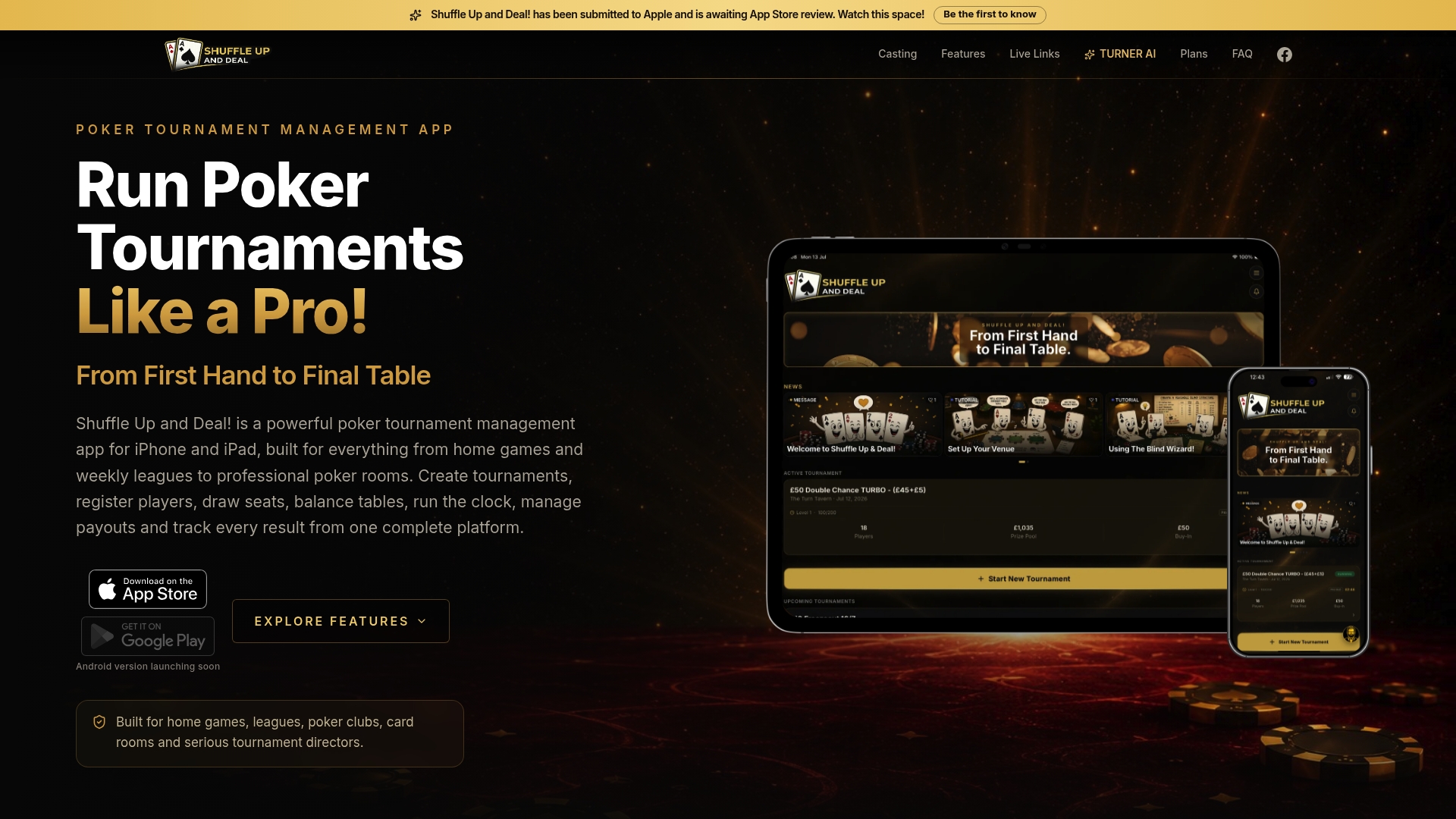 Plans start with a free Home Game tier, with paid plans unlocking more of the seating and balancing automation, including tiers with increasing levels of features and support. Visit Shuffle Up and Deal! to see the full feature set and find the plan that fits your room. For general floor-running advice beyond seating rules, the MagicFranco guide to organising card tournaments is a useful companion read.
Sources
- Poker Tournament Directors Association - Seating, Breaking and Balancing Tables
- Triton Poker Series - Rules
FAQ
Should couples always be split up at poker tables?
Split them where practical, since random seating that avoids known couples sitting together is the safest default under TDA-style rules. Exceptions can be granted, but only with documented approval and active monitoring.
How does a two-step seat redraw actually work?
Seat cards are shown to the players affected, shuffled and stacked face down, then each player is dealt a playing card face up and assigned a seat in order of card rank. This process, described in Triton’s rules, separates the seat draw from any player choice, which removes the suspicion that comes with manual assignment.
What happens if a table breaks and players need to move?
The table breaking first is fixed in advance, usually the highest-numbered table, and the player next due for the big blind moves to the worst position on the table being filled. This is standard practice across TDA-aligned tournament floors and keeps the process predictable.
Can late entrants pick their own seat?
No. Late entrants and re-entries buy a full stack and are drawn randomly into an open seat, with the restriction that nobody is dealt in between the small blind and the button, as set out in the 2024 TDA rules.
How can a tournament app help enforce a couples seating policy?
Shuffle Up and Deal! applies random seating automatically through its smart seating algorithm, rebalances tables without manual input, and logs every seat assignment and exception for later review. That gives a tournament director a clean, exportable record if any seating decision is ever questioned.