
Poker Tournament Management App
Run Poker Tournaments Like a Pro!
From First Hand to Final Table
Seat draws, table balancing, the clock, payouts and league standings: Shuffle Up and Deal! runs the whole night from your phone or tablet.



12.5% Cutoff: Multi Flight Poker Tournaments for Players & TDs
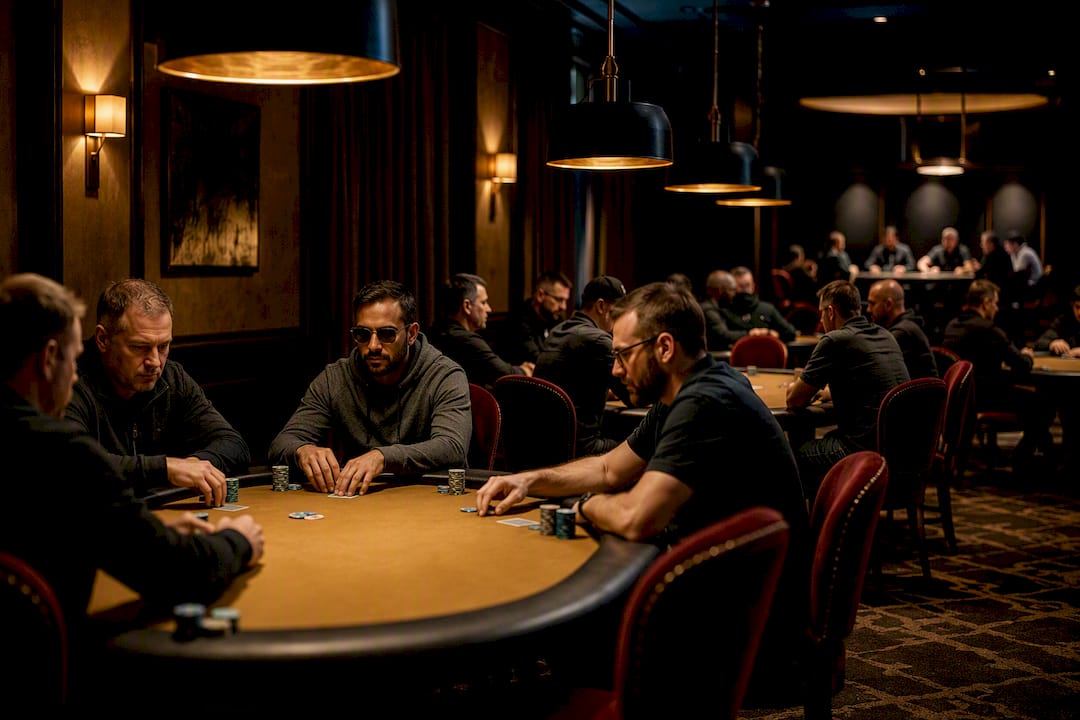
A multi flight poker tournament runs several Day 1 flights that all feed into a single unified final, with only one qualifying stack per player normally carrying forward under “best stack forward” rules. That single detail changes everything about how you should plan your entry, because the flight you choose and the number of bullets you fire both move your expected value before a single card gets dealt.
TL;DR:
- Playing late flights can provide better information on field size and stack quality, which influences your final table strategy.
- Confirm whether re-entries are unlimited or capped, and whether the best stack forward includes minimum cash or is purely the largest stack.
- Choosing an early flight offers softer competition but less insight into overall field dynamics, while later flights allow better assessment of chip distribution.
- Firing a second bullet makes sense only if your first stack is weak and late registration is still open, but avoid multiple entries if your stack is already above average.
- Accurate cross-flight chip tracking and real-time payout monitoring are critical for organizer success, and tools like Shuffle Up and Deal! streamline these processes.
Table of Contents
- What is a multi flight poker tournament?
- Which rules and structure variations should you check first?
- How should you choose which flight to play?
- What do organisers need to manage a multi flight event well?
- What do typical multi flight structures look like?
- What have years of running multi flight events taught me?
- How Shuffle Up and Deal! support multi flight tournament organisers
- Sources
What is a multi flight poker tournament?
A multi flight tournament lets players pick from several starting days, or flights, each running as its own mini Day 1. Everyone who survives their flight bags their chips and returns for one combined final, playing off a single aggregated prize pool rather than several separate ones.
The mechanics hinge on a percentage cutoff. Most events end a flight once a fixed share of the field remains, commonly 12.5% or 15%, rounded down to a whole number of qualifiers.
Late registration usually stretches across several early levels of a flight, often alongside re-entry, depending on event rules. That window matters because it lets weaker starts fade quietly rather than knocking a player out entirely.
- Each flight plays as an independent Day 1 with its own field and dynamics.
- Survivors bag their chip stack and register for the unified final.
- Only the largest stack a player holds carries forward if they play more than one flight, under the best stack forward rule.
- The final combines every flight’s survivors into one bracket with a single aggregated prize pool.
Which rules and structure variations should you check first?
Structure sheets vary more between events than most players expect, and the differences directly change how you should play. Before registering, run through this checklist.
- Confirm whether re-entries are unlimited, capped, or closed after a set level, as this affects early play strategy.
- Check if smaller forfeited stacks receive a minimum cash payment when best stack forward removes them, as policies differ by operator.
- Verify the exact percentage cutoff and how rounding is applied, since a flight sitting near the boundary can affect level length.
- Compare blind level lengths on Day 1 against the final. Many events run shorter Day 1 levels before slowing down considerably once flights merge.
- Look for redraw and seating policy notes, since some events reseat players at the final while others preserve table draws where possible.
None of this is boilerplate. A rule buried on page three of a structure sheet, like whether your second stack gets a token cash out, can be the difference between a wasted bullet and a smart insurance play.
How should you choose which flight to play?
Early flights often attract a softer, more recreational field as casual players tend to choose the earliest start time. That can mean easier chips early, but it also means less information about how the overall field is shaping up.
Later flights give you the opposite trade. You will usually know roughly how many total entries to expect and how big the average bagged stack looks, which helps you judge your ladder position going into the final. The 888poker overview of multi-table tournaments notes that MTT strategy has to account for ICM and the arc of the whole event, and that logic applies with extra force here: your stack size heading into the final effectively buys you a spot on the payout ladder, so bagging big matters more than simply surviving.
Firing a second bullet only makes sense in specific circumstances.
- Fire again if your first attempt busted early and the flight still has meaningful late registration levels left.
- Skip a second bullet if you already qualified with a stack near or above the field average, since best stack forward means the smaller one contributes nothing.
- Weigh your schedule. A softer late flight the next day may beat forcing a second entry into a flight you are already tired from.
- Check the structure sheet for blind speed before committing extra bullets, since a fast structure rewards a big stack far less than a slow one.
Pro Tip: Treat every re-entry decision as a fresh buy-in, not a chase. If you would not fire this flight as your first entry of the day, don’t fire it as your third. Sound bankroll discipline around bullets matters just as much here as it does in general betting bankroll management, where sizing each stake independently keeps one bad session from wrecking the whole roll.
What do organisers need to manage a multi flight event well?
Running several disconnected flights that all merge into one final creates a specific operational headache: keeping chip counts, registrations, and prize pool figures consistent across days that may not even share a physical room. Cloud syncing solves the worst of this, letting a tournament director confirm bagged stacks from any device rather than reconciling paper slips at 2am.
An organiser’s checklist for a clean multi flight event should include:
- Accurate cross-flight chip tracking so every bagged stack registers correctly at the final.
- Live share links that let players check standings and blind levels without pestering staff.
- Smart seating and automatic table balancing to consolidate flights quickly once they merge.
- Real-time prize pool and payout tracking that updates as entries accumulate across every flight.
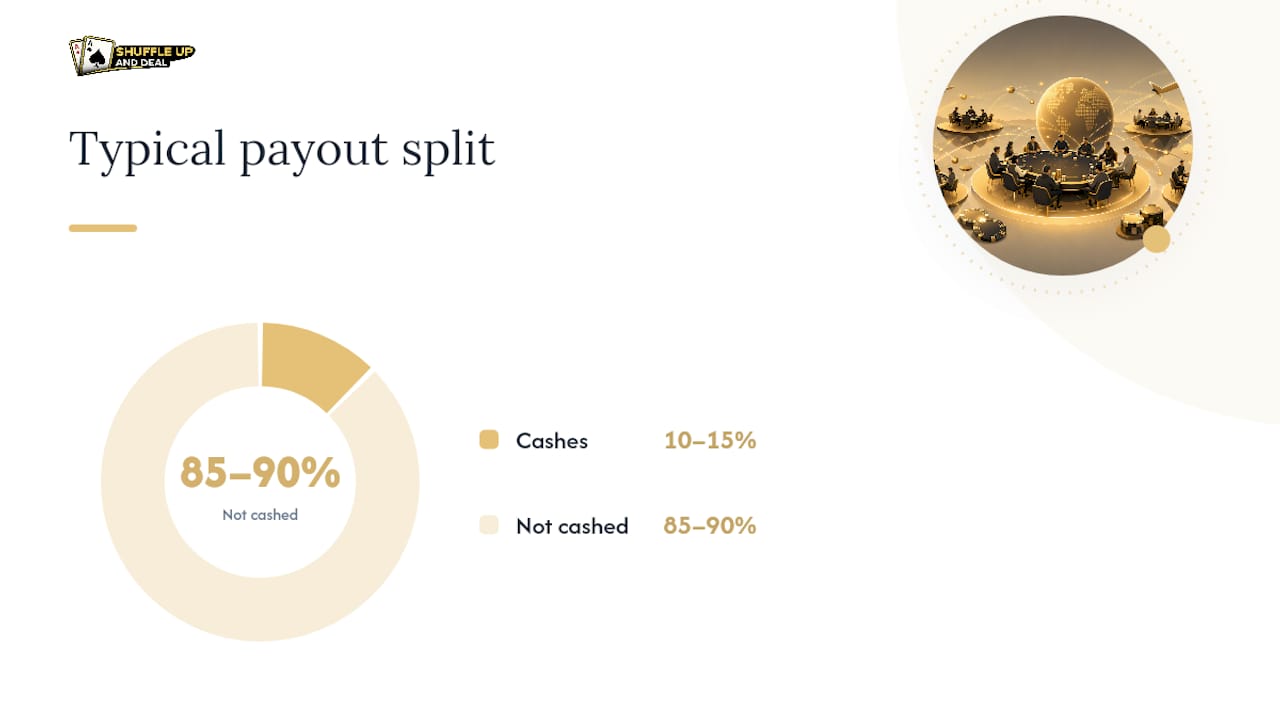
Roughly 10% to 15% of the total field typically cashes in a standard multi-table event, and that payout math only works cleanly if every flight’s numbers are aggregated correctly before the final starts.
What do typical multi flight structures look like?
Published structure sheets follow recognisable patterns once you have seen a few. A large guaranteed event might hand out a 20,000-chip starting stack with 30-minute levels, late registration open until Level 9, and Day 1 ending once 12.5% of each flight remains. A smaller series event often runs shorter levels with unlimited re-entry permitted right up to a specified cutoff level, favouring volume over deep stacks.
Whichever event you are entering, check the same handful of details every time:
- Starting stack size and level length.
- The exact late registration deadline, stated by level number.
- The percentage cutoff for Day 1 and how rounding is applied.
- Whether best stack forward includes a minimum cash for forfeited stacks.
What have years of running multi flight events taught me?
Running multi-flight events for long enough teaches you one thing fast: players lose more equity to poor flight scheduling than to bad decisions at the table. My advice to players is simple. Read the structure sheet before you read anything else about the field. My advice to organisers is equally blunt: publish your rounding and minimum-cash policy clearly, because vague rules cause more disputes than bad beats ever will. Ask your TD directly if anything is unclear before you sit down.
- Jason
How Shuffle Up and Deal! support multi flight tournament organisers
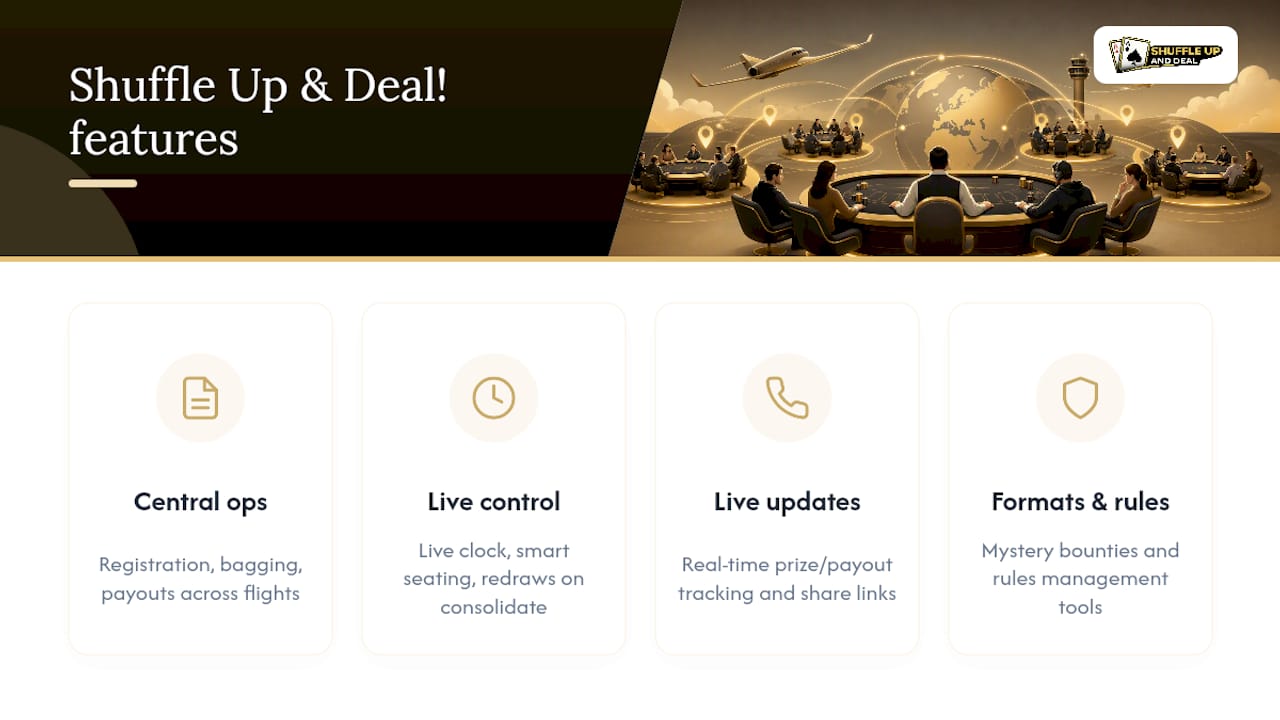
Running a flighted event by spreadsheet is where most of the chaos starts, and it is exactly the gap Shuffle Up and Deal! was built to close. The app gives you a single platform for registration, bagging, and payouts across every flight, so nothing gets lost between Day 1A and the final.

Its live tournament clock and smart seating algorithm keep blind levels and table balancing accurate the moment flights consolidate, and the smart seating and display tools handle redraws without the usual scramble. Prize pool and payout tracking update in real time as entries roll in across flights, and live share links keep players informed without a single phone call to the desk. If your event runs special formats alongside standard flights, the mystery bounty poker features and rules management tools cover that too.
Shuffle Up and Deal! offers a free forever plan alongside tiered paid options for larger card rooms and series operators. Visit the Shuffle Up and Deal! tournament management app to see which plan fits your next flighted event.
Sources
Always check the operator’s own help pages, a published structure sheet, and GambleAware for player support resources before you register.
- Multi‑Flight Tournaments | Stake Help Center
- Multi‑Flight tournaments (policy note) | Stake help
- Event 53 Flight A: Last Multi‑Flight | Seminole Hard Rock Hollywood Poker
- Multi‑Table Tournaments (MTTs) | 888poker