Poker Tournament Management App
Run Poker Tournaments Like a Pro!
From First Hand to Final Table
Seat draws, table balancing, the clock, payouts and league standings: Shuffle Up and Deal! runs the whole night from your iPhone or iPad.

12 Step Misdeal Playbook for Tournament Directors

Call a misdeal for the standard initial-deal errors (boxed cards, wrong-seat deals, dealt-out seats, wrong card counts) unless substantial action has already happened, in which case play continues. The one exception that always stops the hand is a fouled deck. When you spot a misdeal, freeze the deal, protect the stub, and call the floor immediately, without shuffling or touching the cards.
TL;DR:
- A misdeal is only replayed if no substantial action has occurred, with the key test being whether two voluntary actions with chips or three actions of any kind have taken place.
- The thresholds for substantial action exclude forced bets like blinds and antes, meaning a misdeal that occurs immediately after blinds are posted generally results in a redeal.
- A fouled deck, such as one with duplicate or foreign cards, always halts play and requires an immediate redeal regardless of previous action.
- When a misdeal is suspected, dealers must stop immediately, preserve all cards, call the floor, and do not shuffle or rearrange the deck until inspected.
- Consistent, clear procedures backed by written rules help prevent disputes and ensure credible officiating during tournaments.
Table of Contents
- What counts as a misdeal: standard triggers and examples
- Substantial action: exact test, blinds/antes and operational implications
- Fouled deck exception: when play must stop
- Step-by-step procedure for dealers and TDs when a misdeal is suspected
- Common edge cases and worked examples
- How to write and announce your misdeal policy for tournament paperwork
- How Shuffle Up and Deal! helps prevent misdeals and documents incidents
- Author perspective: why consistent procedure matters
- Try Shuffle Up and Deal! for cleaner tournament management
- Primary sources and rulebooks to consult
- Sources
- FAQ
What counts as a misdeal: standard triggers and examples
A misdeal is any flaw in the initial deal serious enough to require a fresh start rather than a continuation. The TDA full-size rulebook lists the specific triggers that qualify, and every dealer and TD should know them cold because hesitation at the table invites disputes.
The most common misdeal triggers are:
- A boxed card: a card turned face up inside the deck during the shuffle or cut, discovered as it’s dealt.
- A card dealt to the wrong seat first: the deal begins from the wrong position and at least one player receives an extra or missing card as a result.
- A dealt-out seat: a player who should be dealt in (or out) is skipped or wrongly included, usually because the dealer misjudges who’s active.
- The wrong number of cards dealt to one or more players, either too many or too few.
- A non-standard card appearing in play, such as a card from a second deck or a joker in a game that doesn’t use one.
- Exposed downcards in flop games or stud, where two or more players see cards they shouldn’t have seen before the deal is complete.
A “boxed card” simply means a card sitting face up in the stub or deck when it should be face down. It happens most often after a sloppy riffle or a rushed cut, and a sharp-eyed dealer will usually catch it before the first card lands.
“Dealt out” describes a seat that’s missed entirely during the deal, often because a player just sat down or just busted and the dealer hasn’t adjusted the seating chart yet. An “exposed burn” happens when the card meant to be discarded face down accidentally flips face up, which matters because it changes what information is technically “live” at the table.
Picture a nine-handed table where the dealer starts the deal at seat four instead of seat five. By the time the error is caught, two players have three cards and one has one. That’s a textbook misdeal, and the fix is a full redeal, not a patch-up.
Substantial action: exact test, blinds/antes and operational implications
Substantial action is the line that decides whether a misdeal gets redealt or the hand simply plays on. Once it’s crossed, the deal stands, fouled deck aside, because unwinding a hand after real decisions have been made creates more unfairness than it solves.
The practical test, drawn from how Poker, comes down to two thresholds:
- Two actions in turn, at least one of which puts chips into the pot voluntarily.
- Any three actions in turn, regardless of whether chips went in.
Posted blinds and antes don’t count towards either threshold on their own, because they’re forced bets rather than voluntary decisions. A player who posts the big blind hasn’t “acted” in the sense the rule cares about, so a misdeal discovered right after the blinds go in still gets redealt.
Statistic callout: substantial action requires multiple voluntary actions in turn, including chips being put into the pot, before a hand is considered locked in, according to Poker.com’s rules explainer. That’s the number every dealer should carry in their head when a floor call comes in mid-hand.
Here’s how it plays out at the table: the small blind and big blind post, the button folds, seat one calls, and a boxed card is discovered before seat two acts. That’s only one voluntary action in turn (the call), so it falls short of substantial action, and the hand gets redealt. Change it so seat two also calls before the card turns up, and you’ve hit two actions in turn with chips involved, meaning the hand plays on as dealt.
Premature action taken while the dealer is still finishing the deal is trickier. If a player acts out of turn before everyone has their cards, that action generally doesn’t count towards substantial action because the deal itself isn’t complete yet. Treat it as void, correct the sequence, and let the hand continue from where it should have been.
Fouled deck exception: when play must stop
A fouled deck always halts the hand, no matter how much action has already occurred. According to the TDA rules, a deck is fouled when it contains two cards of identical rank and suit, a foreign card, or anything else that breaks the standard 52-card structure.
A fouled deck exists when the deck in play is found to have a duplicate card, a card from a second deck, or another physical defect that compromises the integrity of the game.
This is the one scenario where substantial action doesn’t save the hand. The rationale is straightforward: a duplicate card means someone might be holding a hand that’s mathematically impossible for the game being played, and no amount of prior betting fixes that. When it happens, stop the deal immediately, preserve every card exactly where it landed, and return all bets to the players who contributed them, as directed by the tournament’s stated procedure. Log the incident with seat numbers, chip counts, and the exact cards involved, and note the time so a later dispute has something concrete to reference. Most rule sheets give players a short window, often just before the next hand starts, to raise a fouled-deck claim, though local house rules can shorten or extend that window.
Step-by-step procedure for dealers and TDs when a misdeal is suspected
A misdeal only stays clean when everyone at the table, dealer included, follows the same sequence without improvising.
- Stop dealing the moment something looks wrong. Don’t finish the round “just to see” what happens.
- Protect the stub and any exposed cards. Place a hand over the stub if needed, and leave dealt cards exactly where they are.
- Do not shuffle or reorder anything. The deck as it stands is the evidence the floor will need.
- Note the button position and seating before anyone moves, in case the ruling requires an exact re-play.
- Call the floor immediately rather than guessing at a resolution yourself.
- The TD inspects the deck to determine whether this is a standard misdeal or a fouled deck, since the two carry different consequences.
- The TD checks for substantial action using the two-actions-or-three-actions test, factoring out any blinds or antes posted so far.
- The TD issues a ruling: redeal, continue as dealt, or void and return bets, depending on what the inspection shows.
- If a redeal is ordered, it’s an exact re-play: the button stays put, the same players are dealt in, and any player not at their seat for the original deal is dealt in and then killed. According to the TDA rulebook, the original deal and the redeal count as a single hand for penalty purposes.
- Apply any listed penalties for the player who caused the misdeal, if the tournament’s rules specify one.
- Announce the ruling clearly to the table so nobody’s left guessing why the hand restarted.
- Log the incident, including seat numbers, the trigger, and the ruling given, in case the same table raises it again later.
Pro Tip: Keep a small incident log at every dealer station, even a scrap of paper works, so the floor has a paper trail the moment a dispute gets escalated.
Communication matters as much as procedure here. Players accept a redeal far more readily when the dealer states plainly what went wrong (“boxed card, seat six, full redeal”) rather than shuffling quietly and hoping nobody asks. If a player disputes the ruling, the TD’s decision stands as final for that hand, but the incident should still be logged so a floor manager can review the pattern later if the same table keeps generating issues.
Common edge cases and worked examples
Some misdeal situations don’t fit neatly into “redeal” or “play on,” and these are the ones that generate the most floor calls.
- Exposed early hole card: if a single downcard flips during the deal before any action, most rooms treat it as a misdeal and redeal, since flop games rely on hole cards staying hidden from the start.
- Action taken during an incomplete deal: if a player acts before the deal has finished (perhaps posting or betting while the dealer is still pitching cards), that action is usually void and doesn’t count towards substantial action, according to practical floor guidance discussed on PokerTDA’s forum.
- Exposed flop, turn, or river card: rather than a redeal, most floors burn the exposed card and replace it, or reshuffle the remaining deck depending on when in the hand it happened, a remedy described in the Poker Stack Exchange discussion on dealer misdeals.
- Two players seeing an exposed downcard simultaneously: this typically forces a full redeal, because the exposure isn’t limited to one seat and can’t be fairly corrected mid-hand.
A worked example makes the logic clearer. Say the flop is dealt and the turn card flips face up by accident before betting starts on the turn. The floor’s usual option is to shuffle the exposed card back into the remaining stub, burn a new card, and turn a fresh one, since no action has been taken on that street yet. Compare that with a hole card exposed to the whole table before preflop betting even starts: because that undermines the entire hand rather than a single street, the standard treatment is a full redeal.
How to write and announce your misdeal policy for tournament paperwork
A printed rule sheet that mirrors TDA language settles disputes faster than any verbal explanation mid-hand. Cover these clauses on your sheet:
- A plain-language misdeal definition listing the specific triggers your tournament will honour.
- Substantial action wording, spelling out the two-actions or three-actions test and confirming blinds and antes don’t count alone.
- Fouled deck handling, stating clearly that it overrides substantial action and how bets get returned.
- Redeal mechanics, confirming the button doesn’t move and seating stays the same.
- Penalties, if any, for the player responsible for the misdeal.
- A final-authority statement, making clear the TD’s ruling stands for that hand.
Read the key points aloud at registration or before Level 1 starts, so nobody can claim they weren’t told. A sample clause: “Misdeals will be handled per TDA guidelines; the tournament director’s ruling on any misdeal is final.” Keep a copy of your rebuy rules template nearby as a model for how concise, TDA-aligned clauses read in practice.
How Shuffle Up and Deal! helps prevent misdeals and documents incidents
Smart seating algorithms cut down the wrong-seat errors that cause a fair share of misdeals in the first place, especially during late registration when seats fill and empty quickly. The live tournament clock and blind-level control keep every table synced, so dealers do not have to guess which level or blind structure applies mid-hand. Multi-device sync and live displays mean the floor, dealers, and players can view the same seating chart and clock simultaneously, reducing confusion that leads to dealt-out seats.
When a misdeal occurs, table-balancing tools and player records provide a clear picture of seating, useful evidence for a fast, confident ruling. For more on how automated seating reduces dealer error, see the table balancing playbook.

Author perspective: why consistent procedure matters
Rules only protect players when they’re applied the same way every single time, not just when it’s convenient. Most disputes over misdeals happen because a floor improvised instead of pointing to the written rule sheet, and players sense that immediately.
Training TDs and dealers to apply the substantial-action test without hesitation, backed by tools like Shuffle Up and Deal! that reduce the seating and clock errors behind many misdeals, is what actually keeps a tournament room’s rulings credible over time.
- Jason
Try Shuffle Up and Deal! for cleaner tournament management
Fewer seating mix-ups mean fewer misdeals, and that’s exactly where Shuffle Up and Deal!'s smart seating engine and live clock earn their keep. Record-keeping across multiple devices means you’ve got the seating history on hand the moment a ruling needs backing up.
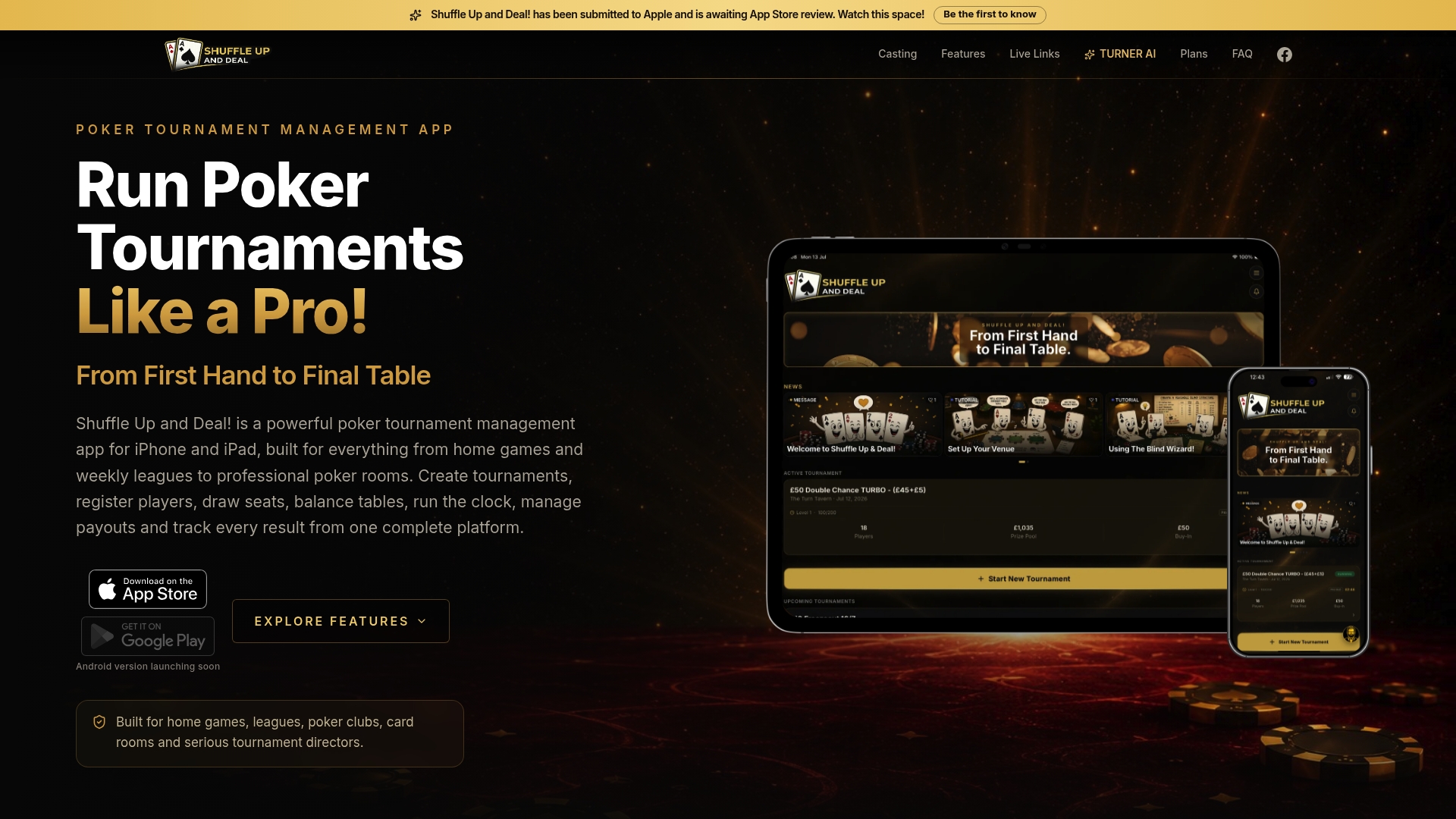
The free Home Game plan gets you started, with Tournament Director, TD Pro, TD Elite, and Card Room tiers available as your events grow. Visit Shuffle Up and Deal! to set up your next tournament with fewer floor disputes from the first hand.
Primary sources and rulebooks to consult
For the exact wording behind everything above, read the primary rulebooks directly rather than relying on summaries.
- The Poker Tournament Directors Association rules cover fouled decks, substantial action, and general tournament procedure.
- The TDA full-size rulebook gives the complete redeal mechanics and penalty wording.
- Poker offers a plain-language walkthrough of the substantial-action test.
Always check your own tournament’s announced house rules too, since local variations can modify how these standards apply.
Sources
FAQ
What does “misdeal” mean?
A misdeal is an error in the initial deal, such as a boxed card, wrong-seat deal, or wrong card count, that’s serious enough to require a redeal rather than continuing the hand. Once substantial action has occurred, most misdeals no longer trigger a redeal, except for a fouled deck, which always stops play.
Does a misdeal move the button?
No, a redeal is an exact re-play, so the button stays in its original position and seating doesn’t change. Players who weren’t seated for the original deal are dealt in for the redeal and then killed, according to the TDA rulebook.
What’s the difference between a misdeal and a fouled deck?
A misdeal covers dealing errors like wrong seats or exposed cards, which get redealt only if substantial action hasn’t happened yet. A fouled deck, meaning a duplicate card or foreign card in the deck, always stops play and returns bets, regardless of how much action has occurred, per the TDA rules.
Do posted blinds count towards substantial action?
No, blinds and antes are forced bets and don’t count towards substantial action on their own. The threshold needs either two voluntary actions in turn with one putting chips in, or three actions in turn of any kind, as explained on Poker.com.
Can a tournament director’s misdeal ruling be appealed?
A TD’s ruling on a misdeal is generally final for that hand once issued, which is why clear rule sheets and floor announcements matter so much. Larger disputes can be raised with tournament management afterwards, but they won’t undo a ruling already applied to a completed hand.