
Poker Tournament Management App
Run Poker Tournaments Like a Pro!
From First Hand to Final Table
Seat draws, table balancing, the clock, payouts and league standings: Shuffle Up and Deal! runs the whole night from your iPhone or iPad.

A missed blinds policy that TDs can enforce fast and fairly
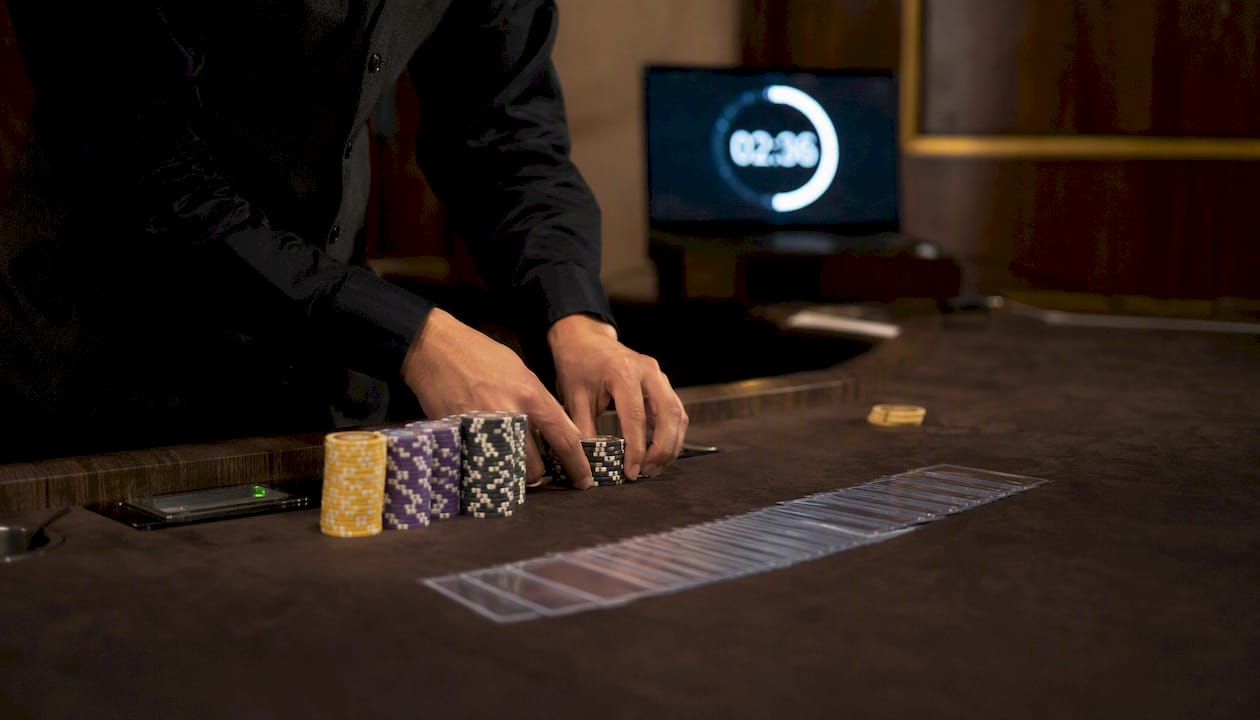
The right missed blinds policy is short, TDA-aligned, and automated wherever possible: publish a clear penalty scale, apply it the moment a player’s blind comes up, and let your tournament software log the whole thing so nobody argues about what happened three levels later. Get this baseline in place before you deal a single card, and you’ll spend far less time refereeing arguments and more time running the clock.
Three things belong in every policy, no exceptions:
- Scope - state exactly who it applies to: every registered player from the moment they’re seated, including late registrants and re-entries.
- Penalty mechanism - adopt the missed-round formula from the Poker TDA Rules: number of players at the table multiplied by the number of penalty rounds.
- Enforcement point - name who pulls the trigger (the TD or a floor person) and how the app records it, so the decision isn’t just a verbal call that vanishes after the hand.
You’ll see this framework referenced throughout the rest of this guide, alongside a ready-to-copy policy template and the exact steps for automating enforcement inside Shuffle Up and Deal!.
Key Takeaways
A missed blinds policy only works when it’s published in advance, calculated with the TDA formula, and enforced through a logged, repeatable procedure rather than memory.
| Point | Details |
|---|---|
| Publish the policy first | Put the full wording on the structure sheet before Level 1, not after the first incident. |
| Configure the app before doors open | Set late-registration windows, rebuy rules and audit logging in Shuffle Up and Deal! ahead of play. |
| Follow the same on-table sequence every time | Notify, post the blind, apply the penalty tier, announce it, then log it immediately. |
| Record everything, appeal before the next hand | Keep timestamped logs and give players a clear appeal window under your policy. |
| Automate enforcement with Shuffle Up and Deal! | Use its clock, smart seating and audit log to carry penalty notes across table moves and settle disputes fast. |
Table of Contents
- Missed blinds policy explanation: a copy-and-paste template
- What should a TD do when a missed blind happens?
- How is a missed-round penalty calculated?
- Late registration, rebuys and re-entry: what’s the difference?
- How do table moves and the clock interact with penalties?
- Configuring Shuffle Up and Deal! to enforce this policy
- Recordkeeping and how to handle an appeal
- Handling disconnects, dodging and online-versus-live differences
- Why consistency matters more than the penalty itself
- Enforce your policy without the paperwork
- Sources
Missed blinds policy explanation: a copy-and-paste template
You don’t need to draft a missed blinds policy from scratch. Below is wording you can paste onto a structure sheet, table card, or registration screen, adapted for a home game, a weekly league, or a card room floor.
Missed Blinds Policy Every player is responsible for posting their blinds and antes when due, regardless of whether they are present at the table. A player who is absent when their blind is due will have it posted automatically from their stack. Intentional avoidance of a blind, or repeated absence without notice, is treated as a penalty offence under this policy.
Penalties: A first offence draws a verbal warning from the Tournament Director. Further offences result in a missed-hand or missed-round penalty, calculated as the number of players seated at the table multiplied by the number of penalty rounds assessed. Persistent or deliberate blind-dodging may result in disqualification without refund.
Appeals: Any player may request a review of a penalty by notifying the Tournament Director before the next hand is dealt. The TD’s ruling, once recorded, is final for that event.
| Offence level | Typical penalty | Notes |
|---|---|---|
| First absence, unintentional | Verbal warning | No chips lost beyond the posted blind/ante |
| Second absence or short pattern | One missed-round penalty | Hands killed after the deal; player away from table |
| Repeated or deliberate dodging | Multiple missed-round penalties | Escalates under TDA Rule 71-B |
| Refusal to comply or leaves table | Disqualification | No buy-in refund; recorded in audit log |
Adapting this for a home game usually means softening the disqualification clause to a simple “sit-out” rule. Card rooms running multiple simultaneous tables should keep the wording rigid and identical across every event, because industry commentary on the 2024 TDA rules update stresses that consistency is what actually prevents players from gaining an edge by skipping their forced bets.
What should a TD do when a missed blind happens?
Consistency wins arguments before they start. Here’s the sequence to follow every single time:
- Note the moment. Record the seat, the level, and the time on the clock the instant you spot the missed blind.
- Post the blind or ante automatically from the player’s stack, as your policy requires.
- Decide the penalty tier using your published scale, first offence, repeat, or deliberate.
- Announce it at the table, not just to the player, so witnesses hear the ruling.
- Remove the player from active play for the penalty duration. Cards are still dealt to their seat, and their hand is killed after the deal, matching the standard casino tournament rules most card rooms already follow.
- Log the penalty in your tournament app, including seat, level, and reason, before the next hand starts.
- Confirm the entry with a second staff member if one is available, for larger events.
Pro Tip: Take a timestamped note or screenshot the moment you apply a penalty, not after the next break. Disputes rarely happen in the moment; they happen twenty minutes later when memories have already started to disagree.
How is a missed-round penalty calculated?
The Poker TDA Rules set out one formula, and it’s worth memorising rather than looking up mid-tournament: missed-round penalty = number of players at the table × number of penalty rounds. This is Rule 71-B, and it applies whether you’re running a six-max cash-style event or a full ten-handed field.
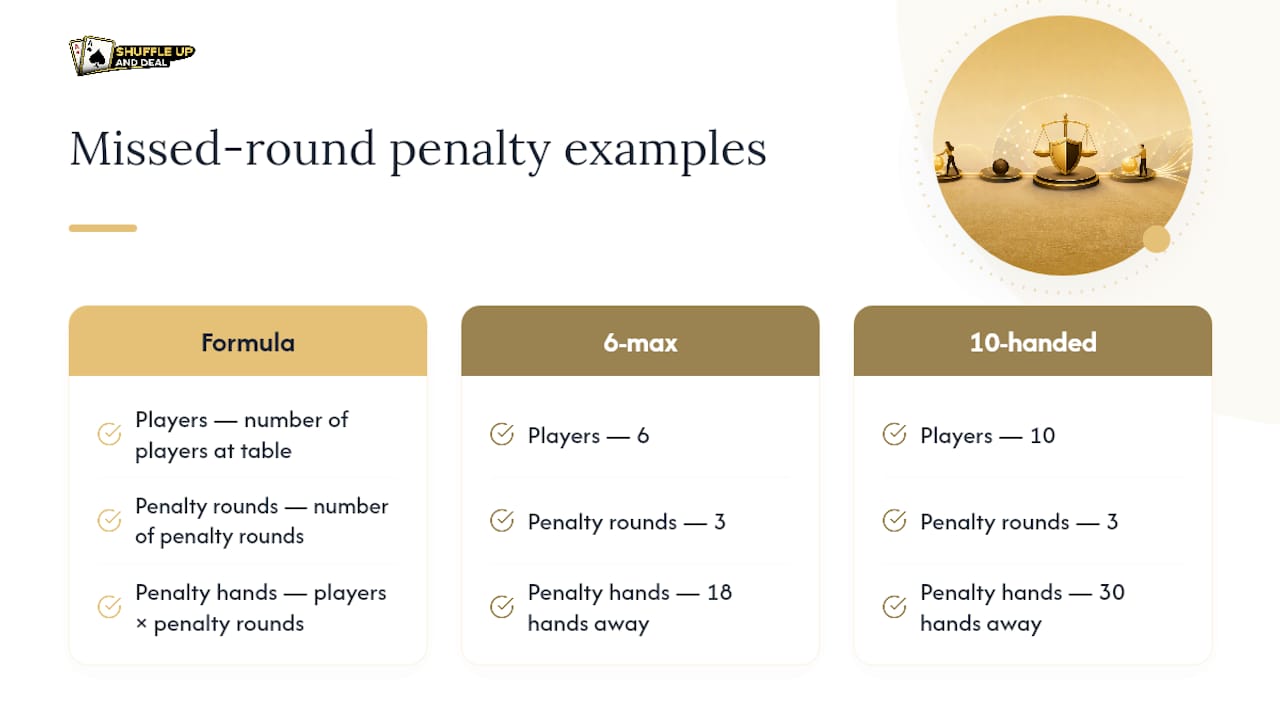
A ten-handed table with a three-round penalty costs the offending player thirty hands away from the action, which at a typical 30-minute live blind level can genuinely bleed a stack down before they’re even back in a pot. That’s the point: the penalty scales with the field, so it hits just as hard at a full table as it does at a short-handed one.
While a player serves a penalty, their blinds and antes still post as normal, and their cards are dealt but killed after the deal, per the 2024 TDA rules document. If you move that player to a new table mid-penalty for balancing purposes, the remaining rounds travel with them. Don’t reset the count just because the seat changed.
Late registration, rebuys and re-entry: what’s the difference?
These three terms get muddled constantly, and a structure sheet that treats them interchangeably invites confusion at the worst possible moment.
Late registration is a window during which a new player can buy in and receive the full starting stack, but at the current blind level rather than the level running when the tournament began, as explained in this baseball poker introduction for adapting missed-blinds policies to novel formats. Re-entry lets an eliminated player buy back in as a fresh entry, usually within the same late-reg window. Rebuys are a separate mechanic, typically restricted to specific rebuy-period tournaments, letting a player top up their stack without being eliminated first.
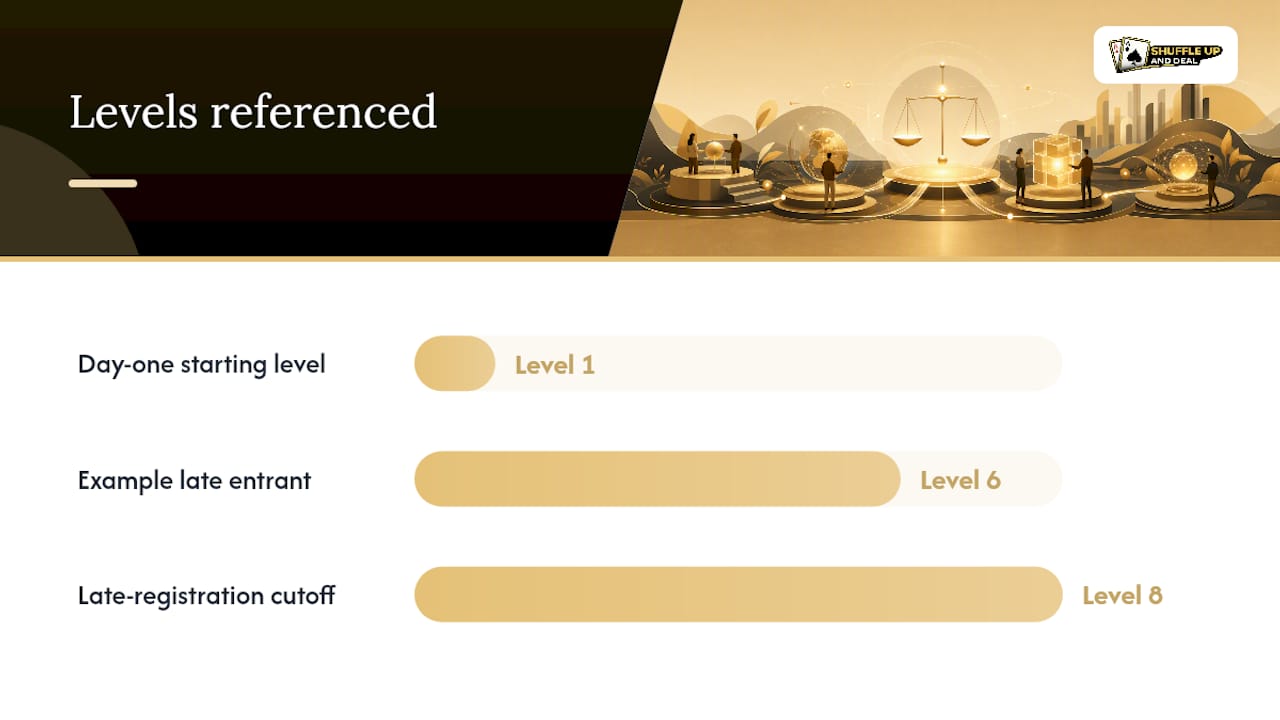
The effective stack depth issue is what matters for your missed-blinds policy: a player entering at level six with a starting stack that was designed for level one is already shallow in big blinds, so a missed round hurts them proportionally more than it would a day-one entrant.
Recommended structure sheet wording:
- “Late registration closes at the end of Level 8 or after 90 minutes, whichever comes first.”
- “Re-entry is permitted during the late registration window only, subject to seat availability.”
- “Rebuys are not offered in this event.” (or state the specific rebuy period if you run one)
- “Missed blinds during the late registration window are assessed identically to day-one entrants.”
How do table moves and the clock interact with penalties?
Table balancing shouldn’t reset the clock on a penalty, and it shouldn’t quietly let a player skip a blind they owe. When you move a player who’s serving a missed-round penalty, carry the remaining rounds to their new seat and note it in your app so the receiving dealer knows immediately.
- Use your blind clock’s level-boundary marker to timestamp exactly when a penalty was assessed, useful evidence if a dispute surfaces later.
- When breaking a table, prioritise moving players who are not mid-penalty first, so you’re not juggling a penalty count across two moves in quick succession.
- Keep a physical or digital chip rack note at the old seat until the move is confirmed, avoiding the classic “who posted what” argument during a redraw.
Pro Tip: During a bubble redraw or a big table-break, blinds get missed more often simply because players are distracted moving chips. Announce the move over the microphone before it happens, not after, so nobody’s caught mid-hand.
Configuring Shuffle Up and Deal! to enforce this policy
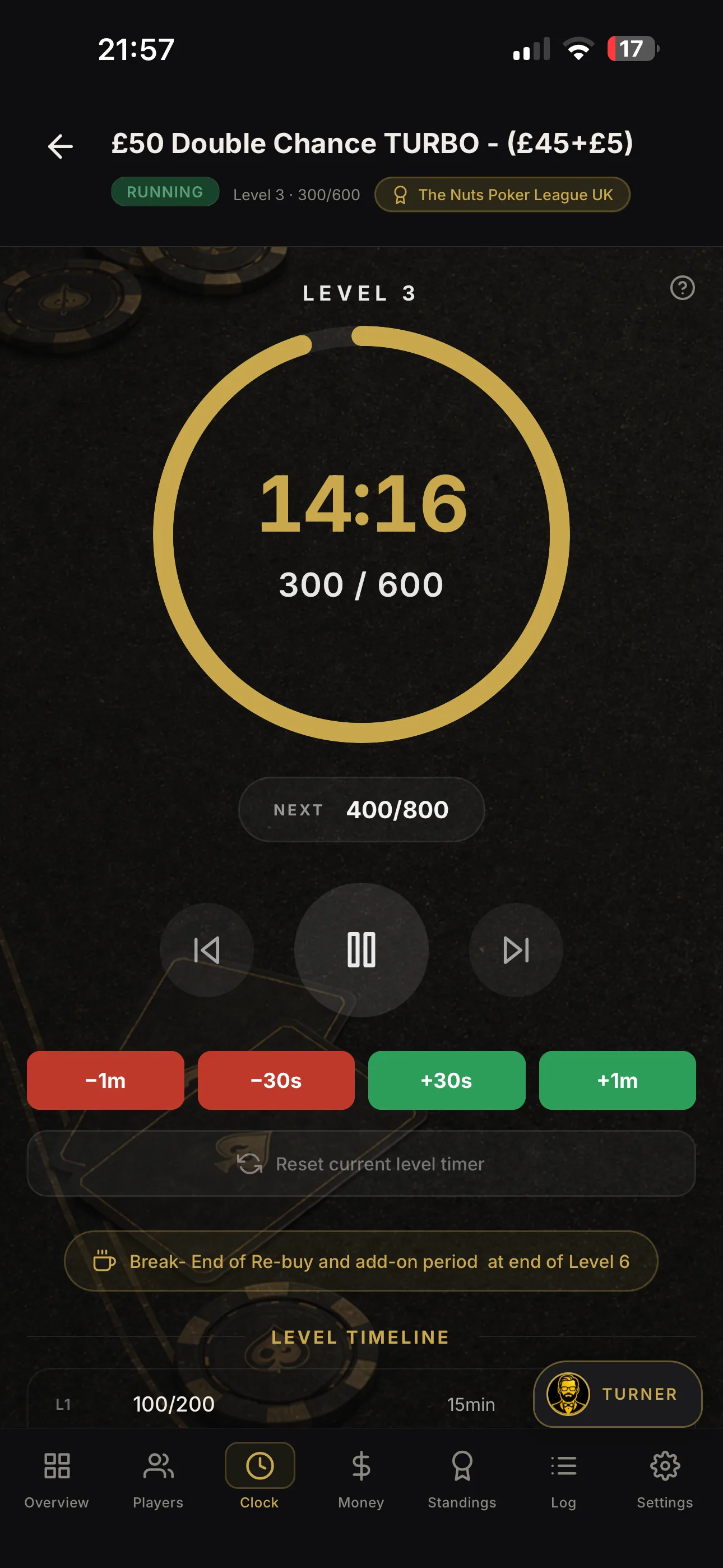
Shuffle Up and Deal! was built around exactly this kind of operational headache. Instead of tracking penalties on a scrap of paper that gets lost by the dinner break, you can configure the app to carry the load with you.
Features that map directly onto the policy above:
- Late-registration and rebuy window controls, set once at event creation and locked automatically when the window closes.
- The live tournament clock, which marks level boundaries so you can timestamp exactly when a penalty applies.
- Smart seating, which carries penalty notes with a player when they’re moved during table balancing.
- Audit logs, recording who applied a penalty, when, and why, in one searchable place.
- External display casting, so a disputed ruling can be shown on a screen rather than argued about verbally.
To set it up before your next event:
- Create the event and enter your blind structure, including ante levels.
- Set your late-registration and rebuy windows under the registration settings.
- Enable audit logging so every penalty entry is timestamped automatically.
- Add a custom note field for missed-blind penalties if you want tier-specific wording saved per incident.
- Test the external display output before doors open, so it’s ready the moment a dispute needs settling.
When a penalty happens, log it in the app immediately rather than at the next break; the timestamp is your evidence. Casting the seating and penalty screen to an external display during a dispute is often the fastest way to defuse an argument, because players trust a screen over a director’s memory.
Recordkeeping and how to handle an appeal
An audit trail turns a “he said, she said” dispute into a five-second lookup. Every penalty you assess should generate a record with:
- Time and blind level of the incident.
- Seat number and player name.
- Dealer or floor staff who witnessed it.
- Penalty tier applied and any screenshot or note attached.
For notifying a player, keep the language short and neutral: “You’ve been assessed a [one-round / two-round] penalty for a missed blind at Level [X], time [XX:XX]. You may appeal this ruling to the Tournament Director before the next hand is dealt.”
Retain logs for at least the duration of the event plus any post-event payout dispute window, commonly 30 days for card rooms handling prize money queries. If a payout dispute arises weeks later, a timestamped app log carries far more weight than a memory of “I think that’s what happened.”
Handling disconnects, dodging and online-versus-live differences
Not every missed blind is the same offence, and your policy needs quick rules for the edge cases that trip up even experienced directors.
- Electronic failures or disconnects (online events) should draw a grace period, typically one orbit, before penalties apply, distinct from intentional dodging.
- Deliberate dodging, such as a player repeatedly stepping away right as their blind approaches, escalates straight to the second-tier penalty rather than starting with a warning.
- A player called back to the table after missing blinds should have their penalty calculated from the moment they were due to post, not from when they physically return.
- Live events need clearer verbal-announcement rules since there’s no chat log; online events should lean on the platform’s automatic timestamping instead.
Quick troubleshooting checklist for a disputed clock or blind call: check the app’s level-boundary log first, confirm the dealer’s account, then apply the penalty tier your policy already defines, don’t improvise a new one mid-argument.
Why consistency matters more than the penalty itself
Every argument I’ve seen escalate at a poker table over a missed blind wasn’t really about the chips. It was about a player feeling singled out, or sensing the ruling changed depending on who was sitting in the seat. A missed blinds policy only works if it’s applied identically to the chip leader and the short stack, and that’s genuinely hard to do from memory when you’re also running the clock, balancing tables, and answering three other questions at once.
The fix isn’t a stricter rule. It’s removing yourself as the variable. When the penalty comes from a published scale and an app log rather than your own recollection, players stop arguing with you and start arguing with the policy, which is a much shorter conversation. Communicate the rule before Level 1, not after an incident, and let the software carry the receipt.
Enforce your policy without the paperwork
Running a fair missed blinds policy shouldn’t mean juggling a clipboard, a stopwatch, and a memory of who said what three levels ago. Shuffle Up and Deal! replaces that with one screen: late-registration and rebuy windows set in advance, a live clock that timestamps every level boundary, smart seating that carries penalty notes when a player moves tables, and an audit log that settles a dispute in seconds instead of minutes.
If you’re tired of penalty rulings that rely on your own recollection under pressure, set up a test event in the app before your next tournament and switch on audit logging. Configure your blind structure, your late-reg window, and your penalty notes once, then let the tournament management app carry the enforcement for every event after that.
Sources
- Late Registration in Poker: How the Window Works (and How to Use It)
- Poker tournaments: how they work · CardPlayer
- Poker Tournament Rules | Mohegan Sun
Recommended
- Big blind ante explained: players and TDs guide | Shuffle Up and Deal!
- Best TDA rules app for TDs: TURNER in Shuffle Up and Deal! | Shuffle Up and Deal!
- Freezeout tournament rules: the complete guide for players and TDs | Shuffle Up and Deal!
- Independent chip model poker: your complete guide | Shuffle Up and Deal!